

Daily Dose Of Jazz…
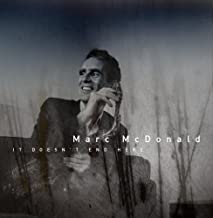
Marc McDonald was born in London, England on February 8, 1961 and lived there for six years before his parents moved to Princeton, New Jersey, where he grew up. Since the 1980s he has led groups in the New York City metropolitan areas as well as Honolulu, London and Athens. Releasing his debut CD as a leader, It Doesn’t End Here, it features his own compositions and the inventive arrangements of standards, drawing from mainstream jazz, Brazilian, and New Orleans R&B influences.
He has been equally active as a sideman and has been a member of award-winning composer Jamie Begian’s big band since 1998, appearing as a featured soloist on the band’s CD Trance.
In 1990, McDonald was among ten jazz composers invited to the ASCAP/Louis Armstrong Jazz Composers Workshop at New York’s Lincoln Center. Always the student, he attended the BMI Jazz Composers Workshop in New York for several years. Between 1991 and 1996 he was invited to premiere works for jazz chamber ensemble, solo saxophone, and saxophone quartet.
As an educator he has held a position for five years as a member of the artist faculty at a private music school in Princeton, and is currently in private teaching practice. Saxophonist and composer Marc McDonald continues to explore the world of jazz.

More Posts: bandleader,composer,history,instrumental,jazz,music,saxophone
Requisites
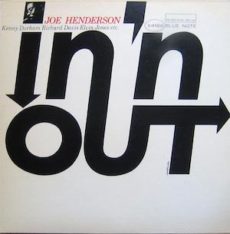
In ‘n Out ~ Joe Henderson | By Eddie Carter
This morning’s choice from the library is a 1964 album by tenor saxophonist Joe Henderson. I’ve been a fan of his for years and first heard him live at The 1992 Atlanta Jazz Festival. His performance that night was brilliant and a stellar highlight that blew everyone away in attendance. In ‘n Out (Blue Note BLP 4166/BST 84166) is his third release and finds him leading a first-class quintet, Kenny Dorham on trumpet, McCoy Tyner on piano, Richard Davis on bass, and Elvin Jones on drums. My copy used in this report is the 1983 Pathé Marconi-EMI French Stereo reissue sharing the original catalog number.
Side One gets underway with the first of three tunes from Henderson’s pen, In ‘n Out swings from the start of the quintet’s brisk melody. Joe takes off first with a ferocious opening statement. McCoy makes his mark in rapid succession on the second solo. Kenny is up next with a vigorous performance, then Joe returns for a few more aggressive notes ahead of the ensemble’s ending theme. Henderson’s Punjab slows the pace to medium tempo for the ensemble’s bluesy opening chorus. Joe begins the first solo at a comfortable and friendly pace, then Kenny follows with a leisurely stroll on the second reading. McCoy steps in next with an easy-flowing interpretation. Joe adds a delightfully laid-back finale into the quintet’s carefree summation.
Joe’s Serenity opens Side Two at mid-tempo with the ensemble sustaining a mellow timbre on the opening chorus. Kenny takes the first spot and gives a relaxing interpretation. Joe continues grooving on a spirited reading that’s an ear-pleaser. McCoy draws us into the next solo with pure pleasure on the keys, and Richard makes an articulate statement on the closer before the group’s reprise and climax. Dorham tells a Short Story on the first of two originals by the trumpeter. The rhythm section sets the basis for swinging on the introduction segueing into the ensemble’s collective melody. Dorham, Henderson, and Tyner make the first three solos come alive with plenty of positive energy, and Elvin has an amazing exchange with the front line preceding the closing chorus.
The quintet closes with a trip to Brown’s Town. Henderson is heard on the opening and closing melody only, Dorham, Tyner, and Davis are the featured soloists. Kenny paints an enchanting portrait on the opening statement, then McCoy possesses a great amount of warmth and joy on the second solo. Richard sparkles on the finale with some strong walking into the ensemble’s tender climax. Joe Henderson released four other albums for Blue Note during the decade, Page One (1963), Our Thing (1964), Inner Urge, and Mode For Joe (1966). He also appeared as a sideman on many of the landmark LPs for the label. His career lasted over forty years recording for CTI Records, Elektra Musician, Fantasy, Milestone, Red Records, and Verve Records.
He was a consummate composer and one of the most respected musicians in jazz, performing in concerts and festivals around the world. I was lucky enough to see him live twice, the second time was a 1994 performance at Spivey Hall. After a long battle with emphysema, Joe passed away from heart failure at age sixty-four on June 30, 2001. In ‘n Out was produced by Alfred Lion and Pathé Marconi-EMI did a superb job remastering the original tapes of Rudy Van Gelder. The vinyl is quiet with an impressive soundstage placing the musicians in your listening room. Kenny, McCoy, and Richard are heard on the left, and Joe and Elvin are heard on the right. If you enjoy the tenor sax, I invite you to treat yourself to In ‘n Out by Joe Henderson. It’s a wonderful album that gets better with repeated listening!
~ Page One (Blue Note BLP 4140/BST 84140); Our Thing (Blue Note BLP 4152/BST 84152); Inner Urge (Blue Note BLP 4189/BST 84189), and Mode For Joe (Blue Note BLP 4227/BST 84227) – Source: Discogs.com © 2022 by Edward Thomas Carter

More Posts: choice,classic,collectible,collector,history,instrumental,jazz,music,saxophone
Requisites
Johnny Griffin Sextet | By Eddie Carter
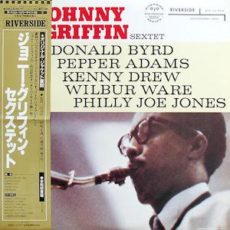
This morning’s discussion is the 1958 album, Johnny Griffin Sextet (Riverside RLP 12-264). Griffin began his career in the forties, playing the alto sax until joining Lionel Hampton’s Orchestra after graduating high school. Hampton urged him to play the tenor sax, and he did in the band until 1947. Johnny also played with Art Blakey, The Kenny Clarke-Francy Boland Big Band, Eddie “Lockjaw” Davis, and Thelonious Monk.
He made three albums for Blue Note and recorded for a variety of labels as a leader and sideman. Griff was nicknamed The Little Giant for his diminutive size but possessed a robust sound that produced riveting solos effortlessly. Donald Byrd on trumpet, Pepper Adams on baritone sax, Kenny Drew on piano, Wilbur Ware on bass, and Philly Joe Jones on drums complete the sextet. My copy used in this report is the 1974 Japanese Mono reissue (Riverside SMJ 6285) by Victor Musical Industries.
Side One opens with Stix’ Trix by Wilbur Campbell. A lively introduction by Philly precedes the ensemble’s feisty opening chorus. Kenny takes the first solo and gives a vigorously spirited performance. Pepper states his case on the second reading, then Donald follows in fine form on the next statement. Philly picks up the baton with some exciting brushwork, and Johnny gives a vivacious finale into the sextet’s reprise and conclusion.
What’s New? by Bob Haggart and Johnny Burke begins with a thoughtfully tender introduction and gentle melody by Griff. The saxophonist’s opening solo is beautifully constructed and poignant. Byrd and Adams split the next chorus with two pensive performances. Drew executes an elegant touch on the next interpretation, then Griffin returns for a few more intimate thoughts before ending with a sultry, seductive exit.
The first side ends with Dizzy Gillespie’s tribute to Woody Herman, Woody ‘n’ You. It starts with a lively conversation between Johnny and Philly. The rhythm section joins them for a cheerfully spirited theme, then Wilbur kicks off the solos with a rousing unaccompanied reading. Kenny delivers a dynamic performance on the next statement. Griff is up next with an interpretation that swings soulfully, and Philly generates an electrical charge ahead of the ensemble’s vigorous closing chorus.
Johnny G.G. by John Hines opens Side Two at a laid-back tempo for the sextet’s melody. Drew is up first with a smoothly flowing solo, then Griff carries the easygoing mood to a delightfully satisfying close. Byrd approaches the third reading with thoughtful construction and fluid lines. Adams delivers the next statement free and easy. Ware has a wonderful thing going into the closing chorus after sharing a final thought with Griff.
The finale is Catharsis, an upbeat swinger by Johnny Griffin that begins with a brisk collective theme and allows everyone solo space. Pepper takes off with rapturous enthusiasm on the opening statement. Donald creates an exuberant reading next. Kenny follows with a solo that’s like the cherry and cream on top of a succulent, tasty sundae. Johnny and Wilbur share the spotlight again on the next interpretation, then Philly has a short exchange with the front line leading to the closing chorus.
Johnny Griffin Sextet was originally recorded by Jack Higgins at Reeves Sound Studios, and the remastering by Victor Musical Industries has a spectacular soundstage. If you’re in the mood for a superb blowing session, I invite you to audition Johnny Griffin Sextet for a spot in your library. It’s forty-two minutes of some of the best Hard-Bop you’ll hear on a turntable and an enjoyable album I highly recommend!
~ A Blowing Session (Blue Note BLP 1559), Introducing Johnny Griffin (Blue Note BLP 1533/BST 81533), The Congregation (Blue Note BLP 1580) – Source: Discogs.com ~ Woody ‘n’ You, What’s New? – Source: JazzStandards.com © 2022 by Edward Thomas Carter
More Posts: choice,classic,collectible,collector,history,instrumental,jazz,music,saxophone
Daily Dose Of Jazz…
Alvin “Abe” Aaron was born on January 27, 1910 in Toronto, Canada on January 27, 1910. His father, a bandleader with a theater band in Milwaukee, Wisconsin, had him playing reeds in the band for more than ten years. Early in the 1940s he left this group to play alto saxophone in the big band of Jack Teagarden, with which he recorded in 1942.
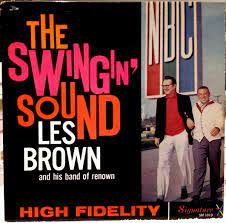
Moving to Hollywood, California in 1943, Abe played with Horace Heidt on radio. From 1945 to 1947 he played with Skinnay Ennis, then returned to work under Heidt through 1949. Through the 1950s he played in Les Brown’s Band of Renown, touring Europe and East Asia. He recorded often as a member of Brown’s band for Coral and Capitol record companies. In the band, he played clarinet and alto saxophone in the early 1950s, then switched to tenor and baritone. He also recorded on bass clarinet with Billy Usselton.
Clarinetist and saxophonist Abe Aaron transitioned on January 31, 1970.
More Posts: clarinet,history,instrumental,jazz,music,saxophone
Three Wishes
When the Baroness inquired of Benny Green if given what three things would he wish for he told her:
- “The first thing I would think of would be to have a little money bestowed upon me. Well, really, if that happened, that would be all. The rest I’d be able to bestow upon myself.”
*Excerpt from Three Wishes: An Intimate Look at Jazz Greats ~ Compiled and Photographed by Pannonica de Koenigswarter
More Posts: baroness,history,instrumental,jazz,music,pannonica,saxophone,three,wishes