


Daily Dose Of Jazz…
Rodrigo Amado was born in Lisbon, Portugal on July 15, 1964 and began studying the sax at the age of 17, briefly at the Hot Club Music School of Lisbon and with mentors Carlos Martins, Pedro Madaleno, and Jorge Reis.
With diverse musical interests, he explored improvisation in other genres, including his work with his various ensembles like the Lisbon Improvisation Players and the Motion Trio with Miguel Mira and Gabriel Ferrandini. He is an in~demand studio player on numerous recorded projects.
He started his own label Clean Feed in 2001, with brothers Pedro and Carlos Costa, before leaving the imprint in 2005 to start a second label, European Echoes. Also an accomplished professional photographer, Amado continues to be a bright light on the Portuguese and international improvisational jazz scene.
Saxophonist Rodrigo Amado continues to specialize in free-form, composition-in-the-moment jazz, and his various projects and trios have given him an international following.

More Posts: bandleader,composer,history,instrumental,music,saxophone

Daily Dose Of Jazz…
Pedro Iturralde Ochoa was born in Falces, Spain on July 13, 1929. He began his musical studies with his father and performed in his first professional engagements on saxophone at age eleven. GraduatING from the Royal Conservatory of Music in Madrid, he had studied clarinet, piano, and harmony.
When he was 20 years old he composed Czárdás for saxophone and dedicated the present version of the work, orchestrated by his brother Javier, to a friend, saxophonist Theodore Kerkezos. He went on to lead his own jazz quartet at the W. Jazz Club in Madrid, Spain and experimented with the combined use of flamenco and jazz, and making recordings for the Blue Note label.
In 1972 he undertook further study in harmony and arranging at the Berklee College of Music in Boston, Massachusetts. He taught saxophone at the Madrid Conservatory from 1978 until his retirement in 1994. He appeared in Spain and abroad as a soloist with the Spanish National Orchestra under the baton of Frühbeck de Burgos, Celibidache, Markevitch, and others.
He made recordings with the renowned flamenco guitarists Paco de Lucia, Paco de Algeciras and Pepe de Antequerra, and Paco Cepero. He also recorded with jazz vocalist Donna Hightower on her I’m In Love with Love album and arranged/conducted on her El Jazz y Donna Hightower album.
Saxophonist, teacher and composer Pedro Iturralde Ochoa passed away on November 1, 2020. in Madrid on November 1, 2020.
More Posts: bandleader,history,instrumental,jazz,music,saxophone
Daily Dose Of Jazz…
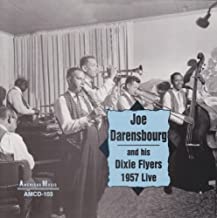
Joe Darensbourg was born in Baton Rouge, Louisiana on July 9, 1906 and in his youth moved out to California where he played gigs where he could find them and appeared in several silent films with these bands. In 1950 Joe appeared in Mahogany Magic with Kid Ory’s Creole Jazz Band. The Sixties saw him playing with Louis Armstrong’s All Stars in The Good Years of Jazz: Louis Armstrong & The All Stars.
In 1958 his Dixie Fliers recording of Yellow Dog Blues hit #43 on the pop charts, and Louis Armstrong’s version of Hello Dolly, which Drensburg played clarinet went to #1 in 1964. By the Sixties he performed on a television special with the All Stars Winter Carnival in Sun Valley, California and a March of Dimes tribute to Louis Armstrong.
He was noted for his work with Buddy Petit, Jelly Roll Morton, Charlie Creath, Fate Marable, Andy Kirk, Johnny Wittwer, Kid Ory, Wingy Manone, Joe Liggins and Louis Armstrong. Clarinetist and saxophonist Joe Darensbourg, who played Dixieland, passed away on May 24, 1985.
More Posts: clarinet,history,instrumental,music,saxophone
Daily Dose Of Jazz..
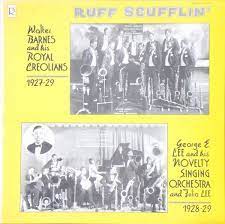
Walter Barnes was born on July 8, 1905 in Vicksburg, Mississippi but grew up in Chicago, Illinois. He studied under Franz Schoepp and attended the Chicago Musical College and the American Conservatory of Music.
Leading his own bands from the early 1920s, he also played with Detroit Shannon and his Royal Creolians. After Shannon’s retinue became dissatisfied with his leadership, Barnes took control of this group as well. He played mostly in Chicago, though the band did hold a residency at the Savoy Ballroom in New York City as well. His band recorded in 1928-29 for Brunswick Records.
He toured the American South in the 1930s to considerable success, touring there yearly and by 1938 the ensemble grew to sixteen members. Around this time, Barnes also worked as a columnist for the Chicago Defender newspaper, and used his position to advertise his own tours and promote other entertainers on the same touring trail to Black audiences. Barnes is thus credited as an early originator of what was known as the “Chitlin’ Circuit”; a network of entertainment venues where it was safe and acceptable for Black entertainers to perform.
Barnes was one of the victims of the Rhythm Club Fire in Natchez, Mississippi, on April 23, 1940. When the club caught fire, he had the group continue playing the song “Marie” in order to keep the crowd from stampeding out of the building. All of the band members except for drummer Walter Brown and bassist Arthur Edward were among the 201 victims of the fire.
Clarinetist, saxophonist and bandleader Walter Barnes, whose death was repeatedly immortalized in song, passed away on April 23, 1940.
More Posts: bandleader,clarinet,history,instrumental,jazz,music,saxophone

Daily Dose Of Jazz…
Charles Redland was born Carl Gustaf Mauritz Nilsson, on July 7, 1911 in Södertälje, Sweden. The son of a musician, he learned several instruments when he was young. By the 1930s he was a member of bands in which he played alto saxophone, clarinet, trumpet, and trombone.
During that decade he doubled as a leader. On clarinet he recorded with Benny Carter in Sweden in 1936. He composed and arranged jazz and popular music, as well as more than eighty films, in addition for radio and television programs.
Saxophonist, composer and bandleader Charles Redland passed away on August 18, 1994 in Stockholm, Sweden.
More Posts: bandleader,composer,history,instrumental,music,saxophone