

Requisites
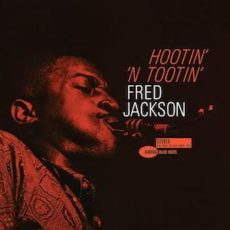
Hootin’ ‘N Tootin’ ~ Fred Jackson | By Eddie Carter
Submitted for your approval from the library this morning is an album by tenor saxophonist, Fred Jackson who began his brief career in 1951 as an R&B saxophonist with Little Richard. A decade later, he worked with blues legend, B.B. King, and has also appeared on a few other Blue Note albums before leaving the jazz scene during the mid-sixties. Fred recorded and released his only album as a leader, Hootin’ ‘N Tootin’ (Blue Note BLP 4094/BST 84094) in 1962. Here, he is working with Earl Van Dyke on organ, Willie Jones on guitar, and Wilbert Hogan on drums. The program consists of seven original tunes by the saxophonist and my copy used in this report is the 1992 Toshiba-EMI Limited Japanese Stereo reissue sharing the original catalog number.
Dippin’ In The Bag starts Side One with a delightfully perky introduction by the quartet. Fred opens with a relaxing theme moving with a spring and a bounce in its step, then Willie constructs a spirited statement that flows steadily into Fred’s final comment ahead of the foursome’s closing chorus fading from view. Southern Exposure is a slow-paced succulent meal introduced by Jones and the rhythm section with some soulful, home-cooking. Jackson brings the fried chicken, black-eyed peas, and collard greens to the melody and adds the potato salad for the first reading. Van Dyke serves the steak and burgers with a highly seasoned sauce on the next interpretation. Jackson wraps up the bluesy meal with a tasty dessert preceding the quartet taking their leave after an enjoyable dinner.
Preach Brother moves the pace to a medium-fast tempo with a spirited church-like feel propelled by Hogan’s drums. Fred delivers the opening chorus and first sermon with a groove that just will not quit. Willie gives the next talk and has fun for one verse. Earl sums up the lesson jumping for joy in the finale ahead of the ensemble’s exit. Hootin’ ‘N Tootin’ begins Side Two with a brisk introduction and melody in unison with an emphasis on lively statements from everyone. Jackson is up first with a swinging reading, then Jones offers a moment of hard cooking. Van Dyke takes an enjoyable romp on the next solo, followed by a short exchange between Hogan and Jackson. The drummer provides an exclamation point with his only solo before the ending.
Easin’ On Down takes the foot off the accelerator for a carefree collective theme with everyone right at home. Fred breaks the ice first with a carefree, easy-going swing. Willie supplies a laid-back response on the next solo. Earl steps into the spotlight last on a smooth course towards Fred’s return with a closing message into the climax. That’s Where It’s At picks up the pace again with the foursome suggesting a skillful virtuosity that is irresistible. One thing piquing my interest is the quote of the Black spiritual, Wade In The Water (1901) in the tenor saxophonist’s and organ’s solos. Jackson burns brightly on an exceptional first statement. Van Dyke also cooks with imaginative verses that crackle and Jones has a feisty performance in-between.
Earl leads off Way Back Home with a brief introduction making everyone feel comfortable as Fred states the mellow opening chorus. He continues providing the spark on the first solo, then Willie executes the next reading proficiently. Earl delivers a highly effective closing statement before the ensemble wraps it up. After Hootin’ ‘N Tootin’ was released, Fred Jackson returned to record his second album at the Van Gelder Studio with the same group plus Sam Jones. Due to poor sales of his debut, the other seven selections weren’t released until they appeared on the CD album of Hootin’ ‘N Tootin’ (1998). Jackson appeared on three other albums for Blue Note as a sideman, Face to Face (1961), Along Came John (1963), and The Way I Feel (1964)!
The music on Hootin’ ‘N Tootin’ is perfect to enjoy at the start of your day or after work, during or after dinner, or for late-night listening. The sound quality is good, but not great. The problem is the microphone placement for the organ is over-modulated when Earl Van Dyke is accompanying Fred and Willie’s solos throughout the album. The only other time I experienced this on a Rudy Van Gelder recording was on Open House (1966). Despite this issue, if you are a fan of Soul-Jazz or jazz organ with a bop flavor, I offer for your consideration, Hootin’ ‘N Tootin’ by Fred Jackson, a tenor saxophonist whose career deserved a better fate and whose music deserved greater recognition!
~ Along Came John (Blue Note BLP 4130/BST 84130), Face to Face (Blue Note BLP 4068/BST 84068), Hootin’ ‘N Tootin’ (Blue Note Connoisseur Series CDP-21819), Open House (Blue Note BLP 4269/BST 84269), The Way I Feel (Blue Note BLP 4174/BST 84174) – Source: Discogs.com © 2021 by Edward Thomas Carter

More Posts: choice,classic,collectible,collector,history,instrumental,jazz,music,saxophone
Daily Dose Of Jazz…
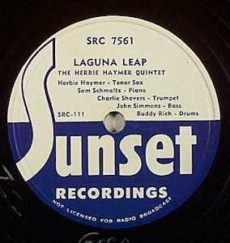
Herbert Haymer was born on July 24, 1915 in Jersey City, New Jersey, and played alto saxophone from age 15 before picking up the tenor at age 20.
Through the Thirties he played with the Carl Sears-Johnny Watson Band, then played with Rudy Vallee, Charlie Barnet, Red Norvo and Jimmy Dorsey from 1937 to 1941. The early Forties saw Herbert playing with Woody Herman, Kay Kyser, Benny Goodman, and Dave Hudkins.
In 1944, he enlisted in the Navy, and after returning he worked as a session musician, including dates with Red Nichols and again with Goodman. In 1945, he led a quintet featuring Charlie Shavers and Nat King Cole on recording, and had three songs issued on Keynote Records in 1946. In 1949 he recorded with Frank Sinatra.
Saxophonist Herbert Haymer, known primarily as a saxophonist in big bands, was killed in an automobile accident after a session on April 11, 1949 in Santa Monica, California.
More Posts: bandleader,history,instrumental,jazz,music,saxophone
Daily Dose Of Jazz…
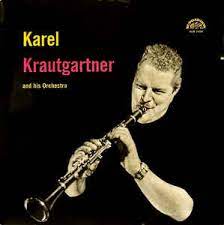
Karel Krautgartner was born on July 20, 1922 in Mikulov, Moravia into the family of a postmaster. He began studying clarinet on a private basis with Stanislav Krtička, and performed a demanding part of the Concertino by Leoš Janáček at the composer’s request at the festival of contemporary music in Frankfurt am Main, Germany in 1926. Acquiring the necessary skills of clarinet playing, and a fanatic passion for clarinet construction and components – reeds, mouthpieces, and barrels, which he later used his knowledge of wind instruments as a lecturer at German universities in Cologne and Düsseldorf.
In 1930 he began playing piano and by 1935 after moving to Brno, Czech Republic he became interested mainly in jazz radio broadcasts. 1936 saw Karel founding the student orchestra Quick band. In 1942, he signed his first professional contract as a saxophonist in the Gustav Brom orchestra in the hotel Passage in Brno. A year later he created Dixie Club and started to arrange in the Benny Goodman and Glenn Miller styles. From 1945 – 1955, the core of the Dixie Club moved to Prague and became a part of the Karel Vlach Orchestra.
He achieved a privileged position as the leader of the saxophone section and started to contribute with his own compositions. In 1956,along with Karel Velebný he put together the Karel Krautgartner Quintet, performed with the All Star Band, and with Studio 5. During the Sixties he became the head of the Dance Orchestra of Czechoslovakia Radio, renamed the Karel Krautgartner Orchestra. In 1968 he emigrated to Vienna, Austria and became the chief conductor of the 0RF Bigband. He eventually moved to Cologne, Germany. Clarinetist, saxophonist, arranger, composer, conductor and educator Karel Krautgartner passed away on September 20, 1982.
More Posts: arranger,clarinet,composer,conductor,educator,history,instrumental,jazz,music,saxophone
Requisites
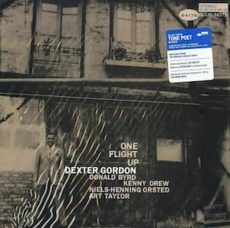
It happened like this; I was choosing several albums to listen to for my next column when a delightful surprise showed up at my door. After auditioning it, I wanted to share my thoughts with you. I first heard this morning’s subject of discussion by Dexter Gordon, One Flight Up (Blue Note BLP 4176/BST 84176) in 1967 during one of my Saturday visits to Record Rendezvous in Cleveland, Ohio. This was his sixth Blue Note album and his second release since moving overseas from the United States. Dexter was a staple on the jazz scene since the forties when he was a member of Billy Eckstine’s Big Band. He was a major influence for two other tenor giants, John Coltrane, and Sonny Rollins. He moved abroad because he was treated more fairly and as an equal than in the US. There was also plenty of work for him and other musicians in some of the best jazz clubs Europe and France had to offer.
In this album, the tenor saxophonist leads a first-class ensemble of Donald Byrd on trumpet, Kenny Drew on piano, Neils-Henning Orsted Pedersen on bass, and Art Taylor on drums. My copy used in this report is the 2021 Blue Note Tone Poet Series Stereo Audiophile reissue sharing the original catalog number. Side One is occupied by Donald Byrd’s Tanya allowing the tenor, trumpet, and piano three lengthy solo opportunities. The rhythm section opens with a brief introduction segueing into a dreamy collective theme. Dexter works his magic first on nearly six minutes of immaculate execution. Donald follows, appealing at every turn on the next reading. Kenny speaks proudly with a firm articulation on the finale that keeps us captivated by Neils-Henning’s and Art’s stylish foundation ahead of the quintet’s closing chorus and gentle dissolve.
Side Two starts with Kenny Drew’s, Coppin’ The Haven. The trio eases into the song with a brief introduction leading to Byrd and Gordon stating the melody to the rhythm section’s infectious beat. Dexter crafts the opening solo with a touch of the blues that sustains its momentum until the conclusion. Donald comes in next with an exquisite reading as smooth as glass. Kenny serves up an impressive final statement preceding the climax. The album ends with the beautiful 1939 standard, Darn That Dream by Jimmy Van Heusen and Eddie DeLange. This is a gorgeous quartet performance opening with a gentle trio introduction. Dexter is the centerpiece here and he produces a beautifully seductive melody and tender first reading. Kenny expresses a gentle warmth on the second interpretation, then Gordon returns to close with a sensuously smooth ending.
One Flight Up was recorded by the French engineer, Jacques Lubin. This Tone Poet reissue was supervised by Joe Harley, and the mastering is by Kevin Gray at Cohearent Audio. The sound quality is spectacular with refreshing clarity and a stunning soundstage that transports the musicians to your listening room. The record was pressed on 180-gram audiophile vinyl and is silent until the music starts. Then, the gatefold photos inside could adorn any wall proudly. Over his nearly forty-year career, Dexter recorded for a host of labels, Bethlehem, Columbia, Decca, Dial, Dootone, Prestige, Savoy, and SteepleChase. However, it was the five years he was at Blue Note (1961-1966) that are among his finest records in my opinion. He passed away on April 25, 1990, at age sixty-seven from kidney failure and cancer of the larynx. If you’re a Hard-Bop fan, I highly recommend One Flight Up by Dexter Gordon. It’s an excellent album where the music speaks to you in a way that’s rewarding listening for any jazz library!
~ Darn That Dream – Source: JazzStandards.com ~ Dexter Gordon – Source: Wikipedia.org © 2021 by Edward Thomas Carter
More Posts: choice,classic,collectible,collector,history,instrumental,jazz,music,saxophone
The Quarantined Jazz Voyager
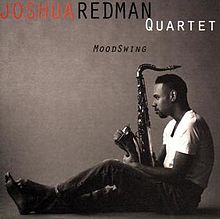
Masking and social distancing are still my mantra in maintaining my health and this time has given me a steady flow of opportunities to sit and listen to albums I have in my collection. So this I am revisiting music that was recorded over a quarter of a century ago. This week I turn to tenor and soprano saxophonist Joshua Redman and his 1994 studio album by his quartet titled Moodswing. All compositions on this album are original and released on the Warner Bros. The album was re-released on vinyl in 2009.
Track Listing | 69:39- Sweet Sorrow
- Chill
- Rejoice
- Faith
- Alone in the Morning
- Mischief
- Dialogue
- The Oneness of Two (In Three)
- Past in the Present
- Obsession
- Headin’ Home
- Joshua Redman ~ tenor, soprano saxophone
- Brad Mehldau ~ piano
- Christian McBride ~ bass
- Brian Blade ~ drums

Recorded on March 8~10, 1994 at the Power Station in New York City. The production team was led by producer Matt Pierson, Jennifer Zeitlin ~ production coordinator, James Farber was the recording/mixing engineer, Greg Calbi and Scott Hull ~ mastering engineers, and Rory Romano, Tony Black ~ engineer assistants. The art direction and design was by Jeri Heiden and Tom Recchion, Jim Merrill did the photography of the band and Marc Hom took the photographs of Joshua. Mary Ann Topper was responsible for management and booking.
Track Listing | 69:39- Sweet Sorrow
- Chill
- Rejoice
- Faith
- Alone in the Morning
- Mischief
- Dialogue
- The Oneness of Two (In Three)
- Past in the Present
- Obsession
- Headin’ Home
- Joshua Redman ~ tenor, soprano saxophone
- Brad Mehldau ~ piano
- Christian McBride ~ bass
- Brian Blade ~ drums
More Posts: adventure,album,club,genius,jazz,museum,music,preserving,restaurant,saxophone,travel