

Three Wishes
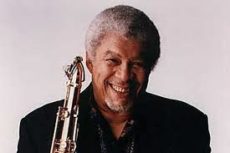
Frank Foster replied to the question the Baroness posed of his three wishes by telling her:
1. “Enlightenment! You know what I mean when I say that?”
2. “The absolute love of one person.”
3. “To see the whole world.”
*Excerpt from Three Wishes: An Intimate Look at Jazz Greats ~ Compiled and Photographed by Pannonica de Koenigswarter

More Posts: baroness,history,instrumental,jazz,music,pannonica,saxophone,three,wishes
Requisites
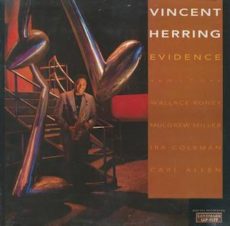
Evidence ~ Vincent Herring | By Eddie CarterThis next choice from the library is by alto saxophonist Vincent Herring who I first heard at the 1992 Atlanta Jazz Festival as a member of The Nat Adderley Quintet. Their performance was a highlight of the AJF, and Herring’s solos were breathtaking throughout the set, mesmerizing the crowd. Evidence (Landmark Records LLP-1527) is his second album as a leader, and accompanying him are Wallace Roney on trumpet, Mulgrew Miller on piano, Ira Coleman on bass, and Carl Allen on drums. My copy used in this report is the 1991 Swiss Digital Stereo pressing.
Side One opens with Mr. Wizard by Vincent and Larry Willis, swinging from the outset with an invigorating theme statement. Wallace takes off first driven by jet propulsion, followed by an energetic workout by Vincent. Mulgrew speaks last with a fierce intensity preceding an exuberant closing chorus and abrupt ending. The mood moves to a slower tempo for a beautiful rendition of I Sing a Song by Tex Allen. This tune opens showing grace and politeness with a Bossa-Nova beat on the melody. Roney begins with a seductively appealing performance, the altoist delivers a sublimely beautiful reading next. Miller’s closing presentation is an equal mix of elegance, poignancy, and warmth. Stars Fell on Alabama, the 1934 jazz standard by Frank Perkins and Mitchell Parish is a touching tribute to Cannonball Adderley who recorded it on Cannonball Adderley Quintet in Chicago (1959). Vincent opens the soloing with a sweet lyricism like a rare vintage wine that’s mellowed with age. Mulgrew adds a richly evocative romanticism to the finale matched by Ira and Carl’s tender interplay.
Voyage by Kenny Barron is the Side One finale with a lively, uptempo beat by the quintet on the opening chorus. Herring solos first with a captivating interpretation. Roney bursts into the next reading with a blazingly hot attack of electrically charged energy. Miller takes the final spot for an effervescent statement into the reprise and ending. Never Forget is Herring’s second contribution to the album and a very pretty ballad by Vincent expressing a voluptuous richness on the opening chorus and affectionate intimacy on the lead solo. Mulgrew gives a vivid example of his ability to communicate something special by caressing each phrase of the closing reading, making it truly distinctive and memorable for a deeply satisfying performance.
Evidence was written by Thelonious Monk in 1948, this jazz standard was first recorded as a single, and later on Milt Jackson and The Thelonious Monk Quintet (1955). The quintet starts with a happy groove exhibited in the opening statement by Herring showing a remarkable maturity beyond his age. Roney takes over in fine spirits and exceptional form on the second solo. Miller comes in next for an equally inspired reading. Carl shares the finale with all three soloists before the ensemble’s exit. Soul-Leo by Mulgrew Miller begins with a joyous medium theme. Wallace delivers tremendous excitement on the first solo. Vincent continues with an infectious groove next, then Mulgrew provides the summation ahead of a few closing comments by Vincent into the close.
The engineer on Evidence is Paul Goodman who has a large discography of notable jazz albums for Atlantic, Cobblestone, Elektra Musician, MPS Records, Muse Records, Onyx Records, Prestige, RCA Victor, and Xanadu. The digital mastering is by George Horn who also has a lengthy resume of albums at Fantasy Studios, and his own company, George Horn Mastering. The quality of this digital recording is splendid with a natural soundstage surrounding your listening chair with sweet sounds. In his closing remarks of the liner notes, producer Orrin Keepnews described Vincent Herring as “a force to be reckoned with in the world of jazz”. I agree with his statement and will only add that Vincent’s playing is indeed a satisfying experience supporting the Evidence found in the seven selections on this album!
~ Cannonball Adderley Quintet in Chicago (Mercury Records MG 20449/SR 60134), Evidence (Blue Note 549), Milt Jackson and The Thelonious Monk Quintet (Blue Note BLP 1509/BST 81509) – Source: Discogs.com ~ Stars Fell on Alabama – Source: JazzStandards.com © 2021 by Edward Thomas Carter

More Posts: choice,classic,collectible,collector,history,instrumental,jazz,music,saxophone

Daily Dose Of Jazz…
John W. Russell was born on June 4, 1909 in Charlotte, North Carolina but was raised in New York City. He began on violin at age nine, later picking up saxophone and clarinet. He played in both capacities with Jimmy Campbell in 1926, then worked at the Strand Danceland under Earle Howard.
While continuing to play violin in live settings, there are no known recordings of him as a violinist. In the early 1930s after working with Harry White, he replaced Chu Berry in Benny Carter’s ensemble in 1933-34, then joined up with Willie Bryant in 1935-36. Johnny toured with Bobby Martin’s orchestra in Europe in 1938, and played with this group on the soundtrack to the 1938 Erich von Stroheim film, L’alibi; it is for his solos in this recording that he is best known.
Following this Russell remained in Europe to play with Willie Lewis from 1939 to 1941. Upon his return to the U.S. he played with Garvin Bushell briefly before being drafted. He played in military bands, including Russell Wooding’s, during World War II, then played following the war with Cecil Scott in 1945 and Eddie Cornelius.
Tenor saxophonist, clarinetist, and violinist Johnny Russell, who stopped playing full-time later in the 1940s, but occasionally did club dates later in his life, passed away on July 26, 1991 in New York City.

More Posts: clarinet,history,instrumental,jazz,music,saxophone,violin
Three Wishes
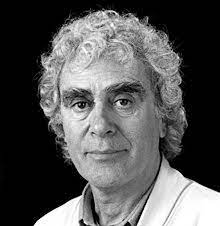
Nica’s curiosity led her to inquire of Charlie Mariano as to what would be his three wishes were and he told her:
- “I wish I had Bird’s heart and technique. But who needs the technique? If I had Bird’s heart, that would be enough.”
*Excerpt from Three Wishes: An Intimate Look at Jazz Greats ~ Compiled and Photographed by Pannonica de Koenigswarter
More Posts: baroness,history,instrumental,jazz,music,pannonica,saxophone,three,wishes
Daily Dose Of Jazz…
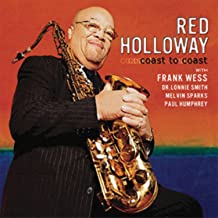
Red Holloway was born James Wesley Holloway on May 31, 1927 in Helena, Arkansas, and started playing banjo and harmonica before switching to tenor saxophone when he was 12 years old. Graduating from DuSable High School, where he had played in the school big band with Johnny Griffin and Eugene Wright, and attended the Conservatory of Music, Chicago, Illinois.
Joining the Army when he was 19, Red became bandmaster for the U.S. Fifth Army Band, and after completing his military service returned to Chicago and played with Yusef Lateef and Dexter Gordon, among others. In 1948, he joined blues vocalist Roosevelt Sykes, and later played with other rhythm & blues musicians such as Willie Dixon, Junior Parker, and Lloyd Price.
In the 1950s, he played in the Chicago area with Billie Holiday, Muddy Waters, Chuck Berry, Ben Webster, Jimmy Rushing, Arthur Prysock, Dakota Staton, Eddie “Cleanhead” Vinson, Wardell Gray, Sonny Rollins, Red Rodney, Lester Young, Joe Williams, Redd Foxx, B.B. King, Bobby Bland, and Aretha Franklin. During this period, he also toured with Sonny Stitt, Memphis Slim and Lionel Hampton. He became a member of the house band for Chance Records in 1952. He subsequently appeared on many recording sessions for the Chicago-based independents Parrot, United, States, and Vee-Jay.
From 1963 to 1966, he was in organist Brother Jack McDuff’s band, which also featured guitarist George Benson, who was then at the start of his career. In 1974, Holloway recorded The Latest Edition with John Mayall and toured Europe, Japan, Australia and New Zealand. From 1977 to 1982, he worked with Sonny Stitt, recording two albums together. Following Stitt’s death, he played and recorded with Clark Terry.
Tenor saxophonist Red Holloway passed away in Morro Bay, California, aged 84 of a stroke and kidney failure on February 25, 2012, one month after Etta James, with whom he had worked extensively.

More Posts: bandleader,composer,history,jazz,music,saxophone