


Daily Dose Of Jazz…
Woody Witt was born on March 16, 1969 and raised in Omaha, Nebraska. He started on the clarinet in fourth grade, switching his focus to saxophone the following year. Becoming a professional musician at the age of 16, he studied at the University of Houston, earning a Master’s degree in Jazz Studies from the University of North Texas, and a Doctor of Musical Arts from the University of Houston’s Moores School of Music.
The tenorist has recorded over thirty compact discs as a sideman and recorded twelve sessions as a leader. He has collaborated with Randy Brecker, Tim Hagans, Jim Rotondi, James Moody, David Liebman, Tim Armacost,Conrad Herwig, Joe LoCascio, Larry Ham, Mark Levine, Louis Hayes, Adam Nussbaum, Billy Hart, Nancy King and Gabrielle Stravelli. He has worked with the Houston Symphony, and has been featured on major third-stream works that blend together jazz and classical music.
He won the 2010 Chamber Music America French American Cultural Exchange grant and the 2014 International Jazz Saxophone Competition in Taiwan. Since 1999 Woody has been the artistic director of Houston’s jazz club, Cezanne, and now owns the club.
As an educator Witt has taught at Houston Community College since 2000, is an Affiliate Artist at the University of Houston, and has conducted countless master classes and workshops throughout the United States, Europe, Brazil and Asia.
Tenor saxophonist, composer and educator Woody Witt continues to expand his musical creativity.

More Posts: bandleader,history,instrumental,jazz,music,saxophone
The Quarantined Jazz Voyager
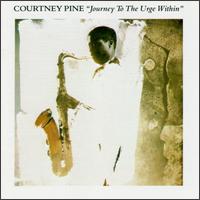
As the new year of the pandemic and moving forward remaining steadfast in our social distancing, I pulled an album out of the stacks that was recorded by British saxophonist Courtney Pine. The album was recorded on July 21-23, 1986 and was released later that year on Verve Records. It was his debut titled Journey to the Urge Within that heralded the arrival of Courtney Pine at the head of a new generation of British jazz musicians.
A pied piper who led British jazz out of the doldrums after its brilliant flowering in the 1960s. Courtney Pine, who was appointed Officer of the Order of the British Empire (OBE) in 2000, and Commander of the Order of the British Empire (CBE), led a new breed of accomplished young jazz lions in Britain. His music was powerful, intense and in the tradition of the great tenor saxophonists such as Coltrane and Rollins. Figuring in the Top 40, an unprecedented achievement for a British jazz album, it went silver, helping to trigger the 1980s jazz boom.
Track List | 43:44 All compositions by Courtney Pine except where noted.- Miss Interpret ~ 4:15
- Believe ~ 4:36
- Peace (Horace Silver) ~ 5:20
- Dolores (Wayne Shorter) ~ 3:29
- As We Would Say ~ 3:19
- Children of the Ghetto (Chris Amoo, Eddie Amoo) ~ 7:02
- When, Where, How and Why ~ 5:20
- C.G.C. ~ 3:31
- Seen ~ 4:28
- Sunday Song ~ 1:27
- E.F.P. ~ 3:45
- Big Nick (John Coltrane) ~ 4:35
Personnel
- Courtney Pine – tenor and soprano saxophones, bass clarinet
- Ray Carless – baritone saxophone
- Kevin Robinson – trumpet
- Julian Joseph – piano
- Roy Carter – keyboards
- Orphy Robinson – vibraphone
- Martin Taylor – guitar
- Gary Crosby – bass guitar
- Mark Mondesir – drums
- Susaye Greene – vocals
- Cleveland Watkiss – vocals
More Posts: adventure,album,club,genius,jazz,museum,music,preserving,restaurant,saxophone,travel

Daily Dose Of Jazz…
Victor Ash was born in East London, England on March 9, 1930, of Jewish ancestry and began playing professionally in 1951 when, with Tubby Hayes, he joined the band of Kenny Baker, with whom he played until 1953. Following this association, Ash played with Vic Lewis from 1953–56, then accompanied Hoagy Carmichael and Cab Calloway on their English tours.
Leading his own group, he became a favourite in the Melody Maker fan polls of the 1950s. Concurrently he had a radio program called Sunday Break, which discussed jazz and religion. In 1954, the Vic Ash Quartet recorded with US singer Maxine Sullivan in London. Ash toured the U.S. in 1957 and returned to play with Lewis in 1959. That same year his ensemble was the only one representing British jazz at the Newport Jazz Festival.
Ash remained a mainstay on the British jazz scene for decades, playing in small and large ensembles including the BBC Big Band. He accompanied Frank Sinatra on his tours in Europe and the Middle East, from 1970 until Sinatra’s death.
He released many albums for Pye, Nixa and MGM, mostly in the mainstream jazz tradition. Saxophonist and clarinetist Vic Ash, who co-authored his autobiography I Blew It My Way in 2006, passed away on October 24, 2014.
More Posts: bandleader,clarinet,history,instrumental,jazz,music,saxophone
Daily Dose Of Jazz…
William Root was born March 6, 1934 in Philadelphia, Pennsylvania and was raised in a musical family. His father, a drummer in Philadelphia ensembles, took him to the Earle Theater at an early age, where big bands from Ellington, Basie and Lunceford performed. At the age of ten he learned the saxophone, at the age of 16 he played briefly with Hot Lips Page.
During the early 1950s, he began performing professionally and toured with the Hal McIntyre Orchestra, then returned to his hometown and played in local jazz clubs. Billy played as a member of the house band in appearances with Clifford Brown, Roy Eldridge, Red Rodney, Buddy Rich, Hal McIntyre, J. J. Johnson, Sonny Stitt, Eddie Lockjaw Davis, Art Blakey, Miles Davis and Kenny Dorham. In 1953 he went to New York, where he played with Bennie Green in an orchestra at the Apollo Theater, which was conducted by Earle Warren.
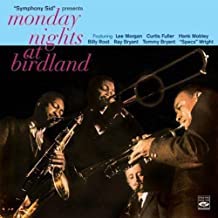
Root went on to play and record with Dizzy Gillespie, Hank Mobley, Lee Morgan, and Curtis Fuller. He led his own ensembles from the late 1950s. In the 1960s he performed with Al Grey and Dakota Staton, as well as working as an accompanist for Ella Fitzgerald, Sarah Vaughan and Billy Eckstine.
For family reasons, Root stopped touring in the early 1960s, from then on worked in local clubs and studied flutes, clarinet and bass clarinet for seven years before playing in various orchestras in Las Vegas, such as in 1968 in the Philadelphia Orchestra at performances of George Gershwin’s Rhapsody in Blue and An American in Paris. In Las Vegas he worked from 1968 with stars such as Tony Bennett and Peggy Lee.
By 1968, settling in Las Vegas, Nevada he played live in casinos for the next two decades, often backing vocalists like Tony Bennett and Peggy Lee. Tenor and baritone saxophonist Billy Root, who recorded as a soloist on several sessions and on no less than ten albums over the course of his career as a sideman, passed away on July 30, 2013.
More Posts: history,instrumental,jazz,music,saxophone
Daily Dose Of Jazz…
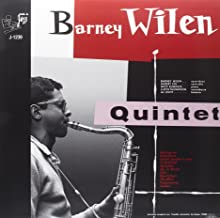
Barney Jean Wilen was born on March 4, 1937 in Nice, France. His mother was French, his father was an American dentist turned inventor. He began performing in Nice nightclubs after receiving encouragement from Blaise Cendrars who was a friend of his mother.
His career was boosted in 1957 when he worked with Miles Davis on the soundtrack Ascenseur pour l’Échafaud. In 1959, Wilen wrote his two soundtracks Un Témoin Dans la Ville and Jazz sur scène with Kenny Clarke, and two years later composed the soundtrack for Roger Vadim’s film Les Liaisons Dangereuses working with Thelonious Monk. In the mid-to-late 1960s he became interested in rock, and recorded an album dedicated to Timothy Leary.
Returning to composing for French films in the 1980s and 1990s, touring Japan for the first time in 1990. He ventured into the world of punk rockers before returning to jazz in the early 1990s. Barney played with modern jazz musicians until his death in 1996.
In 1987, French comic book artist Jacques de Loustal and author Philippe Paringaux paid homage to Wilen in their “bande dessinée” Barney et la note bleue (Barney and the Blue Note).
Tenor and soprano saxophonist and jazz composer Barney Wilen, passed away from cancer in Paris, France on May 25, 1996.
More Posts: bandleader,composer,history,instrumental,jazz,music,saxophone