

Three Wishes
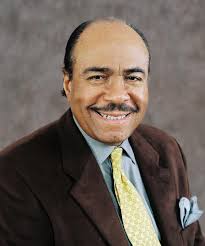
Pannonica asked Benny Golson his three wishes and replying said:
- “Everlasting life.”
- “Equality for everyone.”
- “Infinite musical knowledge.”
*Excerpt from Three Wishes: An Intimate Look at Jazz Greats ~ Compiled and Photographed by Pannonica de Koenigswarter
More Posts: baroness,history,instrumental,jazz,music,pannonica,saxophone,three,wishes
Daily Dose Of Jazz…
William Earnest Green was born on February 28, 1925 in Kansas City, Kansas and learned to play the alto saxophone at age ten, picking up the clarinet when he was twelve. He eventually learned to play most varieties of saxophone, clarinet, and flute.
Serving in the military until 1946, Green began working at a club called Small’s in Kansas City. Relocating to Los Angeles, California in 1947 he enrolled at the Los Angeles Conservatory of Music and Arts, and graduating in 1952 remained on staff as an educator until 1962. He also ran a music education studio on La Brea Avenue in Los Angeles for many years.
During his early career Bill played with Gerald Wilson, and began working with Benny Carter in the latter half of the 1950s. From 1959 to 1962 he played in Louie Bellson’s big band, then went to work extensively as a section player in the bands of Quincy Jones, Henry Mancini, and Buddy Rich. He would accompany vocalists such as Frank Sinatra, Tony Bennett, Nat King Cole, Nancy Wilson, and Dionne Warwick.
Through the mid to late Sixties he played the Monterey Jazz Festival with Gil Fuller, worked with Oliver Nelson, and then Blue Mitchell. The 1970s saw him performing or recording with Gene Ammons, the Capp-Pierce Juggernaut, Ella Fitzgerald, Sonny Rollins, and Sarah Vaughan. He continued working with the Capp-Pierce Orchestra in the early 1980s, as well as with Lionel Hampton, Woody Herman, and the Clayton-Hamilton Jazz Orchestra.
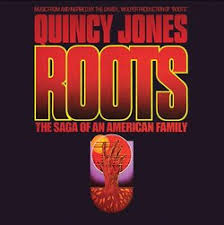
His most notable recordings are Benny Carter’s Aspects and the Quincy Jones recording of the soundtrack for Roots. Multi-instrumentalist Bill Green, who played most saxophones, clarinet and flute, passed away on July 29, 1996. His personal papers and recordings are archived at University of California, Los Angeles..
More Posts: clarinet,flute,history,instrumental,jazz,music,saxophone
The Quarantined Jazz Voyager
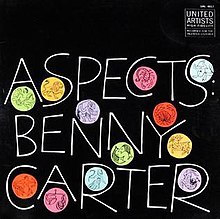
Reveling in my space during this time of temporary seclusion, I am with my music and having lit a few candles, a couple of sticks of incense burning I prepare myself for the talented alto saxophonist and composer Benny Carter. As I drop the needle on his self-produced Aspects album, I kick back, stretch out and enjoy. Recorded in late summer of 1958 in Los Angeles, California it was released the following year on United Artists.
Track List | 46:42Except where noted, all compositions by Benny Carter
- June in January (Ralph Rainger, Leo Robin) ~ 3:12
- February Fiesta (Hal Schaefer) ~ 1:54
- March Wind ~ 3:16
- I’ll Remember April (Gene de Paul, Patricia Johnston, Don Raye) ~ 3:21
- One Morning in May (Hoagy Carmichael, Mitchell Parish) ~ 2:49
- June Is Bustin’ Out All Over (Richard Rodgers, Oscar Hammerstein II) – 2:59
- Sleigh Ride in July (Jimmy Van Heusen, Johnny Burke) ~ 2:50
- August Moon ~ 3:39
- September Song (Kurt Weill, Maxwell Anderson) ~ 2:39
- Something for October ~ 2:52
- Swingin’ in November ~ 3:02
- Roses in December (Ben Oakland, Herb Magidson, George Jessel) ~ 2:36
- Benny Carter – alto saxophone, arranger
- Pete Candoli, Conrad Gozzo, Uan Rasey, Shorty Sherock – trumpet
- Herbie Harper, Tommy Pederson, George Roberts – trombone
- Buddy Collette, Chuck Gentry, Justin Gordon, Bill Green – saxophone
- Arnold Ross – piano
- Larry Bunker – vibraphone
- Bobby Gibbons – guitar
- Joe Comfort – bass
- Shelly Manne – drums
- Joe Gordon, Al Porcino, Ray Triscari, Stu Williamson – trumpet
- Russ Brown, Tommy Pederson, Frank Rosolino – trombone
- Buddy Collette, Jewell Grant, Bill Green, Plas Johnson – saxophone
- Gerald Wiggins – piano
- Barney Kessel – guitar
- Joe Comfort – bass
- Shelly Manne – drums

More Posts: adventure,album,club,genius,jazz,museum,music,preserving,restaurant,saxophone,travel
Daily Dose Of Jazz…
Ray Perry was born on February 25, 1915 in Boston, Massachusetts to a musical family and began playing the violin at a young age, and didn’t pick up the alto saxophone till he was twenty. He organized his first band, the Arabian Knights, in 1932.
Working the bread and butter gigs, he performed with the best in the business from 1935 to 1943, among numerous others, Dean Earl in the Little Harlem Orchestra, Clarence “Chick” Carter Orchestra with Gerald Wilson, then with Joe Nevils band when it masqueraded as the Blanche Calloway Orchestra, before joining the Lionel Hampton band. In the mid-thirties Ray developed a technique of simultaneously singing an octave below his playing as he bowed his violin. Hearing him, bassist Slam Stewart adopted the same technique, except he sang an octave above his playing.
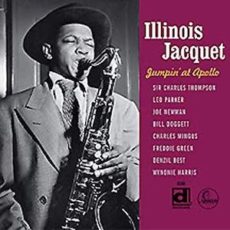
Poor health forced him to return to Boston in late 1942, where he found work with Sherman Freeman, Sabby Lewis, and his fraternal band, the Perry Brothers Orchestra with Joe on tenor saxophonoe and Bey on drums, Performing more frequently on alto saxophone, despite his short career, Perry worked with Shadow Wilson, Illinois Jacquet Vernon Alley, J. C. Heard, Joe Newman, Fred Beckett, Sabby Lewis, Sir Charles Thompson, and Irving Ashby.
Health problems continued to dog him for almost a decade leading to the passing away of violinist and alto saxophonist Ray Perry from kidney disease at age 35 in November 1950 in New York City. However, his final record date was with Illinois Jacquet earlier that year. Some of his best surviving violin work was recorded with a Hampton septet in late 1940.
More Posts: bandleader,history,instrumental,jazz,music,saxophone,violin

Daily Dose Of Jazz…
Akira Sakata was born on February 21, 1945 in Hiroshima, Japan and first heard jazz on short-wave radio and Voice of America, then became more interested in it from listening to film soundtracks. His serious study of music began in high school where he played clarinet. He played alto sax in a jazz band when at Hiroshima University and trained as a marine biologist before moving to Tokyo, Japan in 1969.
From 1972 to 1979 Sakata was a member of the Yamashita Yosuke Trio and toured internationally with them. In 1986, he performed with the group Last Exit with Bill Laswell. This performance was released as The Noise of Trouble: Live in Tokyo. Laswell went on to play bass on and produce Sakata albums such as Mooko, Silent Plankton and Fisherman’s.com, the last of which also featured the reclusive Pete Cosey on guitar. He later worked with DJ Krush and Chikamorachi with Darin Gray and Chris Corsano.
His career nearly ended in 2002, when he had a brain haemorrhage and he had to relearn the saxophone, only to return to performing after three months, but still had some remaining restrictions years later. Akira is also a television and film actor, as well as being a writer.
Free jazz saxophonist Akira Sakata, who has recorded fifteen albums as a leader, continues to perform and record.
More Posts: history,instrumental,jazz,music,saxophone