


The Quarantined Jazz Voyager
As social distancing and wearing masks continues to be our current state of affairs I had this thought of how this much we have seen in our lifetime, especially those of us who were born in the middle of the 20th century. So going into my music room I pulled down from the stacks Out of This World, a studio album by saxophonist Teddy Edwards. The album was recorded in Denmark on December 5, 1980 for the SteepleChase label. It was originally released with six tracks in 1981, however, the 1995 compact disc reissue added a seventh track. The session was produced by Nils Winther.
Track List: 57:30 All compositions by Teddy Edwards except where noted.
- No Name No. 1 ~ 6:00
- April Love ~ 6:47
- Out of This World (Harold Arlen, Johnny Mercer) ~ 11:07
- Summertime (George Gershwin, DuBose Heyward) ~ 8:29
- That’s All (Bob Haymes, Alam Brandt) ~ 8:00
- Cheek to Cheek (Irving Berlin) ~ 6:05
- Summertime [alternate take] (Gershwin, Heyward) ~ 10:48 Bonus track on CD reissue
- Teddy Edwards – tenor saxophone
- Kenny Drew – piano
- Jesper Lundgaard – bass
- Billy Hart – drums

More Posts: adventure,album,club,genius,jazz,museum,music,preserving,restaurant,saxophone,travel
Three Wishes
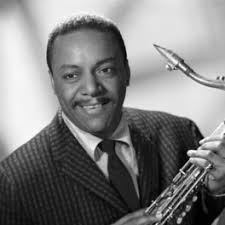
The Baroness asked Jimmy Forrest of his three wishes and he said:
- “Million… million… million!”
*Excerpt from Three Wishes: An Intimate Look at Jazz Greats ~ Compiled and Photographed by Pannonica de Koenigswarter

More Posts: baroness,history,instrumental,jazz,music,pannonica,saxophone,three,wishes

Daily Dose Of Jazz…
Bob Mover was born March 22, 1952 in Boston, Massachusetts into a musical family as his father played professionally with among others the Charlie Spivak Orchestra. Starting on the alto saxophone at age 13, he studied with Phil Woods at a summer music camp and took private lessons with Ira Sullivan.
In 1973, at the age of 21, Mover was a sideman for Charles Mingus for a five-month period at New York City’s 5 Spot Café. By 1975 he was working regularly in New York City jazz clubs with Chet Baker and he made his first European appearances with Baker at La Grande Parade du Jazz in Nice, France, Jazz Festival Laren in the Netherlands, and the Middelheim Jazz Festival in Antwerp, Belgium.
By late 1975, Bob started leading his own groups around the New York area and made his first two albums as a leader for Choice and Vanguard in 1976 and 1977 respectively: On the Move (Choice) and Bob Mover (Vanguard). Weekly gigs at the Sweet Basil in Greenwich Village included Tom Harrell, Jimmy Garrison, Kenny Barron, Albert Dailey, Ben Riley, Mike Nock, and Ron McLure.
Reuniting with Chet Baker in 1981 for a European tour and landing in Germany they recorded Chet Baker Live at Club Salt Peanuts Koln, Volumes 1 and 2 for the Circle label. Mover recorded two more albums as a leader in 1981 and 1982, In the True Tradition and Things Unseen, both issued by Xanadu.
Moving to Montreal, Canada in 1983 he taught at Concordia University. Three years later he recorded his fifth album as leader, The Nightbathers, with pianist Paul Bley and guitarist John Abercrombie, which was an experiment in free improvisation. From 1987 to 1997, Mover lived in Toronto and toured Europe and with Don Thompson and Archie Alleyne, he helped found the Toronto Jazz Quartet. He accepted a teaching position at York University, giving saxophone master classes and teaching a course called Musicianship for Jazz Singers. Alto saxophonist, bandleader and educator Bob Mover has recorded ten albums as a leader, eight as a sideman and continues to perform, record and teach.
More Posts: bandleader,history,instrumental,jazz,music,saxophone
Daily Dose Of Jazz…
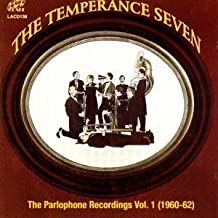
John R. T. Davies was born John Ross Twiston Davies on March 20, 1927 in Wivelsfield, Sussex, England. A trombonist, trumpeter and alto saxophonist, in the early 1950s he was a member of the Crane River Jazz Band led by Ken Colyer which spearheaded interest in the original New Orleans jazz style. Later he achieved chart success with the 1960s jazz revival band The Temperance Seven. The group’s recording of You’re Driving Me Crazy reached the top of the charts in 1961.
Considered by many as the world’s leading specialist in the art of sound restoration, he specifically focused on jazz and blues existing on pre-magnetic tape media such as shellac 78s. He was particularly interested in recordings from 1917 to 1940. Davies developed many methods for restoring old recordings and disliked modern techniques for removing surface noise.
While he appreciated attempts to clean up recordings and to create new versions of old recordings for modern audiences (e.g. the stereophonic remastered recordings by Robert Parker), in general he said he preferred remasterings which “keep everything and do as little as possible” to the original recording, and thought the remastering engineer should “Add nothing, take nothing away”. The presence of his name on the credit of a reissue is generally considered the mark of a quality product. He started his own record label called Ristic in the late 1940s which produced reissued recordings from 1949 to 1972.
Davies was always generous with his time and his collection and wanted it to be available for other people to use for research and reissues after his death. The Borthwick Archive at York University have accepted the entire collection and are housing it in ideal conditions, and making a transfer suite available so that his wish can be carried out. Information about the collection collated from the collection catalogue is also now available online from the University of York Digital Library and a small selection of the tracks have been made available to listen online.
Alto saxophonist and audio engineer John R. T. Davies, who specialized in restoring classic jazz records, passed away on May 25, 2004.
More Posts: audio engineer,history,instrumental,jazz,music,saxophone
Daily Dose Of Jazz…
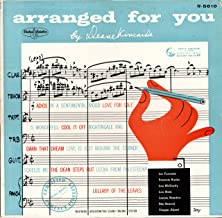
Robert Deane Kincaide was born on March 18, 1911 in Houston, Texas but raised in Decatur, Illinois. He began playing professionally and working as an arranger in the early 1930s, working with Wingy Manone in 1932, then took a job with Ben Pollack from 1933 to 1935.
He arranged for Benny Goodman on the side before joining Bob Crosby’s group in 1935. Deane went on to work with Woody Herman and Manone again and by the end of the decade he worked briefly with Tommy Dorsey. In the first half of the 1940s he worked with Joe Marsala, Glenn Miller, Ray Noble, and Muggsy Spanier.
Serving in the United States Navy during World War II, he played in a ship’s band on the USS Franklin. He joined Ray McKinley’s band in 1946, working with him until 1950. From the 1950s until the early 1980s Kincaide worked primarily as an arranger for television. Arranger and saxophonist Deane Kincaide passed away at the age of 91 in St. Cloud, Florida on August 14, 1992.
Share a dose of a Houston arranger to inspire inquisitive minds to learn about musicians whose legacy lends their genius to the jazz catalog…
More Posts: arranger,bandleader,history,instrumental,jazz,music,saxophone