

Daily Dose Of Jazz…
Charlie Holmes was born on January 27, 1910 near Boston, Massachusetts and began playing alto saxophone at age 16 and emulated the style of his childhood friend, Johnny Hodges.
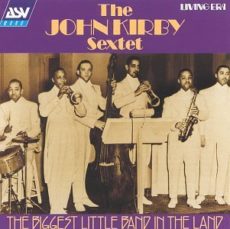
Beginning his professional career a week later, after moving to New York City Charlie worked for a variety of groups, including Luis Russell in 1928. Between 1929 and 1930 he recorded with Red Allen. He would work with Russell again a few times and in 1932 joined the Mills Blue Rhythm Band. He was in John Kirby’s Sextet, Cootie Williams’ Orchestra, and Louis Armstrong’s band for much of the next two decades.
Leaving music in 1951, Holmes did not return for twenty years then worked in Clyde Bernhardt’s Harlem Blues & Jazz Band. He later played for the Swedish band Kustbandet. He never acted as a leader in any recording or group.
Alto saxophonist Charlie Holmes, best known for composing Sugar Hill Function, not only performed during the swing era but also played clarinet and oboe for the Boston Civic Symphony Orchestra, passed away on September 19, 1985 in Stoughton, Massachusetts.
More Posts: composer,history,instrumental,jazz,music,saxophone
Daily Dose Of Jazz…
Arthur Crawford Wethington was born on January 26, 1904 in Chicago, Illinois and graduated from the Chicago College of Music. Working under pianist Lottie Hightower in the mid-1920s, he then took a position in Carroll Dickerson’s band in 1928. 1929 saw this ensemble playing with Louis Armstrong in New York City.
Between 1930 and 1936 Crawford played with the Mills Blue Rhythm Band, recording several times with the group. He recorded with Edgar Hayes in 1937 and also worked with Cab Calloway, Red Allen, and Adelaide Hall.
After 1937 Wethington quit performing full-time but was active as a music teacher, and in the 1960s he took work in New York City as a supervisor for a transit line power plant.
Saxophonist and educator Crawford Wethington, who was never recorded as a leader, passed away on September 11, 1994 in White Plains, New York.
More Posts: educator,history,instrumental,jazz,music,saxophone
Daily Dose Of Jazz…
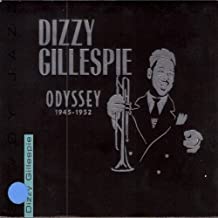
Ray Abrams was born January 23, 1920 in New York City, His younger brother was jazz drummer Lee Abrams. He first worked with Dizzy Gillespie in 1945, toured Europe with Don Redman in 1946 and was with Andy Kirk in 1947. He went back and forth between Kirk and Gillespie for decades.
Outside of his work with Gillespie he was best known for the Ray Abrams Big Band. Other bands with which he played into the early 1950s include those of Hot Lips Page, Roy Eldridge, and Slim Gaillard.
Tenor saxophonist Ray Abrams, known for his jazz and jump blues playing, passed away in July 1992.
More Posts: history,instrumental,jazz,music,saxophone

Daily Dose Of Jazz…
Teddy McRae was born in Waycross, Georgia on January 22, 1908 but was raised in Philadelphia, Pennsylvania. Playing with local ensembles, including one composed of family members, when he was young. He played with June Clark in 1926 before his move to New York City to form his own band.
Through the Thirties he played with Charlie Johnson, Elmer Snowden, Stuff Smith, Lil Armstrong, and Chick Webb, the last as both a soloist and arranger. After Webb’s death he was musical director for the orchestra during its tenure under the leadership of Ella Fitzgerald from 1939 to 1941. He recorded in the decade with Benny Morton, Teddy Wilson, and Red Allen.
In the 1940s McRae worked in the orchestras of Cab Calloway, Jimmie Lunceford, Lionel Hampton, and Louis Armstrong; he also served as Armstrong’s musical director during his period with that band. He wrote tunes for Artie Shaw and formed his own band in 1945.
He and Eddie Wilcox formed their own short~lived R&B label, Raecox, in the 1950s. Teddy recorded with Champion Jack Dupree in 1955-56, and recorded a few sides for Groove Records in 1955 and Moonshine Records in 1958.
Tenor saxophonist and arranger Teddy McRae, who was also known as Teddy (Mr. Bear) McRae, or simply as Mr. Bear, passed away on March 4, 1999.
More Posts: arranger,bandleader,history,jazz,music,saxophone
Daily Dose Of Jazz…
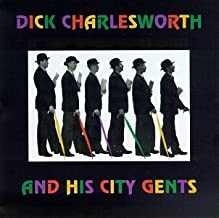
Dick Charlesworth, born Richard Anthony Charlesworth on January 8, 1932 in Sheffield, England. Attending King Edward VII School, at 16, he became a clerk in the Ministry of Labour and was in due course transferred to London. He bought a clarinet and started playing jazz as a hobby in 1952. Entirely self-taught, he became good enough to play clarinet and saxophone in a dance band and performed with jazz bands in south London including Jim Weller’s Jazzmen.
He formed his first group in 1956 and his Dick Charlesworth’s Jazzmen won the South London Jazz Band Championship in 1957. His group was signed by the Melodisc label, and they recorded an EP in December 1957 and produced an album for Doug Dobell’s 77 Records.
Leaving the Civil Service in 1959 he became a professional musician and signed a recording contract with EMI, remarketing the group as Dick Charlesworth’s City Gents. This was the time of light jazz, sporting distinctive attire of pin stripes and bowler hats, with their Latin motto, Dum vivimus vivamus, simply translated as “While we live, let us enjoy life”. They charted one single Billy Boy on the UK Singles Chart in 1961.
When jazz went out of vogue in the Sixties, Dick broke up his band, and from 1964 to 1969 fronted a band on the cruise liners. He then settled in Mojacar, Spain where he ran a music bar. Returning to Britain in 1977, he was active on the London jazz scene until the early 2000s working with, among others, Keith Smith, Rod Mason, Alan Littlejohn, Denny Wright, and appeared on the BBC Radio series, Jazz Score.
In his later years, Charlesworth lived in Thames Ditton, Surrey, and played a residency at various pubs with his band The Dick Charlesworth’s Fraternity Four, and released their final recording in 2004. Clarinetist, saxophonist and bandleader Dick Charlesworth passed away following a heart attack on April 15, 2008, at the age of 76.
More Posts: bandleader,clarinet,history,instrumental,jazz,music,saxophone