

Daily Dose Of Jazz…
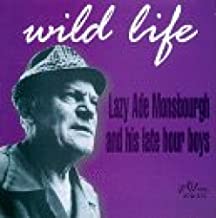
Ade Monsbourgh was born on Febrauary 17, 1917 in Melbourne, Victoria, Australia. He studied piano first before taking up reeds, valve trombone, trumpet and even recorder. He met pianist Graeme Bell early on and was part of his band regularly during 1944 to 1952. During his tenure with the band he recorded several times with Bell’s freewheeling band and toured Europe and Czechoslovakia.
He had occasional opportunities to lead his own dates, in addition to playing with groups led by Roger Bell, Dave Dallwitz, Len Barnard and Frank Traynor. His band, the Late Hour Boys, recorded prolifically for Swaggie through 1971.
During the 1992 Australia Day Honours, Monsbourgh was made an Officer of the Order of Australia (AO) for service to music, particularly jazz as a performer and composer.
Retiring from fulltime playing in the 1970’s, clarinetist Ade Monsbourgh, known as Lazy Ade or Father Ade, and who also played alto and tenor saxophone, trumpet, trombone and recorder, passed away on July 19, 2006 in Nathalia, Victoria, Australia.

More Posts: bandleader,history,instrumental,jazz,music,recorder,saxophone,trombone,trumpet
Daily Dose Of Jazz…
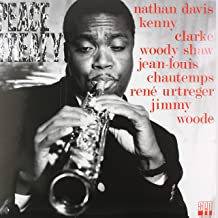
Nathan Tate Davis ws born February 15, 1937 in Kansas City, Kansas. He apprenticed in the Jay McShann band before heading off to college to receive his degree in Music Education. After being discharged from military service post World War II, he traveled extensively around Europe before settling in Paris, France in 1962.
Moving back to the States he went on to attain a Ph.D in Ethnomusicology from Wesleyan University and was a professor of music and director of jazz studies at the University of Pittsburgh from 1969, an academic program that he helped initiate. During his tenure he was founder and director of the University of Pittsburgh Annual Jazz Seminar and Concert, the first academic jazz event of its kind in the United States.
Nathan helped to found the university’s William Robinson Recording Studio as well as establish the International Academy of Jazz Hall of Fame located in the school’s William Pitt Union and the University of Pittsburgh-Sonny Rollins International Jazz Archives.
Retiring as director of the Jazz Studies Program at Pitt in 2013, Davis also served as the editor of the International Jazz Archives Journal. One of Davis’ best known musical associations was heading the Paris Reunion Band from 1985 to 1989, which at different times included Nat Adderley, Kenny Drew, Johnny Griffin, Slide Hampton, Joe Henderson, Idris Muhammad, Dizzy Reece, Woody Shaw, and Jimmy Woode.
Over the course of his career he worked with Eric Dolphy, Kenny Clarke, Ray Charles, Slide Hampton, Kenny “Klook” Clarke and Art Blakey. He toured and recorded with the post-bop ensemble leading Roots which he formed in 1991. As a composer, Nathan created various pieces, including a 2004 opera entitled Just Above My Head.
Tenor and soprano saxophonist, bass clarinetist and flutist Nathan Davis, who recorded eighteen albums as a leader, passed away on April 8, 2018 in Palm Beach, Florida, at the age of 81.
More Posts: bandleader,educator,flute,history,instrumental,jazz,music,saxophone
Daily Dose Of Jazz…
Harold Andrew Dejan was born on February 4, 1909 into a Creole family in New Orleans, Louisiana and took clarinet lessons as a child before switching to the saxophone. He became a professional musician in his teens, joining the Olympia Serenaders and then the Holy Ghost Brass Band.
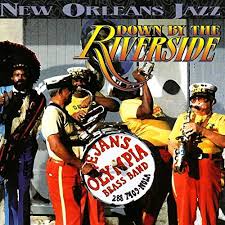
He played regularly in Storyville, at Mahogany Hall, and on Mississippi riverboats. He also worked in the mail office of the Lykes Brothers Steamship Company for 23 years. In World War II, he played in Navy bands, then returning to his day job and his parallel musical career after the war, he led his own band, Dejan’s Olympia Brass Band, from 1951, was considered one of the top bands in New Orleans.
The band often appeared at Preservation Hall, recorded nine albums, and also toured internationally, making 30 concert tours of Europe and one of Africa. It was featured in the James Bond movie Live and Let Die, and as well as in many TV commercials.
Suffering a stroke in 1991 left him unable to play the saxophone, but he continued as a band leader and singer until shortly before his death. Alto saxophonist and bandleader Harold Dejan, known affectionately as Duke, passed away on July 5, 2002 in New Orleans.
More Posts: bandleader,history,instrumental,jazz,music,saxophone
Daily Dose Of Jazz…
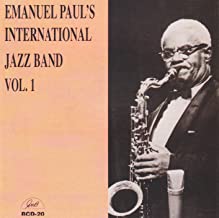
Emanuel Paul was born on February 2, 1904 in New Orleans, Louisiana. He did not begin playing music until late in his youth, picking up the violin at age 18 and then switched to banjo. In the middle of the 1920s he settled on the tenor saxophone, where his instrument often substituted for the baritone horn in a brass band.
Becoming a member of the Eureka Brass Band in 1940 and remained with them into the 1960s; he also played often with Kid Thomas Valentine from 1942 and recorded with Oscar Celestin, Emanuel Sayles, and the Olympia Brass Band. He led three recording sessions for the European Jazz Macon label in 1967. His sidemen on these records include Valentine, George Lewis, and Butch Thompson.
Tenor saxophonist Emanuel Paul, who was one of the first tenor saxophonists to hold regular work in the New Orleans jazz scene, passed away on May 23, 1988 in New Orleans.
More Posts: bandleader,history,instrumental,jazz,music,saxophone
Daily Dose Of Jazz…
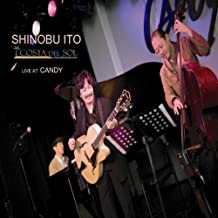
Shinobu Ito was born in Oiso, Kanagawa, Japan on January 28, 1951. While a young boy, his interest was in American pop songs, so his father bought him a guitar and gave him lessons. Devoting great efforts to his study of the guitar, in junior high school he organized his own pop music group and performed at various musical events. He became interested in jazz guitar during his high school days when he listened to Wes Montgomery. While attending Tokai University, he studied guitar with Ikuo Shiosaki, and became a member of the university’s Jazz Workshop.
He began his professional career at this time, performing at clubs and on recordings. In 1975, during a 6-month stay in Los Angeles, California he met Toshiko Akiyoshi, who introduced him to many musicians and strongly suggested to him that he go to New York to learn and play jazz on his next visit to the States.
When he returned to Japan in 1975, Shinobu joined vocalist Yoshiko Kimura’s group, and also resumed activities with top Japanese musicians such as Kohsuke Mine, Seiichi Nakamura, Shigeharu Mukai, Hidefumi Toki and Takao Uematsu. He also performed with Tete Montliu, Bill Reichenbach, Ronnie Foster, Stanley Banks in this era.
Back in New York City again in 1977 he became a member of a 10-piece band directed by Reggie Workman, joined Teruo Nakamura & his Rising Sun Band and Shinobu appeared on pianist Tsuyoshi Yamamoto’s album in 1981. Once settled he performed and recorded with Joe Jones Jr., Sadik Hakim, John Orr, Tommy Turrentine, Bob Mintzer, Rickey Ford and Kenny Kirkland, Valery Ponomarev, Lonnie Plaxico, Eddie Henderson, Lonnie Smith, Jesse Davis, Kenny Davis and Jeff Williams, Mike Formanek, Vincent Herring and Judy Niemack among others.
Shinobu released his first CD in 1991 with Tom Harrell, Danny Gottlieb, Gary King, Mark Soskin and Dick Oates. While Shinobu is known as a jazz guitarist who plays with a pick, he also plays only with his fingers, and his improvisations effectively fuse classical guitar and jazz.
As an educator he has worked as an instructor in the Jazz Division of the Senzoku College of Music in Tokyo, Japan. Returning to New York City in 2009 guitarist Shinobu Ito resumed performing and recording and continues to explore new directions.

More Posts: bandleader,history,instrumental,jazz,music,saxophone