


Conversations About Jazz & Other Distractions
Conversations About Jazz Features Scat, Improvisation & The Avant~Garde on January 7
Hammonds House Digital invites you to join us for Conversations about Jazz & Other Distractions hosted by former jazz radio host and founder of Notorious Jazz, Carl Anthony. On Thursday, January 7 at 7:30 pm (EST), Carl’s special guests will be musicians and artists known for their extraordinary skills in improvisation, scat, and the avant-garde. Tune in for a great evening with vocalist and pianist Audrey Shakir, saxophonist Kebbi Williams, and composer and lyricist Fay Victor. The program is free and will stream live on Hammonds House Museum’s Facebook and YouTube.
Audrey Shakir is a jazz-pop vocalist and pianist extraordinaire. Dubbed Atlanta’s First Lady of Jazz, she has entertained throughout the U.S. and internationally. Her scatting talents have been compared to the great Ella Fitzgerald, and she brings a remarkable jazz influence to all the material she performs.
Kebbi Williams is a Grammy award-winning tenor saxophonist and one of contemporary music’s whirlwind improvisers. The imaginative multi-instrumentalist/ composer/producer/arranger/teacher resists categorization. His innovative sound blends avant-garde jazz, hip-hop, afro-beat, gospel, electronica, classical and fiery rock, which he interweaves with passion and edge.
Fay Victor is a musician, composer, lyricist, and educator. Originally a singer in the traditional jazz field, she has been working in jazz, blues, opera, free improvising, avant-garde, modern classical music, and occasional acting since re-settling in New York in 2003. She is an Associate Professor at the School of Jazz and Contemporary Music in New York.
Hammonds House Museum is generously supported by the Fulton County Board of Commissioners, Fulton County Arts and Culture, the City of Atlanta Mayor’s Office of Cultural Affairs, The Community Foundation for Greater Atlanta, The National Performance Network, AT&T and WarnerMedia.
Hammonds House Museum’s mission is to celebrate and share the cultural diversity and important legacy of artists of African descent. The museum is the former residence of the late Dr. Otis Thrash Hammonds, a prominent Atlanta physician and a passionate arts patron. A 501(c)3 organization which opened in 1988, Hammonds House Museum boasts a permanent collection of more than 450 works including art by Romare Bearden, Robert S. Duncanson, Benny Andrews, Elizabeth Catlett, Jacob Lawrence, Hale Woodruff, Amalia Amaki, Radcliffe Bailey and Kojo Griffin. In addition to featuring art from their collection, the museum offers new exhibitions, artist talks, workshops, concerts, poetry readings, arts education programs, and other cultural events throughout the year.
Located in a beautiful Victorian home in Atlanta’s historic West End, Hammonds House Museum is a cultural treasure and a unique venue. During the COVID-19 pandemic, they continue to observe CDC guidelines, but look forward to welcoming in-person visitors soon! For more information about upcoming virtual events, and to see how you can support their mission and programming, visit their website: hammondshouse.org.
MEDIA: For more information, contact Karen Hatchett at Hatchett PR, karen@hatchettpr.com.
More Posts: conversations,history,instrumental,jazz,musicians,piano,saxophone,vocal
Requisites
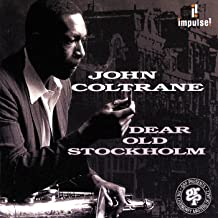
Dear Old Stockholm ~ John Coltrane | By Eddie Carter
Fans of modern Jazz know that during his lifetime, John William Coltrane redefined the sound of jazz on the tenor sax, making some of his most important contributions while recording for Impulse Records from 1961 to his passing in 1967. It’s with one of the lesser-known releases in his discography that I begin this first report of 2021. Dear Old Stockholm (Impulse GRD-120) is a 1993 CD-album featuring Coltrane playing to the beat of a different drummer, Roy Haynes. Roy replaced the quartet’s regular drummer, Elvin Jones on the two sessions comprising this delightful album, April 29, 1963 (tracks: 1 and 2), and May 26, 1965 (tracks: 3 to 5). McCoy Tyner on piano, and Jimmy Garrison on bass complete the quartet.
Dear Old Stockholm is a traditional Swedish folk song that Miles Davis liked enough to record several times. John adapts this tune as easily as if it were created for jazz with a very impressive opening statement, weaving gracefully in unison with Jimmy’s bass and Roy’s assertive timekeeping. McCoy contributes some stirring solo work on the finale before the foursome takes the song out.
After The Rain is one of the most beautiful compositions Coltrane ever wrote and opens with a passionate gracefulness by the saxophonist on the melody. He continues with an intimate reading conveying a refined elegance leading to a hauntingly beautiful climax. The quartet returns to uptempo on the saxophonist’s One Down, One Up. John charges into the lead solo of this fire-breathing cooker with an incandescent performance relentlessly. McCoy continues the aggressive beat with a dynamic high-octane reading that’ll leave the listener’s ears sizzling. The tenor man gives a few final exhilarating statements before the song’s closing moments. After The Crescent opens with an introduction to the children’s song, Ring Around The Rosie. The similarity ends there because Trane and his bandmates take us on an exuberant joyride with two ferocious readings from Tyner and Coltrane. The walloping tones from Garrison’s bass and the brilliant brushwork by Haynes give both soloists a propulsive lift that’s exciting preceding the ensemble’s closing chorus.
The closer is a mid~tempo tune by John titled Dear Lord. This song is a perfect vehicle for a passionate performance by John Coltrane who shows his lyrical side on the first solo with charming simplicity. McCoy makes an indelible impression on the closing statement with a delicately tender interpretation, ahead of John’s return for the emotionally touching coda. The album was originally recorded by Rudy Van Gelder and digitally remastered by Robert Stoughton.
In my opinion, he did a fantastic job because the sound quality is superb with a stunning soundstage that brings the musicians into your listening room for your enjoyment. To some fans, this CD-album may not have the infinitely explosive spirit of the classic Coltrane quartet with Elvin Jones that so many are acquainted with. However, in my opinion, Dear Old Stockholm is an enticing invitation to explore and enjoy a fascinating album showing John Coltrane’s versatility as one of the legendary masters of jazz! Do your ears a favor and check it out, it’s sure to become a welcome addition to your jazz collection!
Dear Old Stockholm – Source: Wikipedia.org © 2020 by Edward Thomas Carter
More Posts: choice,classic,collectible,collector,history,instrumental,jazz,music,saxophone
Daily Dose Of Jazz…
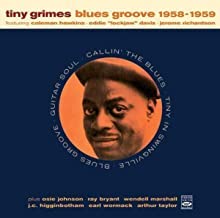
Musa Kaleem was born Orlando Wright on January 3, 1921 in Wheeling, West Virginia. He bought a clarinet in 1937, and by 1939 was touring as a saxophonist with the El Rodgers Mystics of Rhythm, featuring Eddie Jefferson on lead vocals.
In the early 1940s he began using the name Gonga Musa, and then Musa Kaleem, the name by which he is best known. He played often in Pittsburgh, Pennsylvania in the Fortiess, gigging with Erroll Garner, Mary Lou Williams, and Art Blakey.
In the middle of the decade he toured with Fletcher Henderson, then relocated to New York City and played with Duke Ellington, Count Basie, Jimmie Lunceford, and the Savoy Sultans by the end of the 1940s. The 1950s saw Kaleem playing on cruise ships, however, upon his return in the 1960s he played with James Moody, Coleman Hawkins, Tiny Grimes, and rejoined Jefferson.
Saxophonist and flautist Musa Kaleem passed away on March 26, 1988 in Los Angeles, California.
Daily Dose Of Jazz…
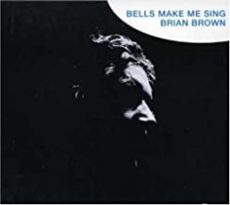
Brian Ernest Austin Brown was born on December 29, 1933 in Melbourne, Australia and was a self-taught player and emerged in the 1950s, a leading figure in Australia. He performed as a soloist and with his own ensembles since the mid-1950s throughout Australia and in Scandinavia, United States, Japan, United Kingdom, Italy, Spain, the Netherlands, Brunei and Germany.
In early 1956 Brown returned to Melbourne from Europe and formed the Brian Brown Quintet with drummer Stewie Speer, trumpeter Keith Hounslow, schoolboy pianist Dave Martin and bassist Barry Buckley. The new hard bop band was a regular from 1955 to 1960 at Horst Liepolt’s Jazz Centre 44 in St Kilda, Victoria, Australia. They introduced bop to Melburnians, a musical style largely unheard in Australia.
He made eight albums over an 18-year period heading various groups. Touring Europe with his Australian Jazz Ensemble in 1978, Brian also led groups doing experimental and original classical pieces from 1980 to 1986.
As an educator, he founded the Improvisation Studies course at the Victorian College of the Arts, where he taught from 1978 until his retirement in 1998. He appeared at the World Saxophone Congress in Tokyo in 1988, with Tony Gould. In June 1993 he was awarded the Order of Australia for service to the performing arts.
Soprano and tenor saxophonist, flutist, synthesizer, panpiper, leather bowhorn, composer, and educator Brian Brown passed away on January 28, 2013.
More Posts: composer,educator,flute,history,instrumental,jazz,leather bowhorn,music,panpipes,saxophone,synthesizer
Requisites
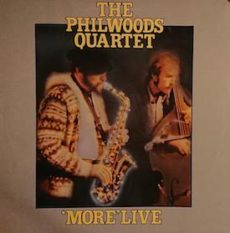
‘More’ Live ~ The Phil Woods Quartet | By Eddie Carter
Alto saxophonist Phil Woods was one of the unsung heroes of jazz, he was equally adept at Cool Jazz, and Hard-Bop with a gorgeous tone, and speed of execution that never failed to please his fans. ‘More’ Live (Adelphi Records Inc. AD 5010) is the second live session that The Phil Woods Quartet performed at The Armadillo World Headquarters in Austin, Texas during 1978 and 1979. It hit the stores in 1981, following their 1980 album, The Phil Woods Quartet Live, Volume One, featuring Mike Melillo on acoustic piano, Steve Gilmore on acoustic bass, and Bill Goodwin on drums. My copy used in this report is the 1981 US Stereo album.
Side One opens with Miles Davis’ Milestones. Phil is excellent on the lead solo, backed only at first by Steve and Bill. Mike joins them, then takes over on the second interpretation. Steve’s bass dances brightly on the third reading and Bill has the last word in an exchange with Phil and Mike before the reprise and close. Eiderdown by Steve Swallow kicks off with a five-minute performance by Gilmore who solos impressively. Woods launches into the next statement with inspired exuberance and Melillo takes care of business on the closing chorus.
Horace Silver’s Strollin’ begins Side Two in a relaxed vein for the ensemble’s theme. Mike kicks off the solos with a vivaciously spirited interpretation. Phil moves into the spotlight next with a soulful tone and agility that builds to a compelling conclusion. Steve shines on the closing statement with a quiet intensity ahead of the foursome taking the song out. Mike Melillo’s See Hunt and Liddy begins with a lovely introduction by the pianist developing into the quartet’s sprightly mood on the melody. Melillo lays down a solid groove on the opening statement that delivers the goods. Gilmore’s bass takes a brisk trip through the next reading, and Woods turns up the heat with a vigorous, energetic closing chorus culminating with the group’s climax. The engineers for See Hunt and Liddy are Jim Finney, Mark LeBaron, and Hank Allrich. The men behind the dials of the remaining tracks are Cliff Carter, Fletcher Clark, and LeBaron. The ensemble is tight, the music is terrific, the album has an exceptionally good soundstage, and I’m very impressed with the sound quality.
In addition to playing the alto sax, Phil Woods was also proficient on the clarinet. Woods was married to Chan Parker for seventeen years, and Stepdad to her daughter, Kim. His discography is extensive with sixty records as a leader and many others as a sideman performing with some elite jazz musicians and pop vocalists. His final live performance was a tribute to Charlie Parker with Strings on September 4, 2015. He passed away from emphysema twenty-five days later on September 29 at the age of eighty-three. Now that I’ve found this one, I’ll certainly be on the lookout for its companion album. If you’re in the mood for some Post-Bop and are a fan of any LP’s by Phil Woods, I offer for your consideration, ‘More’ Live by The Phil Woods Quartet. An album of sumptuous jazz that’s sure to satisfy almost any jazz appetite!
~ The Phil Woods Quartet Live, Volume One (Clean Cuts CC 702) – Source: Discogs.com
~ Milestones – Source: JazzStandards.com © 2020 by Edward Thomas Carter
More Posts: choice,classic,collectible,collector,history,instrumental,jazz,music,saxophone