


Daily Dose Of Jazz…
Wayman Carver was born on December 25, 1905 in Portsmouth, Virginia and was one of the earliest flute soloists to perform jazz. He was one of very few jazz flautists active in the swing era and his first professional experience was with J. Neal Montgomery.
After he moved to New York City in 1931, he recorded in the early Thirties with Dave Nelson, and played with Elmer Snowden, Benny Carter, and Spike Hughes.
From 1934 to 1939 he played with Chick Webb on both alto saxophone and flute. After Webb died he continued in the orchestra during its period of leadership under Ella Fitzgerald until 1941.
>After leaving the jazz scene he became a professor of music at Clark College, where he taught saxophonists George Adams and Marion Brown, among others. Flutist and alto saxophonist Wayman Carver passed away on May 6, 1967 in Atlanta, Georgia.

The Quarantined Jazz Voyager
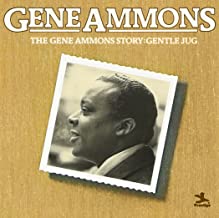
The Gene Ammons Story: Gentle JugOctober 6, 1992 was the Fantasy reissued compact disc release date of the original Prestige/Moodsville Records is my next exploration into one of the world’s great bop, cool jazz, and soul-jazz tenor saxophonists to keep me company during this pandemic. The Gene Ammons Story: Gentle Jug is a compilation reissue of sixteen songs recorded on two separate dates. A master at interpreting ballads, Gene Ammons presents lyrical music that is quite enjoyable.
The album was produced and original photography taken by Esmond Edwards, recorded by Rudy Van Gelder at Van Gelder Studio in Hackensack, New Jersey, and the art direction was contributed by Phil Carroll. The reissue producer and writer of the liner notes was Bob Porter and the album was remastered by Phil De Lancie.
A compilation of two previously released albums, 1961’s Nice an’ Cool” (1 to 8) recorded on January 26, 1961, and 1962’s The Soulful Mood of Gene Ammons (9 to 16) recorded April 14, 1962. Tracks 1 to 8, originally issued on Prestige / Moodsville 18 as Gene Ammons – Nice An’ Cool Tracks 9 to 16, originally issued on Prestige / Moodsville 28 as Gene Ammons – The Soulful Moods Of Gene Ammons.
Tracklist
Nice An’ Cool
- Till There Was You (Meredith Wilson ~ 7:08
- Answer Me, My Love (Rauch, Winkler) ~ 4:35
- Willow Weep For Me (Ann Ronell) ~ 4:00
- Little Girl Blue (Richard Rodgers, Lorenz Hart) ~ 4:55
- Something I Dreamed Last Night (Magidson, Yellen, Fain) ~ 7:41
- Something Wonderful (Riodgers, Hammerstein) ~ 3:03
- I Remember You (Mercer, Schertzinger) ~ 4:21
- Someone To Watch Over Me (Gershwin, Gershwin) ~ 3:48
- Two Different Worlds (Frisch, Wayne) ~ 4:53
- But Beautiful (Burke, Van Heusen) ~ 4:27
- Skylark (Carmichael, Mercer) ~ 6:19
- Three Little Words (Kalmar, Ruby) ~ 3:49
- On The Street Of Dreams (Lewis, Young) ~ 3:09
- You’d Be So Nice To Come Home (Cole Porter) ~ 4:17
- Under A Blanket Of Blue (Neiburg, Livington, Symes) ~ 5:12
- I’m Glad There’s You (Dorsey, Mertz) ~ 6:02
- Gene Ammons ~ Tenor Saxophone
- Patti Bown (tracks: 9 to 16) | Richard Wyands (tracks: 1 to 8) ~ Piano
- Doug Watkins (tracks: 1 to 8) | George Duvivier (tracks: 9 to 16) ~ Bass
- Ed Shaughnessy (tracks: 9 to 16) | J.C. Heard (tracks: 1 to 8) ~ Drums
When the curtain goes up and the pandemic is controlled I will return to flying around the globe discovering the best of jazz. Until that time arrives stay safe and healthy.

More Posts: adventure,club,genius,jazz,museum,music,preserving,restaurant,saxophone,travel
Daily Dose Of Jazz…
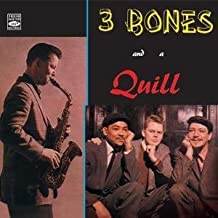
Daniel Eugene Quill was born on December 15, 1927 in Atlantic City, New Jersey. He played often with Phil Woods in the duet Phil and Quill. The two often engaged in celebrated alto battles, exemplifying musical sportsmanship at its finest. As a leader, he recorded three albums and collaborating with Phil Woods recorded six albums between 1956 and 1959.
Recording for Roost and Dawn on his own dates, Quill certainly had no problem playing melodically and was in very melodic settings when employed in Claude Thornhill’s big band and Gerry Mulligan Concert Jazz Band from 1960-1962.
Working as a sideman, Gene recorded forty-three albums for Buddy DeFranco, Quincy Jones, Gene Krupa, Gerry Mulligan, Manny Albam, Bob Brookmeyer, Al Cohn, Michel Legrand, Joe Newman, Johnny Richards, Steve Allen, Buddy Arnold, Gil Evans, Dick Garcia, Billie Holiday, Teddi King, Jimmy Knepper, Mundell Lowe, Oscar Pettiford, Pony Poindexter, Bill Potts, Buddy Rich, Jimmy Rushing, and George Williams.
During the last years of his life, he was in extremely poor health during the last years of his life, after suffering brain damage and partial paralysis. On December 8, 1988 alto saxophonist Gene Quill passed away at the age of 60 in his hometown of Atlantic City.
More Posts: bandleader,history,instrumental,jazz,music,saxophone
Daily Dose Of Jazz…
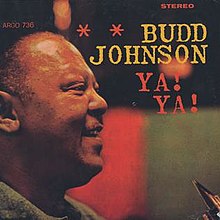
Budd Johnson was born Albert J. Johnson III on December 14, 1910 in Dallas, Texas. He initially played drums and piano before switching to tenor saxophone. In the 1920s he performed in Texas and parts of the Midwest, working with Jesse Stone among others.
Making his recording debut while working with Louis Armstrong’s band from 1932 to 1933, he is more known for his work, over many years, with Earl Hines. He was an early figure in the bebop era, doing sessions with Coleman Hawkins in 1944. The 1950s saw Budd leading his own group and doing session work for Atlantic Records, being the featured tenor saxophone soloist on Ruth Brown’s hit Teardrops From My Eyes.
In the mid-1960s he began working and recording again with Hines. His association with Hines is his longest lasting and most significant. In 1975 he began working with the New York Jazz Repertory Orchestra. In 1993 he was inducted into the Big Band and Jazz Hall of Fame.
Throughout his career, he recorded ten albums as a leader and played and recorded thirty~two albums as a sideman with among others, Cannonball Adderley, Ben Webster, Benny Goodman, Big Joe Turner, Dizzy Gillespie, Carmen McRae, Bud Powell, Carrie Smith, Duke Ellington, Quincy Jones, Count Basie, Roy Eldridge, Claude Hopkins, Etta Jones, Jimmy Smith, Randy Weston, Gil Evans, and Billie Holiday.
Tenor and soprano saxophonist and clarinetist Budd Johnson passed away of a heart attack on October 20, 1984 at the age of 73 in Kansas City, Missouri.
More Posts: bandleader,clarinet,history,instrumental,jazz,music,saxophone
Daily Dose Of Jazz…
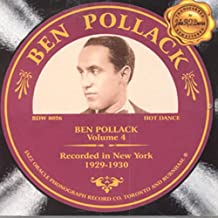
Gil Rodin was born in Russia on December 9, 1906 and studied saxophone, clarinet, flute, and trumpet in his youth. He played in Chicago, Illinois with Art Kahn in the middle of the 1920s. Moving to California and played with Harry Bastin before joining Ben Pollack in 1927, remaining in his band until 1934.
He simultaneously did studio work and played with Red Nichols’s radio band. Making his only recordings as a leader in 1930-31, amounting to four tracks which included Jack Teagarden on vocals, he also enlisted Eddie Miller and Benny Goodman as sidemen.
After Pollack’s band dissolved in 1934, Gil played with some of the players in the group until Bob Crosby regrouped them into his own ensemble. Rodin remained with Crosby through 1942, when he was drafted. While serving in the Army he played in the Artillery Band and after his discharge in 1944 he played with Ray Bauduc for a year, then with Crosby again.
His major composition was Big Noise from Winnetka, for which he wrote the lyrics with Bob Crosby. The music was written by Ray Bauduc and Bob Haggart. The song appeared in the films Raging Bull, Cannery Row, Manhattan Murder Mystery, Saving Mr. Banks, and What If.
Later in his career, Gil worked radio and television production, with Bill Cosby among others. He produced the soundtracks to the films American Graffiti and The Sting. Saxophonist, songwriter, and record producer Gil Rodin passed away on June 10, 1974.
More Posts: history,instrumental,jazz,music,record producer,saxophone,songwriter