

Requisites
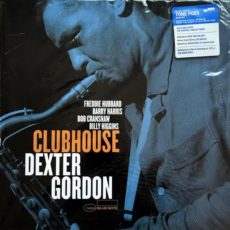
Clubhouse ~ Dexter Gordon | By Eddie CarterAny opportunity I get to discuss an album by tenor saxophonist Dexter Gordon is always welcome, so I begin September with a recent addition to the library. Clubhouse (Blue Note Classic LT-989) is a date from 1965 that also produced the album, Gettin’ Around, but was shelved until 1979. The ensemble is a stellar one, Freddie Hubbard on trumpet; Barry Harris on piano; Bob Cranshaw on bass and Billy Higgins on drums. My copy used in this report is the 2019 Blue Note Tone Poet Series Stereo Audiophile reissue (Blue Note B0029356-01 – LT-989).
The quintet gets into some Hanky Panky to begin Side One with a melody march. Dexter swings with a bluesy beat on the opening statement. Freddie takes over for a neatly paced reading next. Barry ices the closer with a laid-back attitude into a marvelous finale. I’m A Fool To Want You is from 1951 by Frank Sinatra, Jack Wolf, and Joel Herron. Sinatra co-wrote the lyrics and recorded it for Columbia that year. Gordon expresses personal thoughts of lyrical reflection on the opening chorus and first solo. Hubbard and Harris also arouse tender emotions on two beautiful readings before the luxurious coda.
Devilette is by bassist Ben Tucker and was first heard on the 1971 live album, The Montmartre Collection, Vol. 1. This midtempo swinger makes a wonderful vehicle for the quintet to swing easily on the melody. Dexter struts smoothly into the first solo, then Freddie speaks proficiently next. Barry closes with an articulate, passionate interpretation ahead of the conclusion. The quintet convenes inside Gordon’s Clubhouse to start Side Two for a laid-back meeting offering everyone a solo opportunity. Harris gives a charming introduction blossoming into the ensemble’s collective theme. Gordon starts with a soulfully, mellow statement, then Hubbard offers some rhythmically incisive ideas. Harris follows for a melodic mix of grace and fire that’s especially effective. Bob has a definitive moment on the fourth interpretation and Billy wraps things up in a brief exchange with the front line. Jodi is a thoughtfully provocative tribute to Gordon’s wife at the time. Dexter opens with a perfect evocation of love on the melody and first solo. Freddie creates a concise mood of ecstasy next, and Barry adds a touch of sweet lyricism preceding the romantic ending.
The album ends with a tune by guitarist Rudy Stevenson that I first heard on the 1961 album Two Feet In The Gutter, Lady Iris B. The solo order is Gordon, Hubbard, Harris, Cranshaw, and their messages are full of joy and happiness into an immensely satisfying ending that’s positive and upbeat. Clubhouse was produced by Joe Harley of Music Matters Jazz and mastered by Kevin Gray of Cohearent Audio from Rudy Van Gelder’s original analog master tape utilizing 180-gram audiophile vinyl.
The Blue Note Tone Poet Series reissues include high-definition gatefold photos that are worthy of wall art and superb packaging of the covers. The music is simply amazing, and the sound is reference quality with a breathtaking soundstage that’s thrilling, to say the least. Dexter Gordon was a jazz master in every sense as a bandleader, composer, and tenor saxophonist. Clubhouse is nearly forty-minutes of exceptional jazz and an excellent choice for Blue Note to rescue from oblivion for any fan who loves Hard-Bop that you shouldn’t miss on your next vinyl hunt!
~ Gettin’ Around (Blue Note BLP 4204/BST 84204); I’m A Fool To Want You (Columbia 39425); The Montmartre Collection, Vol. 1 (Black Lion BL-108); Two Feet In The Gutter (Epic LA 16021/BA 17021) – Source: Discogs.com
~ I’m A Fool To Want You – Source: Wikipedia.org
© 2020 by Edward Thomas Carter
More Posts: choice,classic,collectible,collector,history,instrumental,jazz,music,saxophone
Daily Dose Of Jazz…
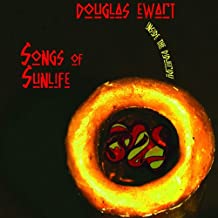
Douglas Ewart was born on September 13, 1946 in Kingston, Jamaica and emigrated to the United States in 1963. Settling in Chicago, Illinois he became associated with the Association for the Advancement of Creative Musicians (AACM) in 1967, studying with Joseph Jarman and Roscoe Mitchell. He served as that organization’s president from 1979 to 1986.
Douglas recorded eight albums as a leader and has performed or recorded fifteen with J. D. Parran, Muhal Richard Abrams, Art Ensemble of Chicago, Anthony Braxton, Alvin Curran, Anthony Davis, Robert Dick, Von Freeman, Joseph Jarman, Amina Claudine Myers, Roscoe Mitchell, James Newton, Rufus Reid, Wadada Leo Smith, Cecil Taylor, Richard Teitelbaum, Henry Threadgill, Hamid Drake, Don Byron, Malachi Favors Maghostut, Muhal Richard Abrams, Spencer Barefield, Tani Tabbal, Jean-Luc Cappozzo, Joëlle Léandre, Bernard Santacruz, Michael Zerang, Chico Freeman, Dennis González, Yusef Lateef, Adam Rudolph,
In 1992 he collaborated with Canadian artist Stan Douglas on the video installation Hors-champs which was featured at Documenta 9 in Kassel, Germany. The installation features Ewart in improvisation of Albert Ayler’s Spirits Rejoice with musicians George Lewis, Kent Carter, and Oliver Johnson.
Douglas Ewart has lived in Minneapolis, Minnesota since 1990 and plays sopranino and alto saxophones, clarinets, bassoon, flute, bamboo flutes, panpipes, and didgeridoo; as well as Rastafarian hand drums.

More Posts: bamboo flute,bassoon,clarinet,didgeridoo,flute,hand drums,history,instrumental,jazz,music,panpipe,saxophone
Daily Dose Of Jazz…
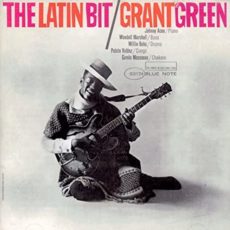
John Adriano Acea was born September 11, 1917 in Philadelphia, Pennsylvania to Adriano Acea of Cuba and Leona Acea of Virginia. One of six children, he was stricken with rheumatic fever and wasn’t expected to live during his first decade of life.
During the 1930s, Acea started out as a trumpeter and saxophonist and after his military service in the Army in 1946, he switched to playing the piano. He later became a session musician with jazz veterans Eddie Lockjaw Davis, Cootie Williams, Dizzy Gillespie, Illinois Jacquet, Dinah Washington, James Moody, Zoot Sims, and Roy Haynes. Between 1951 to 1962 he would record with Grant Green, Dodo Greene, Joe Newman, Leo Parker, Don Wilkerson, and Jesse Powell.
Acea is listed as co-composer of Nice ‘N’ Greasy that was the closing track to Lou Donaldson’s 1962 album, The Natural Soul. He is also credited as a composer on recordings by Gillespie, Jacquet, and Moody.
Pianist Adriano Acea, known as Johnny Acea, passed away on July 25, 1963.
More Posts: history,instrumental,jazz,music,piano,saxophone,trumpet
Daily Dose Of Jazz…
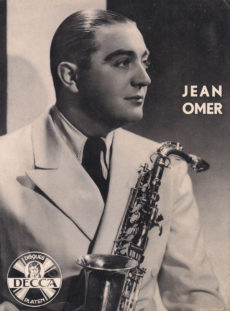
Jean Omer was born in Nivelles, Belgium on September 9, 1912. He played violin before switching to clarinet and saxophone, playing with local groups in Strassburg and Brussels. He worked in France in the band of Billy Smith, then played with the Golden Stars and in René Compère’s band.
Omer participated in a recording session with Gus Deloof in 1931. Following a tour with Fud Candrix’s Carolina Stomp Chasers, he founded his own group, which included at times, Lauderic Caton and Jean Robert. He and Robert De Kers accompanied Josephine Baker in the mid-1930s and played in a group with Ernst van’t Hoff late in the decade.
In 1941, he recorded with Rudy Bruder. He settled in Brussels and led a band into the 1960s which played at the club Le Boeuf sur le Toit. Clarinetist, saxophonist, and bandleader Jean Omer passed away on May 30, 1994 in Brussels, Belgium.
More Posts: bandleader,clarinet,history,instrumental,jazz,music,saxophone
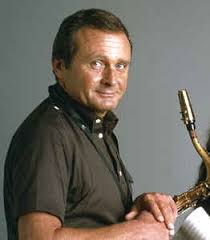
Three Wishes
Baroness Pannonica inquired of Stan Getz that if granted three wishes what would he ask for and he told her:
-
-
“Justice.”
-
“Turth.”
- “Beauty..”
-
*Excerpt from Three Wishes: An Intimate Look at Jazz Greats ~ Compiled and Photographed by Pannonica de Koenigswarter

More Posts: baroness,history,instrumental,jazz,music,pannonica,saxophone,three,wishes