

Three Wishes
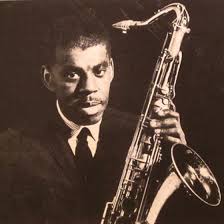
What Roland Alexander told Nica his three wishes were when the inquiry came his way was:
-
-
“Creation.”
-
“Peace.”
- “More creation.”
-
*Excerpt from Three Wishes: An Intimate Look at Jazz Greats ~ Compiled and Photographed by Pannonica de Koenigswarter

More Posts: baroness,history,instrumental,jazz,music,pannonica,piano,saxophone,three,wishes
Daily Dose Of Jazz…
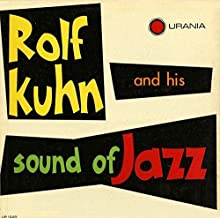
Rolf Kühn was born on September 29, 1929 in Köln, Germany, the older brother of the pianist Joachim Kühn. He started out playing in dance bands in the late ’40s, then worked with radio orchestras starting in 1952 before moving west across the Atlantic to America.
Living in the United States for three years from 1956 to 1959, subbing for Benny Goodman on a few occasions, played in the Tommy Dorsey ghost band, and worked in a big band led by Urbie Green. Rolf drew favorable reviews, and over the course of his career, he recorded more than two-dozen albums as a leader, ten with his younger brother, and as a sideman, eighteen.
He has recorded with Eddie Costa, Buddy DeFranco,Klaus Doldinger, Tommy Dorsey, European Jazz Ensemble, Urbie Green, Friedrich Gulda, Greetje Kauffeld, Eartha Kitt, Albert Mangelsdorff, Oscar Pettiford, and George Wallington.
In 2008 he founded a band with Christian Lillinger, Ronny Graupe, and Johannes Fink. In 2019, the New York Times Magazine listed him among the hundreds of artists whose material was reportedly destroyed in the 2008 Universal fire. Clarinetist and saxophonist Rolf Kühn at 90 continued to perform and compose for the next two years until his passing on August 18, 2022 in Berlin, Germany.

More Posts: bandleader,clarinet,composer,history,instrumental,jazz,music,saxophone
The Quarantined Jazz Voyager
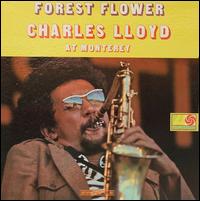
The Quarantined Jazz Voyager continues to social distance and in doing so continues to listen to some of the greatest recordings of the 20th century. This week the spotlight is on Forest Flower: Charles Lloyd at Monterey. It was recorded on two separate dates: in~studio in New York City on September 8, 1966, tracks 3 & 4, and live on September 18, 1966 at the Monterey Jazz Festival in Monterey, California. The album was produced by George Avakian and released on Atlantic Records on February 21, 1967.
Track Listing | 39:17- Forest Flower: Sunrise (Lloyd) ~ 7:18
- Forest Flower: Sunset (Lloyd) ~ 10:37
- Sorcery (Keith Jarrett) ~ 5:18
- Song of Her (Cecil McBee) ~ 5:24
- East of the Sun (Brooks Bowman) ~ 10:40
- Charles Lloyd – tenor saxophone, flute
- Keith Jarrett – piano
- Cecil McBee – bass
- Jack DeJohnette – drums

More Posts: adventure,club,genius,jazz,museum,music,preserving,restaurant,saxophone,travel,voyager
Requisites
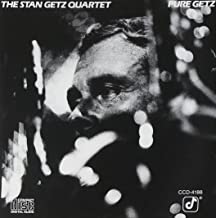
Pure Getz ~ The Stan Getz Quartet | By Eddie Carter
I enjoy listening to jazz when I’m reading and one of my favorite musicians to hear is Stan Getz. He became a favorite of mine after hearing The Girl From Ipanema and Corcovado from the 1964 album, Getz/Gilberto. I also got to see him perform live as a member of the 1972 Newport Jazz Festival All-Stars at Music Hall on July 6, 1972, in New York City. This morning’s choice from the library is Pure Getz (Concord Jazz CJ-188) featuring his quartet at the time, Jim McNeely on piano; Marc Johnson on bass; Billy Hart (tracks: A3, B1, B2) and Victor Lewis (tracks: A1, A2, A4, B3) on drums. My copy used in this report is the 1982 US Stereo release.
The album opens with an uptempo tune by Jim McNeely, On The Up and Up. The ensemble starts with an invigorating melody, then Stan moves right into a sizzling lead statement. Jim swings hard on the next solo with a bouncy effervescence and spirited lyricism. Marc responds with an impressive presentation that appeals at every turn, and Victor keeps the rock-solid beat flowing into a quick climax.
The pace slows down for Blood Count by Billy Strayhorn, originally written as a three-part work for Duke Ellington titled Blue Cloud. It was Strayhorn’s final composition for Duke before succumbing to cancer on May 31, 1967. Ellington himself only performed the tune twice after Billy’s passing. First at a Carnegie Hall concert later that year in August and on his touching 1968 tribute album in memory of Strayhorn, And His Mother Called Him Bill. The quartet delivers an evocatively moving melody and Getz blows a passionately delicate performance culminating with a compassionate coda.
Very Early by Bill Evans is a pretty tune written early in the pianist’s career that was featured on his 1962 album, Moon Beams. The quartet presents this song at an easy, relaxing tempo with Billy Hart on drums. Marc opens with a tenderly expressive solo, then Jim turns in an enchanting interpretation next. Stan weaves a gentle spell of tenderness on the closing statement with a wonderful warmth and presence.
Sipping at Bell’s by Miles Davis begins with a three-instrument chat between Getz, Johnson, and Lewis. McNeely joins the discussion for the informal melody, then Johnson carves out a clever opening reading. Getz is formidable on the next presentation with a sharp, crisp attack. McNeely permits his fingers full sway on an effectively swift performance, and Lewis connects with a lightness of touch on a brief statement that’s exceptionally smooth.
Side Two starts with I Wish I Knew, written in 1945 by Harry Warren and Mack Gordon. This is a very enjoyable rendition taken at midtempo with the solo order, Getz, McNeely, and Johnson with Hart behind the drums. Stan swings into a soulful tenor solo sticking close to the melody. Jim comes next for a delightfully pleasant reading, then Marc makes an indelible impression on the finale with an inspired statement.
Come Rain or Come Shine by Harold Arlen and Johnny Mercer was written in 1946 for the Broadway musical, St. Louis Woman and is a jazz and pop favorite with numerous recordings since its inception. The trio opens with a gentle introduction evolving into an emotional communication on the melody. Getz’s sound is perfectly suited to this ballad as he demonstrates on the lead solo with a beautiful tone and thoughtful musicality. McNeely handles the next interpretation with meticulous care, and Johnson closes with a gorgeous bass solo ahead of the leader’s sensuous ending.
Tempus Fugit, aka Tempus Fugue-it, was written in 1949 by Bud Powell and is a play on words meaning “time flies”. The quartet takes off at a torrid tempo on the opening chorus, Jim swings at a ferocious pace on the scintillating first solo. Stan exemplifies boundless energy on the second reading with breakneck speed, then Marc gives the third reading a serious jolt of electrical energy. Victor wraps up the album with some bouncy brushwork before the quartet makes a spirited sprint to the finish line.
The album was recorded by Ed Trabanco and Phil Edwards, and the more I listened, the more I became impressed with the record’s soundstage. The instruments leap out of your speakers with outstanding detail. Stan Getz was one of the master tenor men with a career spanning nearly five decades from the forties to 1990. If you’re a fan of Bebop and Cool Jazz, I offer for your consideration, Pure Getz by The Stan Getz Quartet. An entertaining album that any jazz fan would appreciate!
~ And His Mother Called Him Bill (RCA LSP-3906); Getz/Gilberto (Verve Records V-8545/V6-8545); Moon Beams (Riverside RLP 428/RLP 9428) – Source: Discogs.com
~ Come Rain or Come Shine – Source: JazzStandards.com
~ Blood Count, Tempus Fugit – Source: Wikipedia.org
© 2020 by Edward Thomas Carter

More Posts: choice,classic,collectible,collector,history,instrumental,jazz,music,saxophone
Daily Dose Of Jazz…
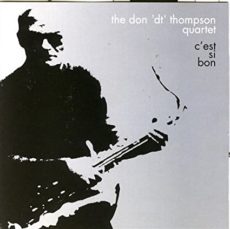
Don D.T. Thompson was born in Drumheller, Alberta on September 19, 1932. He played saxophone and clarinet at twelve and began promoting his own jazz concerts, Jammin’ the Blues, in Edmonton at 17. Moving to Toronto, Canada in 1952, he toured Canada and the United States from 1954 to 1958 with Anne Marie Moss.
Save for a period in 1965 and 1966 with the Lionel Hampton Orchestra in the United States, Thompson was a mainstay of the Toronto jazz scene through the 1960s. During the early 1960s, he led singer Tommy Ambrose in a big band ensemble. He appeared regularly at the First Floor Club with small groups and a big band from 1959 until 1965, and was seen in the NFB’s Toronto Jazz with a quintet.
He performed on many CBC TV pop music shows, Club Six and Music Hop and played in several Toronto studio orchestras. In 1961 he recorded as a member of the Pat Riccio Big Band in Ottawa and 1963 saw him with pianist Wray Downes and trombonist Rob McConnell. He also released a record as part of a quintet that included trumpeter Fred Stone.
After touring for ten years beginning in 1971 and recording with pop singer Anne Murray, he returned to jazz. In 1981 moving away from his early bebop-based style he landed on a simpler, full-toned, melodic approach in the manner of a Stanley Turrentine. D.T. wrote and recorded several jazz themes; his pop-song arrangements appear on albums by Murray, John Allan Cameron and Gordon Lightfoot.
Saxophonist, composer, and arranger Don D.T. Thompson passed away in Vancouver, Canada on March 21, 2004.
More Posts: arranger,composer,history,instrumental,jazz,music,saxophone