


Conversations About Jazz & Other Distractions
Conversations About Jazz Features
The Composers on September 3
Hammonds House Digital invites you to join us for Conversations about Jazz & Other Distractions hosted by former jazz radio host and founder of Notorious Jazz, Carl Anthony. Every other Thursday, Carl takes audiences on a unique journey through the world of jazz music with artist talks, workshops, and listening sessions.
On September 3 Conversations about Jazz delves into the subject of influential jazz composers. Carl’s guests for this program will be saxophonist, composer and educator Tia Fuller; trumpeter, composer and leader of the Royal Krunk Jazz Orkestra Russell Gunn; and drummer, educator and activist Jaimeo Brown. They will discuss their own music, composers that have influenced them, leadership, making albums and more. This program is for the jazz novice and jazz head alike. The event is FREE, but you must register. To register click HERE.
Saxophonist Tia Fuller is an accomplished solo artist who has recorded five full-length projects with her quartet. Her most recent album, Diamond Cut, received a Grammy nomination in the Best Instrumental Jazz category. She is recognized as well-respected collaborator who has recorded and toured with numerous high-profile artists. She performed as part of the I AM… Sasha Fierce and Beyoncé Experience World Tour on stages across the globe; served as assistant musical director for Esperanza Spaulding’s Radio Music Society tour; and recorded and toured with Dianne Reeves for her Grammy-winning Beautiful Life album. Currently, Fuller is a faculty member at Berklee College of Music.
Trumpeter, composer and band leader Russell Gunn grew up listening to rap and hip hop. At the age of sixteen his dedication to the art of jazz took shape, although hip-hop has remained an influence on his work. Gunn has performed with numerous musicians including Wynton Marsalis, Jimmy Heath, Roy Hargrove, James Moody, and R&B hitmaker Maxwell. In 1999 Gunn released his first solo project, Ethnomusicology Vol. 1, which earned him a Grammy nomination. SmokinGunn followed a year later and, in 2001, Ethnomusicology Vol. 2. Since that time, Gunn has released two more volumes in his Ethnomusicology series. In 2007 the trumpeter paid homage to fellow St. Louis, IL, native and trumpet icon Miles Davis with Russell Gunn Plays Miles. More recently Gunn released Pyramids (2019) and Get It How You Live (2020) with his Afro-Futurist Jazz Big Band, The Royal Krunk Jazz Orkestra.
Jaimeo Brown (pronounced jah-mayo) began his drum career at age 16 with his father bassist Dartanyan Brown, mother pianist and woodwind specialist, Marcia Miget, and drum teacher, Sly Randolph. In the last 20 years, Brown has worked with musicians including Stevie Wonder, Carlos Santana, Q-Tip, Carl Craig, Bobby Hutcherson, Joe Locke, David Murray, and others. He gained experience performing and educating audiences around the world as an ambassador for the US State Department. In addition to performing, Jaimeo contributed material for the Oscar and Grammy award winning documentary ’20 Feet from Stardom’ and PBS production of Ralph Ellison’s ‘King of the Bingo Game.’ As the Director of Transcending Arts Jaimeo is a passionate educator, working in community service in NJ and NY by giving lessons to kids through programs such as NJPAC and New City Kids.
Hammonds House Museum is generously supported by the Fulton County Board of Commissioners, Fulton County Arts and Culture, the City of Atlanta Mayor’s Office of Cultural Affairs, AT&T and WarnerMedia.
Hammonds House Museum’s mission is to celebrate and share the cultural diversity and important legacy of artists of African descent. The museum is the former residence of the late Dr. Otis Thrash Hammonds, a prominent Atlanta physician and a passionate arts patron. A 501(c)3 organization which opened in 1988, Hammonds House Museum boasts a permanent collection of more than 450 works including art by Romare Bearden, Robert S. Duncanson, Benny Andrews, Elizabeth Catlett, Jacob Lawrence, Hale Woodruff, Amalia Amaki, Radcliffe Bailey and Kojo Griffin. In addition to featuring art from their collection, the museum offers new exhibitions, artist talks, workshops, concerts, poetry readings, arts education programs, and other cultural events throughout the year.
Located in a beautiful Victorian home in Atlanta’s historic West End, Hammonds House Museum is a cultural treasure and a unique venue. During the COVID-19 pandemic, they continue to observe CDC guidelines, but look forward to welcoming in-person visitors soon! For more information about upcoming virtual events, and to see how you can support their mission, visit their website: hammondshouse.org.MEDIA: For more information, contact Karen Hatchett at Hatchett PR, karen@hatchettpr.com.
More Posts: conversations,drums,history,instrumental,jazz,musicians,saxophone,trumpet
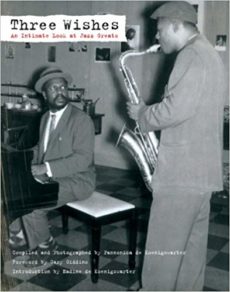
Three Wishes
Upon request by Pannonica as to his three wishes Danny Quebec~West responded by telling her:
-
-
“That the United States government… I wish that the capitalistic system be like the socialistic system in subsidizing the starving musicians, for art’s sake.”
-
“My second wish ~ speaking of a field not concerning music ~ I wish that the stigma on jazz musicians concerning drugs… that the world have socialization of medicine, and therefore that we canget all we want.”
- “I hope when they do decide to let me be heardagain after such a long layoff, I hope that I can reach from their toes to their heads, and explode every minute cell in their brain ~ meaning the public, being that I feel that I have been treated very unjustly music~wise..”
-
*Excerpt from Three Wishes: An Intimate Look at Jazz Greats ~ Compiled and Photographed by Pannonica de Koenigswarter

More Posts: baroness,history,instrumental,jazz,music,pannonica,saxophone,three,wishes
Daily Dose Of Jazz…
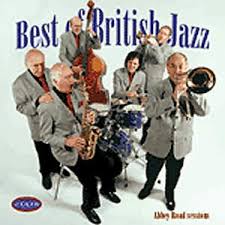
Roy Willox was born August 31, 1929 in Welwyn, Hertfordshire, England into a musical family in 1929. At 16 he initially played with Johnny Claes for a short time in 1945 and then worked in other well-known bands before joining the Ted Heath Orchestra for a five-year stint from 1950 to 1955. During this time he also worked in a band with Keith Christie.
A collaboration with Jack Parnell and other bands led to extensive freelance in television, radio and theater. In the field of jazz, he was part of Harry South’s band in the 1960s and 1970s. This period of performing saw him occasionally returning to the Heath band throughout the 1990s and 2000s, playing the Ted Heath Bands farewell concert at London’s Royal Festival Hall in 2000.
In his later years Roy worked with Kenny Baker, the Robert Farnon Orchestra, and Laurie Johnson’s London Big Band. 2009 with the all-star formation The Allan Ganley Jazz Legacy. He was involved in 156 jazz recording sessions between 1951 and 2016 with Cleo Laine, Larry Page, George Chisholm, Beryl Bryden, Johnny Keating, Tubby Hayes, Kenny Clare, Dudley Moore, Louie Bellson, The London Jazz Chamber Group, Michel Legrand, Phil Woods, and the Len Phillips Big Band.
As a session musician, he is also in pictures of Bert Kaempfert, Tiny Tim ~ Live! At the Royal Albert Hall, and Harry Nilsson ~ A Little Touch of Schmilsson in the Night. Alto saxophonist Roy Willox, who also plays clarinet and flute, passed away on November 25, 2019.
More Posts: clarinet,flute,history,instrumental,jazz,music,saxophone
Requisites
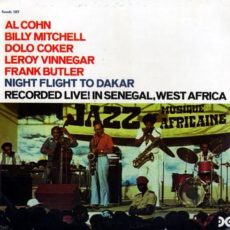
Night Flight To Dakar ~ Al Cohn, Billy Mitchell, Dolo Coker, Leroy Vinnegar, Frank Butler | By Eddie Carter
Submitted for your consideration this morning is the second of two albums recorded during The Xanadu All-Stars’ first tour in Senegal, West Africa. Night Flight To Dakar (Xanadu Records 185) was released in 1982 after the first LP, Xanadu In Africa hit the stores a year earlier. The personnel consists of Al Cohn and Billy Mitchell on tenor sax; Dolo Coker on piano; Leroy Vinnegar on bass and Frank Butler on drums. My copy used in this report is the original release. On the four quintet tunes, Cohn is heard on the left channel and Mitchell on the right channel.
The album opens with the title tune, Night Flight To Dakar was composed by Coker as a tribute to his bandmates and in honor of the ensemble’s trip to Africa. It’s a tune the group has fun on with a vigorous beat by both horns in unison leading the trio on the melody. Al opens with a scintillating groove of spirited wailing as refreshing as a cold drink on a hot summer day or evening. Billy makes his point next with innovative energy on a superb statement. Dolo digs into the finale with a tasty reading before the front line shares the final two choruses into the reprise and close.
Don’t Let The Sun Catch You Crying was written by Joe Greene in 1946 and showcases the trio in a gorgeous performance. Dolo tenderly presents the melody and approaches the song’s only solo with delicate respect, sustained by Leroy and Frank’s gentle foundation. It’s back to a blowing session for the quintet’s first side finale with an uptempo version of Blues Up and Down by tenor saxophonists Gene Ammons and Sonny Stitt. This jazz favorite was written in 1950, making its first appearance on a Prestige 78-rpm single and reissued a year later on the LP, Battle of The Saxes.
The song is charged with electricity from the opening notes of the melody. Billy begins the fireworks with an exciting exhibition of musical virtuosity. Cohn comes right on his heels with a blistering heatwave of his own. Coker swings into a bouncy, happy groove on the next interpretation. Vinnegar steps up next with a rousing chorus shadowed by Butler, then swings swiftly on the next five verses. Butler makes a crisp contribution, exchanging the final statement with both saxes into a most satisfying conclusion.
Sweet Senegelese Brown by Billy Mitchell is dedicated to a woman from Georgia. This song opens Side Two built on the chords of the 1925 standard, Sweet Georgia Brown by Ben Bernie, Maceo Pinkard, and Kenneth Casey. Al and Billy provide the first two exemplary readings, but the showcase here belongs to Frank who has the longest solo at 5 ½ minutes. It’s not a bad performance, but his readings on Blues Up and Down and The King are better in my opinion. Dolo and Leroy don’t solo themselves but provide the propulsive power on the opening and closing themes and behind both saxophonists. The finale is by Count Basie and became a signature song for Illinois Jacquet.
The King is an uptempo cooker allowing everyone solo space and opens with a high-voltage melody collectively. Billy soars first into a fiercely, heated lead solo, then Al attacks the next one with the quick motion of a whirlwind. Dolo executes the next reading with rapid-fire agility, then Leroy takes a joyful excursion next. Frank exchanges a few riffs with Al and Billy, taking the ensemble home on a high note.
Night Flight To Dakar was recorded by American engineer Paul Goodman and he delivers an album with good sound quality. I say good because the one area that fails as you’re listening is when a musician is talking. You can barely make out what anyone is saying until the very end of The King when one of the guys says Merci Beaucoup to the crowd. That issue aside, the ensemble delivers a solid live performance with excellent musicianship and a soundstage from the instruments that’s good enough to provide excellent playback on any mid-fi or high-end audio system. I’m intrigued enough to start looking for the first album Xanadu In Africa for a serious listen and enjoyed the music on Night Flight To Dakar enough to recommend it for fans of Al Cohn, Billy Mitchell, Dolo Coker, Leroy Vinnegar and Frank Butler.
~ Blues Up and Down, Battle of The Saxes (Prestige PRLP 107); Don’t Let The Sun Catch You Cryin’ (Prestige 877); Xanadu In Africa (Xanadu Records 180) – Source: Discogs.com ~ Sweet Senegelese Brown – Source: Album liner notes by Don Schlitten © 2020 by Edward Thomas Carter
More Posts: choice,classic,collectible,collector,history,instrumental,jazz,music,saxophone
Daily Dose Of Jazz…
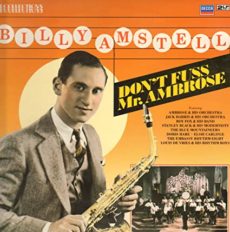
Billy Amstell was born on August 20, 1911 in London, England. At ten he played piano and at thirteen was teaching himself how to play the alto saxophone. He performed in Glasgow before moving to London in 1930, working with violinist Jack Harris.
During the next year, Billy recorded with Roy Fox and Spike Hughes and became a member of the Bert Ambrose Orchestra in which he played tenor saxophone. In the 1940s he worked for bandleader Geraldo and in the 1950s for the BBC Dance Orchestra, and in the 1960s while a studio musician he worked with George Chisholm.
The 1980s saw Amstell playing clarinet, releasing a solo album, Session After Midnight on the Zodiac label, and wrote his autobiography, Don’t Fuss, Mr. Ambrose. Saxophonist and clarinetist Billy Amstell, who continued to perform into his nineties, passed away on December 19, 2005 at the age of 94.
More Posts: bandleader,clarinet,history,instrumental,jazz,music,saxophone