

Daily Dose Of Jazz…
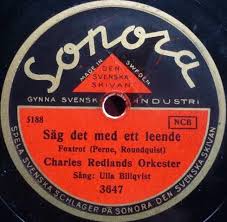
Charles Redland was born Carl Gustaf Mauritz Nilsson on July 7, 1911 in Södertälje, Sweden. The son of a musician, he learned several instruments when he was young.
In the 1930s he was a member of bands in which he played alto saxophone, clarinet, trumpet, and trombone. During that decade he also worked as a leader.
On clarinet, he recorded with Benny Carter in Sweden in 1936. He composed and arranged jazz and popular music. He also composed for more than 80 films, as well as for radio and television programs. Alto saxophonist, Charles Redland passed away on August 18, 1994 in Stockholm, Sweden.

More Posts: bandleader,clarinet,history,instrumental,jazz,music,saxophone,trombone,trumpet
Requisites
Heads Up ~ David Newman | By Eddie Carter
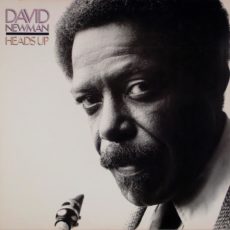
Up next from the library is an album by the flutist, alto, and tenor saxophonist, David Newman. Heads Up (Atlantic 81725-1) finds him leading a first-rate quintet with Kirk Lightsey on piano; Steve Nelson on vibraphone; David Williams on bass and Eddie Gladden on drums. My copy used in this report is the original 1987 Stereo release.
Ain’t Misbehavin’ by Fats Waller, Harry Brooks and Andy Razaf starts Side One at a slow ballad tempo. The song premiered at the Harlem club Connie’s Inn and was the opening tune for the 1929 all-black musical revue, Hot Chocolates. The show was so successful it ran on Broadway for 219 performances, and Louis Armstrong performed the first instrumental version during the intermission. Kirk opens with a tender introduction that gently grows into David’s seductive melody. Newman also delivers a beautiful work of richness and sincerity on the lead solo. Kirk and Steve split the next few verses, each man offering a romantic sensitivity before a pretty closing chorus.
Makin’ Whoopee is by Walter Donaldson and Gus Kahn, first appearing in the 1928 Broadway musical Whoopee, the song was sung by Eddie Cantor who reprised it two years later in the 1930 film. The quintet proceeds smoothly from the introduction to the opening chorus led by Newman who also casts a distinct voice with expressive beauty on the first reading. Nelson also gives an enticing presentation on the second solo. Williams is as sweet as honey on the third statement with an exquisite tone and Lightsey makes the final statement a delightfully nostalgic performance into the coda. Newman’s Heads Up comes at you next vivaciously with David taking off first with a rocking beat compelling one to snap their fingers and tap their toes. Steve conveys a festive celebration on the second reading, then Kirk dazzles with the vigorous zest of a sanctified church service. David sums everything up with a few short comments leading to the group’s finale.
Newman opens Side Two on flute for an upbeat rendition of Delilah by Victor Young. It’s a catchy 1954 tune with the quintet producing a vibrant melody. David’s opening solo is delivered with abundant spirit and energy. Kirk steps up next with driving ambition, then Nelson takes the final bow with driving ambition and dexterity. Lover Man by Jimmy Davis, Roger Ramirez, and Jimmy Sherman slows the pace with the leader back on tenor sax. After the ensemble’s ravishingly beautiful theme, David demonstrates his rhythmic mastery with grace and elegance. Kirk etches a delicately thoughtful presentation next, then Steve follows with an amorously tender interpretation. Newman closes with a few sultry comments before the warm-hearted ending. For Buster, David’s second original closes the album with the leader on alto-sax expressing a down-home blues flavor. Newman and Nelson are the featured soloists and each man offers an interpretation eminently fitting for the blues into David’s earthy reprise and climax.
Heads Up was engineered by Tony May whose work has appeared on many Jazz, Latin, Pop, and Soul albums. His assistant Ira McLaughlin has worked on albums for Atlantic, CBS, and Profile Records. This album was digitally recorded and has a highly effective soundstage placing the musicians in the center of your listening room. David Newman who the jazz world would come to know as “Fathead” originally worked with Ray Charles and had a prolific career recording albums of Hard-Bop, Post-Bop, Soul-Jazz, Jazz-Funk, and Jazz-Fusion for another twenty-one years after Heads Up was released. He passed away at the age of seventy-five on January 20, 2009, from pancreatic cancer. If you’re seeking an album displaying his skills as a composer and multi-instrumentalist, consider this your Heads Up!
~ Ain’t Misbehavin’, Lover Man, Makin’ Whoopee – Source: JazzStandards.com ~ © 2020 by Edward Thomas Carter SynopsisHeads Up is an album by saxophonist David Newman recorded at the Atlantic Recording Studios in New York City on September 16~18, 1986 and released in 1987 on the Atlantic Records label.
Track List | 37:55
- Ain’t Misbehavin’ (Fats Waller, Andy Razaf) 7:40
- Makin’ Whoopee (Walter Donaldson, Gus Kahn) 8:24
- Heads Up (David Newman) 6:21
- Delilah (Clifford Brown) 7:22
- Lover Man (Jimmy Davis, Ram Ramirez, James Sherman) 9:52
- For Buster” (Newman) :41
- David Newman – tenor saxophone, flute
- Steve Nelson – vibraphone
- Kirk Lightsey – piano
- David Williams – bass
- Eddie Gladden – drums

More Posts: choice,classic,collectible,collector,flute,history,instrumental,jazz,music,saxophone
Daily Dose Of Jazz…
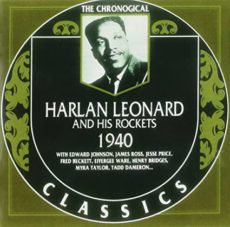
Harlan Leonard was born on July 2, 1905 in Kansas City, Missouri. He started his career in the Territory Band of George E. Lee in 1923, then moved to Benny Moten in 1924 and joined Thamon Hayes ‘ Kansas City Rockets in 1931 with several other musicians from the band. Disbanded in 1934, they formed the basis of the new Moten Orchestra. After Moten’s death in 1935, Leonard founded his own group, bringing several Moten musicians which became Harlan Leonard and his Rockets, and soon was one of the most famous bands in Kansas City.
After Count Basie’s departure for new YorkCity, he and Jay McShann were the strongest rivals. When the first Leonard band fell apart in 1936, he then took over the musicians of the Jimmy Keith band in 1937/38. In 1938 the young Charlie Parker also belonged to the band for five weeks but was dismissed because of unreliability.
In Chicago, Illinois in 1940, the band along with singer Myra Taylor recorded sessions for Victor Records. Returning to Kansas City in 1941, they toured the Midwest, then went to New York City but were unsuccessful so they returned home. Early 1943 Leonard went on a West Coast tour, playing one-nighters and a year engagement in Los Angeles, California.
After the band’s disbandment, Leonard remained in the Los Angeles area, performing occasionally in local clubs until retiring from the music business and working for the Internal Revenue Service.
Clarinetist, saxophonist, and Swing bandleader Harlan Leonard, who was one of the leaders of Kansas City Jazz with Jay McShann, and one of the links between the swing and the subsequent bebop, passed away on November 10, 1983.
More Posts: bandleader,clarinet,history,instrumental,jazz,saxophone
Requisites
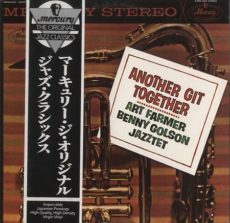
Another Git Together ~ Art Farmer/Benny Golson Jazztet | By Eddie CarterI was listening to this album a few nights ago and that’s what led me to this morning’s choice submitted for your approval by two jazz titans, trumpet and flugelhorn player Art Farmer and tenor saxophonist Benny Golson. Another Git Together (Mercury Records MG-20737/SR-60737) by The Jazztet is a 1962 release and their sixth album as an ensemble. They were together from 1959 to 1962 before disbanding but would reunite in the nineties performing live at jazz festivals around the world. Here, the duo is augmented by Grachan Moncur III on trombone; Harold Mabern on piano; Herbie Lewis on bass and Roy McCurdy on drums. My copy used in this report is the 1985 Japanese Stereo reissue (Mercury EXPR-1002), one of The Original Jazz Classics Series from Nippon Phonogram and Polygram Records.
The album takes flight with a trip to the Space Station by Grachan Moncur III, an uptempo burner beginning with the group in complete agreement on a scintillating melody. Art opens with a vigorously brisk first solo, then Benny blows with audacious confidence next. Grachan gives a statement of spirited exuberance on the third interpretation and Harold provides plenty of enthusiastic energy on a joyous finale.
The sextet changes gears for Domino, a 1950 French tune by Don Raye, Jacques Plante, and Louis Ferrari. It’s also been a hit in the US for numerous vocalists and an unforgettable title song by Roland Kirk on his 1962 album. The trio settles into a relaxed setting for the melody with Farmer on flugelhorn, and Golson and Moncur trailing him softly. Art begins telling a subtle touching story on the opening chorus with a soft tone. Grachan hits his target next with a gorgeous performance. Benny meets the challenge on the third reading, his tenor sax flowing seamlessly. Harold makes his mark on the closing statement with a dazzling display of creativity preceding the ensemble’s climax.
The title track is a soulful blues by John Hendricks and Pony Poindexter that starts with a dialogue between the trio and ends slowly fading into oblivion. The fun begins when Benny goes to work first at a danceable tempo, compelling the listener to snap their fingers, get up and dance. Harold gets into a tantalizing groove next, and Art is passionately driven on the third performance. Grachan expresses his emotions exquisitely with the utmost assurance on the fourth statement. Roy and Harold share an irresistibly appealing, smartly articulated performance on the closer.
Along Came Betty by Benny Golson first appeared on the 1958 album, Art Blakey and The Jazz Messengers while he was a member. The ensemble starts the melody slightly faster than the original recording. Mabern steps up first to create a relaxing atmosphere with a great swinging beat. Golson breathes new life into his tune with a stylish interpretation providing a remarkable timbre and easy rhythm. Farmer executes a flawless statement on the finale before the sextet reconvenes for the coda.
This Nearly Was Mine by Oscar Hammerstein II and Richard Rodgers made its debut in their 1949 Broadway musical, South Pacific, and reappearing in the 1958 film as well. Farmer is back on flugelhorn leading the sextet on the melody of this pretty waltz at a lively pace. The solo order is Art, Benny, Grachan, and Harold with each man giving inspired improvisations.
Reggie, a cheerful original by Benny named for his second son closes the second side with a perfect vehicle for improvisation as the group collectively illustrates on the opening chorus. The tenor man opens the solos with a boldly assertive statement. Farmer comes in next for an enthusiastically agile reading that’s pitch-perfect. Moncur is as cool as the other side of the pillow on the third performance, and Mabern gets the final spotlight to deliver an imaginatively melodic, happy reading leading to the climax. Tommy Nola engineered the original recording of Another Git Together and has also made albums for Argo, ATCO, Atlantic, Contemporary, Riverside, and United Artists Records. The album was produced by Jack Tracy who also was the director of EmArcy and an editor at a little-known jazz magazine named Down Beat that’s still in publication in print and digital form today. The sound quality from Mr. Nola’s original tapes has been gorgeously remastered by Polygram with a spectacular soundstage throughout the highs, midrange, and low end, that’s quite revealing. As noted, writer Leonard Feather mentions in his liner notes, “The Jazztet was one of the finest combos in 1959; it is one of the finest today. This is enough; invidious comparisons are not needed. By the same token, three years from now there will be no need to assume that the present LP has lost, any intrinsic value. Any group in which Farmer and Golson are leaders, and for which they select the rest of the membership, can hardly go wrong”. I agree with every word in that statement and will only add, Another Git Together by The Art Farmer–Benny Golson Jazztet is an LP that’ll reward you with many hours of listening pleasure, especially if you’re a fan of small group jazz! ~ Art Blakey and The Jazz Messengers (Blue Note BLP 4003/BST 84003); Domino (Mercury Records MG 20748/SR 60748) ~ Tommy Nola, Jack Tracy – Source: Discogs.com ~ Album Quote – Source: Album Liner Notes by Leonard Feather ~ Domino – Source: Wikipedia.org ~ Space Station – https://www.youtube.com/watch?v=n3FrCKqP1Fs ~ Domino – https://www.youtube.com/watch?v=DN74iqjXLLs Track List | 34:28
- Space Station (Grachan Moncur III) – 5:10
- Domino (Don Raye, Jacques Plante, Louis Ferrari) – 6:58
- Another Git Together (Jon Hendricks, Pony Poindexter) – 6:12
- Along Came Betty (Benny Golson) – 5:24
- This Nearly Was Mine (Richard Rodgers, Oscar Hammerstein II) – 6:20
- Reggie (Golson) – 4:24
- Art Farmer – trumpet, flugelhorn
- Benny Golson – tenor saxophone
- Grachan Moncur III – trombone
- Harold Mabern – piano
- Herbie Lewis – bass
- Roy McCurdy – drums
More Posts: choice,classic,collectible,collector,history,instrumental,jazz,music,saxophone,trumpet
Daily Dose Of Jazz…
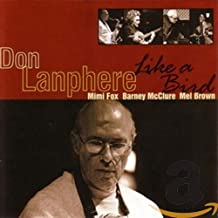
Donald Gale Lanphere was born on June 26, 1928 in Wenatchee, Washington and briefly studied music at Northwestern University in the 1940s, but moved to New York City as a member of Johnny Bothwell’s group and became part of the bebop jazz scene. While in New York, he was in a relationship with Chan Richardson, who later married Charlie Parker and then Phil Woods.
1951 saw Don arrested and charged with heroin possession in New York City. After his release from jail, he worked in his family’s music store in Wenatchee, where he met Midge Hess, whom he married in 1953. By the late 1950s and early 1960s he performed with Herb Pomeroy and with Woody Herman.
Throughout most of the 1960s Lanphere was mostly inactive musically but began performing around the Seattle, Washington area after becoming a born again Christian in 1969, at which time he also stopped using drugs and alcohol. It wasn’t until the 1980s that he would begin recording again and started releasing albums. He toured in New York City and Kansas City in 1983 and a Europe in 1985.
His later years, had Don as a jazz educator in the Pacific Northwest, giving lessons out of his home in Kirkland, Washington. He instructed clinics and small groups, as well as performing at the Bud Shank Jazz Workshop, an annual, week-long summer camp in Port Townsend, Washington for jazz students of all ages. The workshop coincided with the annual Port Townsend Jazz Festival.
He led thirteen recording sessions as well as Fats Nava Jazz Orchestrarro and the Seattle Repertory Jazz Orchestra. Tenor and soprano saxophonist, bandleader, and educator Don Lanphere passed away on October 9, 2003.

More Posts: bandleader,history,instrumental,jazz,music,saxophone