

Daily Dose Of Jazz…
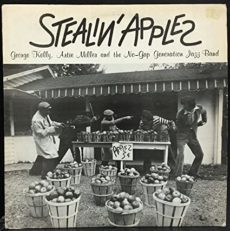
George Kelly was born on July 31, 1915 in Miami, Florida. In the 1930s Panama Francis was a sideman in Kelly’s band. During the Forties, he played in Al Cooper’s band.
Kelly played in Francis’s Savoy Sultans band in the 1970s, and had played of the same name in the 1940s. Leading his own bands he was also a sideman who worked with Tiny Grimes, Rex Stewart, and Cozy Cole.
Tenor saxophonist, vocalist, bandleader, and arranger George Kelly, who recorded seven albums as a leader, passed away at the age of 82 on May 24, 1998.

More Posts: arranger,bandleader,history,instrumental,jazz,music,saxophone,vocal
Daily Dose Of Jazz…
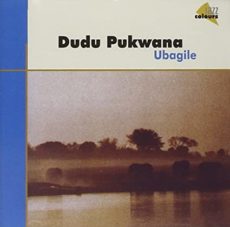
Mthutuzeli Dudu Pukwana was born on July 18, 1938 in Walmer Township, Port Elizabeth, South Africa. He grew up studying piano in his family, but in 1956 he switched to alto saxophone after meeting tenor saxophone player Nikele Miyake In 1962, Pukwana won first prize at the Johannesburg Jazz Festival with Moyake’s Jazz Giants. In his early days, he also played with Kippie Moeketsi. Chris McGregor then invited him to join the pioneering Blue Notes, a sextet, where he was the principal composer and played along with Mongezi Feza, Nikele Moyake, Johnny Dyani and Louis Moholo.
As mixed-race groups were illegal under apartheid, the Blue Notes, increasingly harassed by authorities, emigrated to Europe in 1964, playing in France and Zürich, Switzerland before settling in London, England. After they split in the late 1960s, Pukwana joined McGregor’s Brotherhood of Breath Big Band, which featured his soloing and composing. He wrote Mra, one of the best-loved tunes by the Brotherhood.
1967 saw Dudu receiving his first mention of success with the Bob Stuckey Trio in America’s DownBeat magazine, which later expanded to a quartet when Phil Lee joined on guitar. He went on to form two groups with Feza and Moholo. One was the afro rock band Assagai, the other Spear, with whom he recorded the seminal afro-jazz album In The Townships in 1973 for Virgin Records at The Manor Studio.
His fiery voice was heard in many diverse settings including recordings of Mike Heron, Centipede and Toots and the Maytals. In 1978, Pukwana founded Jika Records and formed his own band, Zila, featuring South Africans Lucky Ranku on guitar and powerful vocalist Miss Pinise Saul. In duo with John Stevens, he recorded the free session They Shoot To Kill in 1987, dedicated to Johnny Dyani. In 1990, Pukwana took part in the Nelson Mandela Tribute held at Wembley Stadium.
Alto saxophonist, pianist, and composer Dudu Pukwana, who was not known for his piano playing, passed away in London, England of liver failure on June 30, 1990, not long after the death of his longtime friend and colleague McGregor.
More Posts: bandleader,composer,history,instrumental,jazz,music,piano,saxophone
Daily Dose Of Jazz…
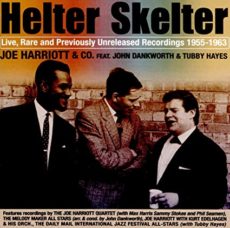
Joseph Arthurlin Harriott was born in Kingston, Jamaica on July 15, 1928. Harriott was educated at Alpha Boys School, an orphanage in the city where he learned to play the clarinet, the instrument that was assigned to him shortly before his tenth birthday. He took up the baritone and tenor saxophone while performing with local dance bands before settling on the alto saxophone.
Moving to London, England as a working musician in the summer of 1951 at the age of 23 as a member of Ossie Da Costa’s band, he initially began as a bebopper, and also became a pioneer of free-form jazz. Harriott was part of a wave of Caribbean jazz musicians who arrived in Britain during the 1950s, including Dizzy Reece, Harold McNair, Harry Beckett and Wilton Gaynair.
Deeply influenced by Charlie Parker, he developed a style that fused Parker with his own Jamaican musical sensibility, most notably the mento and calypso music he grew up with. During the 1950s, he had two long spells with drummer Tony Kinsey’s band, punctuated by the membership of Ronnie Scott’s short-lived big band, occasional spells leading his own quartet and working in the quartets of drummers Phil Seamen and Allan Ganley.
Harriott began recording under his own name in 1954, releasing a handful of E.P. records for Columbia, Pye/Nixa and Melodisc throughout the 1950s. However, the majority of his 1950s recordings were as a sideman with the musicians previously mentioned, also backing a diverse array of performers, from mainstream vocalist Lita Roza to traditional trombonist George Chisholm to the West African sounds of Buddy Pipp’s Highlifers. Harriott also appeared alongside visiting American musicians during this period, including a “guest artist” slot on the Modern Jazz Quartet’s 1959 UK tour.
Forming his own quintet in 1958, Joe’s hard-swinging bebop was noticed in the United States, leading to the release of the Southern Horizons and Free Form albums on the Jazzland label. By now firmly established as a bebop soloist, in 1960 Harriott turned to what he termed “abstract” or “free-form” music. During the late 1960s he and violinist John Mayer developed Indo-Jazz Fusion – an early attempt at building on music from diverse traditions. His work in 1969 was to be the last substantial performance of his career.
While he continued to play around Britain wherever he was welcome, no further recording opportunities arose. He was virtually destitute in his last years and ravaged by illness. Alto saxophonist and composer Joe Harriott passed away from cancer on January 2, 1973.
More Posts: bandleader,composer,history,instrumental,jazz,music,saxophone
Daily Dose Of Jazz…
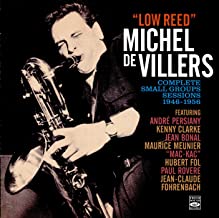
Michel De Villers was born July 13, 1926 in Villeneuve-sur-Lot, France and learned to play alto saxophone as a teenager. He would later expand to clarinet and baritone saxophone. Playing in the latter half of the 1940s with Jean-Claude Fohrenbach, Django Reinhardt and Rex Stewart, he then joined the Edward VII Theatre band in Paris.
In the 1950s he worked in the bands of Geo Daly, Jack Diéval, André Persiany, and Gérard Pochonet. He also played with touring American musicians such as Buck Clayton, Bill Coleman, Jonah Jones, and Lucky Thompson. The Seventies saw De Villers as less active as a musician, working as a jazz writer and radio screenwriter. In the 1980s he became active again as an educator and performer, working later in his career with Christian Garros, Pierre Michelot, Roger Guérin, and Marc Fosset.
Saxophonist, clarinetist, and bandleader Michel De Villers October 25, 1992, Mont St. Aignan, France.
More Posts: bandleader,clarinet,history,instrumental,jazz,music,saxophone
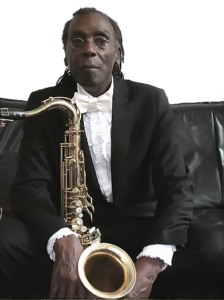
Three Wishes
When the Baroness inquired of Ira Jackson what his three wishes were and he replied:
-
-
“My wishes have nothing to do with my music, directly. This has puzzled me all my life. I wish I could make a trip through the entire universe. I’d like to find the key to the univeerse, how it all started, what it is really. What is this? That’s be my first wish.”
-
“And then, the second, I… since I have to live on this planet, I wish there was peace here. That’s about all for the second wish. ”
- “I just wish I could use all of my mind, all of my potential I’m working on that anyway. Like one works on scales, you know? You can practice using it. That’s what it would be.”
-
*Excerpt from Three Wishes: An Intimate Look at Jazz Greats ~ Compiled and Photographed by Pannonica de Koenigswarter

More Posts: baroness,history,instrumental,jazz,music,pannonica,saxophone,three,wishes