

Daily Dose Of Jazz…
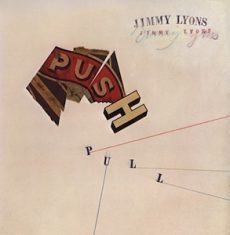
Jimmy Lyons was born on December 1, 1931 in Jersey City, New Jersey and raised there until the age of nine, when his mother moved the family to Harlem and then the Bronx in New York City. In the mid-1940s he got his first saxophone and took lessons from Buster Bailey.
After high school he was drafted into the United States Army and spent 21 months on infantry duty in Korea before spending a year playing in army bands. Once discharged he enrolled at New York University but by the end of the Fifties, Lyons was supporting his music by working for the United States Postal Service.
1960 saw Jimmy followed Archie Shepp into the saxophone role in the Cecil Taylor Unit. His post-Parker sound and strong melodic sense became a defining part of the sound of that group, from the 1962 Cafe Montmartre sessions onwards. During the 1970s, he ran his own ensemble, with bassoonist Karen Borca and percussionist Paul Murphy and was part of the loft jazz movement.
Lyons’ group and Cecil Taylor Unit continued a parallel development throughout the 1970s and 1980s, often involving the same musicians, including trumpeter Raphe Malik, bassist William Parker and percussionist Murphy.
In 1976, Lyons performed in a production of Adrienne Kennedy’s A Rat’s Mass directed by Cecil Taylor at La MaMa Experimental Theatre Club in the East Village of Manhattan.
Alto saxophonist Jimmy Lyons, who recorded eight albums as a leader, twenty-nine as a sideman and performed in the free jazz genre, died from lung cancer at the age of 54.
More Posts: bandleader,history,instrumental,jazz,music,saxophone
Daily Dose Of Jazz…
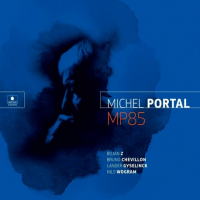
Michel Portal was born on November 27, 1935 in Bayonne, France into a musical family and home filled with several instruments growing up. His interest in jazz began after hearing it on the radio after World War II. He studied clarinet at the Conservatoire de Paris and conducting with Pierre Dervaux.
Gaining experience in light music with the bandleaders Henri Rossotti and with Perez Prado in Spain in 1958, Michel performed with drummer Benny Bennett, Raymond Fonsèque, Aimé Barelli and for many years, the singer Claude Nougaro.
Portal co-founded the free improvisation group New Phonic Art. During 1969, he played on a recording of Karlheinz Stockhausen’s Aus den sieben Tagen.
He began scoring music for films in the 1980s. He won the César Award for Best Music Written for a Film three times. Playing both jazz and classical music and is considered to be “one of the architects of modern European jazz.
Composer, saxophonist, and clarinetist Michel Portal continues to perform and record.

More Posts: bandleader,clarinet,composer,history,instrumental,jazz,music,saxophone
Daily Dose Of Jazz…
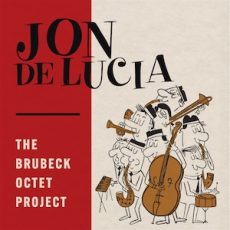
Jon De Lucia was born on November 26, 1980 in Quincy, Massachusetts. He is predominantly a student of jazz, but also has a deep interest in the folkloric music and instruments of Cuba, Japan, Ireland and Italy. He has performed on a variety of ethnic flutes, drums and stringed instruments.
Having led his groups and played as a sideman in Boston, Massachusetts, New York City and all over Japan, he has worked with Tommy Crane, David Tronzo, Bob Moses, Bob Gullotti, John Lockwood and Thomas Morgan among others.
He leads the Jon De Lucia Group, and the baroque improvising Luce Trio. Saxophonist and composer Jon De Lucia, now based in Brooklyn, New York, continues to compose, perform and teach full time at BMCC in Tribeca, New York.
More Posts: bandleader,composer,history,instrumental,jazz,music,saxophone
Daily Dose Of Jazz…
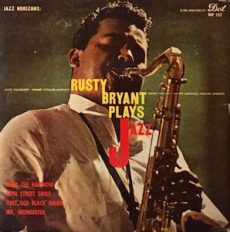
Rusty Bryant was born Royal Gordon Bryant on November 25, 1929 in Huntington, West Virginia and grew up in Columbus, Ohio where he became a fixture of the local jazz scene.
He worked with Tiny Grimes and Stomp Gordon before founding his own ensemble, the Carolyn Club Band in 1951. Signing with Dot Records in 1954 Rusty released several albums as a leader in the second half of the 1950s. In 1953, his live recording All Nite Long which was a faster version of Night Train, became a hit R&B single in the U.S.
With his Dot contract ending in 1957 he returned to Columbus to do mostly local engagements, playing often with pianist-organist Hank Marr and a young Nancy Wilson also sang in his group. It was not until his appearance on the 1968 Groove Holmes album That Healin’ Feelin’ that he resurfaced beyond regional acclaim, and soon after he began leading dates for Prestige Records.
Bryant recorded extensively for the label from 1969 through the middle of the 1970s, being a sideman with Ivan “Boogaloo Joe” Jones, Johnny “Hammond” Smith, Charles Kynard, and Sonny Phillips. His 1970 release Soul Liberation was his most commercially successful, reaching No. 35 on the U.S. Black Albums chart and No. 15 on the Top Jazz Albums chart.
Tenor and alto saxophonist Rusty Bryant, who recorded into the early 1980s before returning to Columbus and played mostly local dates, died on March 25, 1991.
More Posts: bandleader,history,instrumental,jazz,music,saxophone
Daily Dose Of Jazz…
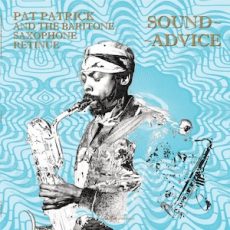
Pat Patrick was born Laurdine Kenneth Patrick Jr. on November 23, 1929 in East Moline, Illinois, to Laverne and Laurdine Kenneth Patrick. He first learned piano, drums, and trumpet as a child, and then switched to saxophones. He attended and studied music at DuSable High School in Chicago, Illinois where he met fellow students and future musicians bassist Richard Davis and saxophonists John Gilmore and Clifford Jordan. While still in school he was baritone saxophonist for the Regal Theater’s house band.
1949 saw Pat enrolled at Florida Agricultural and Mechanical University, but soon returned to Chicago to study at Wilson Junior College. Around 1950 he first played in one of Sun Ra’s bands as part of a trio and occasionally in Sun Ra’s Arkestra. By 1954 he became a regular member of the band. He moved to New York City in 1961, spent several years in the Arkestra’s communal residences in the East Village and Philadelphia, Pennsylvania.
He went on to play and record with John Coltrane, Blue Mitchell, Mongo Santamaría, Thelonious Monk, and Babatunde Olatunji. In 1972, Patrick co-founded the Baritone Saxophone Retinue, which featured Charles Davis and recorded two albums for Saturn Records.
He toured Europe with Sun Ra in 1970 and 1976, and was part of some other Arkestra performances in that decade, but he also devoted time to teaching at the State University of New York at Old Westbury.>
Baritone and alto saxophonist, bassist, flutist, percussionist and composer Pat Patrick, who is known for his 40-year association with Sun Ra, died from leukemia in Moline on December 31, 1991.
More Posts: bandleader,bass,composer,flute,history,instrumental,jazz,music,percussion,saxophone