

Requisites
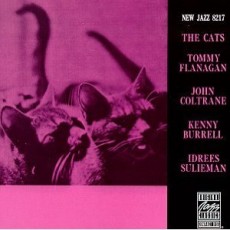
The Cats: In the Fifties, Tommy Flanagan was one of the most highly valued pianists in jazz. His appearance on record was primarily as a sideman, well appreciated by his fellow musicians but not recognized for their display of his superior abilities by a wider audience.
This album contains a Flanagan trio track “How Long Has This Been Going On?” surrounded with the choice, empathetic soloists as Coltrane, Burrell and Sulieman. It is still a delight to hear their interaction to this day with Tommy and the all-Detroit rhythm section of Doug Watkins and Louis Hayes. Flanagan penned all of the originals on this album.
Personnel: Tommy Flanagan – piano, John Coltrane – tenor saxophone, Idrees Sulieman – trumpet, Kenny Burrell – guitar, Doug Watkins – bass, Louis Hayes – drums
Record date: Hackensack, New Jersey – April 18, 1957
Supervised by: Bob Weinstock
Songs: Minor Mishap; How Long Has This Been Going On; Eclypso; Solacium; Tommy’s Tune

More Posts: bass,collectible,drums,guitar,piano,saxophone,trumpet
Requisites
It’s the late 1950s and early ’60s in Los Angeles, California and Jazz, that quintessentially American art form, is struggling to find its footing. Gigs are drying up, and even titans like tenor saxophonist Ben Webster are fighting for recognition in their own country. But here’s the beautiful part: when the spotlight dims, sometimes the most honest music emerges.
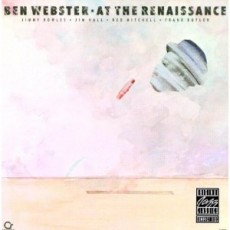
At The Renaissance captures one of those magical nights when Webster and a group of sympathetic, deeply inspired colleagues came together at a Hollywood club and created something essential. This wasn’t about fame or fortune—this was about survival, about keeping the music alive when nobody seemed to be listening.
Recorded live on October 14, 1960, Webster is surrounded by the perfect ensemble: the sensitive touch of pianist Jimmy Rowles, the elegant guitar work of Jim Hall, Red Mitchell’s solid bass foundation, and Frank Butler’s impeccable drumming. Producer Lester Koenig had the wisdom to simply press record and let them do what they do best.
What unfolds across eight tracks—from the haunting “Gone With The Wind” to the classic “Stardust,” from Ellington’s “Caravan” to the blues-soaked originals—is pure empathy translated into sound. Webster’s tone is unmistakable: warm, breathy, deeply human. You can hear everything he’s feeling in every note.
This is the kind of recording that belongs in every collection not because it’s flashy or groundbreaking, but because it reminds us what jazz is really about—musicians speaking truth to each other and to us, even when the world isn’t paying attention.

Give A Gift Of Jazz – Share
More Posts: collectible,saxophone