


MERLON DEVINE
Love and inspiration can come from many places, but Merlon Devine’s love and inspiration to play music came from right inside his childhood home. Growing up in Little Rock, Arkansas with a singing mother and a guitar playing father, Merlon and his nine siblings lived in a home filled with gospel music. Although Merlon did not have the gift to sing as many of his siblings did, he eventually found his voice on the saxophone.
Merlon’s signature sound and gospel tinged expression on the horn has set him apart and propelled him onto various stages to share his musical gift with the world. His music charges the atmosphere, leaving his listeners refreshed and well.
More Posts: adventure,club,genius,history,instrumental,jazz,music,preserving,saxophone,travel
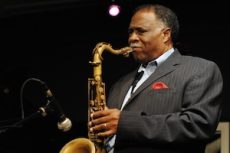
HOUSTON PERSON QUARTET
Nothing, it seems, stops Houston Person, reigning King of the Boss Tenor, now in his sixth decade of performing. His tone has gotten bigger even as his delivery has mellowed. He’s recorded over 75 albums as a leader. With his robust sound and swinging style, Houston is a master’s master.
Concert Location: Dobbs Ferry
More Posts: adventure,club,genius,history,instrumental,jazz,music,preserving,saxophone,travel
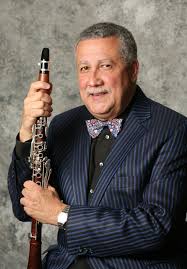
PAQUITO D’RIVERA
Paquito D’Rivera has won a combined 16 Grammy and Latin Grammy Awards (5 Grammy and 11 Latin Grammys). He is celebrated both for his artistry in Latin jazz and his achievements as a classical composer.
Born in Havana, Cuba, he performed at age 10 with the National Theater Orchestra, studied at the Havana Conservatory of Music, and at 17, became a featured soloist with the Cuban National Symphony. As a founding member of the Orquesta Cubana de Musica Moderna, he directed that group for two years, while at the same time playing both the clarinet and saxophone with the Cuban National Symphony Orchestra.
He eventually went on to premiere several works by notable Cuban composers with the same orchestra. Additionally, he was a founding member and co-director of the innovative musical ensemble Irakere. With its explosive mixture of jazz, rock, classical and traditional Cuban music never before heard, Irakere toured extensively throughout America and Europe.
The Band:
Paquito D’Rivera – Clarinet, Alto Saxophone
Alex Brown – Piano
Oscar Stagnaro – Electric Bass
Mark Walker – Drums
Pernells Saturnino – Percussion
Victor Provost – Steel pans
More Posts: adventure,clarinet,club,genius,history,instrumental,jazz,music,preserving,saxophone,travel
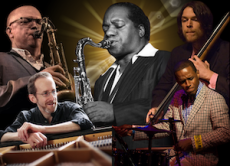
TEDD BAKER QUARTET
Teddy Plays Eddie: The Music of Eddie Harris
The Tedd Baker Quartet celebrates the music of the great Eddie Harris! One of Baker’s many influences, Eddie’s sounds on the saxophone, his compositions, publications, and the stories surrounding him, are “near and dear… His music is as current now as when first released.” Eddie played the original Keystone Korner many times, and “All The Way Live” was recorded there with organ great Jimmy Smith. Baker has gotten to know the Harris family over the years and asked permission to present this program. Join the fun for an evening of exciting music with very special guests!
The Band:
Tedd Baker ~ saxophone
Harry Appelman ~ piano & organ
Hamilton Price ~ bass
Quincy Phillips ~ drums
More Posts: adventure,club,genius,history,instrumental,jazz,music,preserving,saxophone,travel
Requisites
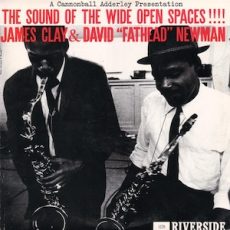
The Sound Of The Wide Open Spaces ~ James Clay and David “Fathead” Newman | By Eddie Carter
This morning’s album from the library brings together two Texas tenor saxophonists for the first of two recordings together. The Sound of The Wide Open Spaces (Riverside RLP 12-327/RLP 1148) is a 1960 release that marks the debut of James Clay and the second album by David “Fathead” Newman. The album’s title refers to the vast landscape of the Lone Star state. This hard bop blowing session allows both musicians to have a superb showcase in which to work. Wynton Kelly on piano, Sam Jones on bass, and Arthur Taylor on drums complete the quintet. My copy is the 1986 U.S. Original Jazz Classics Stereo reissue (Riverside OJC-257).
The quintet starts Side One with the opening ensemble to Wide Open Spaces by Babs Gonzales. David gets right down to business first. James takes the baton and gives an exhilarating interpretation; then Wynton comes in for a spirited reading. Clay and Newman return to share an energetic exchange ahead of the closing chorus. The front line eases up on the gas to begin They Can’t Take That Away From Me by George and Ira Gershwin. James steps into the opening statement with extreme confidence. David returns the compliment on the following reading, and then Wynton closes things out with masterful ease, leading to the theme’s reprise and ending.
Side Two begins with the rhythm section’s introduction to Some Kinda Mean by Keter Betts ahead of the front line’s laid-back theme. James is up first and moves leisurely through the opening solo. David is equally easygoing in the following reading. Wynton’s carefree interpretation precedes the theme’s restatement and the trio’s climax. James switches to the flute for the Johnny Burke, Bob Haggart standard, What’s New? The trio opens gently ahead of David’s tender melody. James leads the way with an emotionally sensitive statement. Wynton comes in next for a beautiful reading, and David delivers a gorgeous finale leading to the polite ending.
Figger-ration by Babs Gonzales takes off with the rhythm section’s quick introduction to the front line’s brisk melody. David is off to the races in the opening solo, then James takes a vigorous romp next. Wynton illustrates his agility in the following interpretation. Sam takes a short walk leading to a vigorous exchange by both horns ahead of the reprise and close. Julian “Cannonball” Adderley produced The Sound of The Wide Open Spaces and Jack Higgins was the recording engineer. The sound quality of this OJC reissue is exceptional, with an excellent soundstage allowing the instruments to come through your speakers vibrantly, as if the musicians are playing in front of your sweet spot, providing an immersive experience for the listener.
The Sound of The Wide Open Spaces by James Clay and David “Fathead” Newman is an overlooked, but wonderful album that, in my opinion, is a perfect place to start if you’re beginning your journey into either musician’s discography. Its got good tunes with great solos by five remarkable musicians who together have created an album that should appeal to any jazz collector and become a welcome addition to any jazz fan’s library!
~They Can’t Take That Away From Me, What’s New? – Source: Jazz Standards.com © 2024 by Edward Thomas Carter
More Posts: choice,classic,collectible,collector,history,instrumental,jazz,music,saxophone