


Jazz Voyager
It’s been a few years since the Jazz Voyager has been on the other side of the Atlantic but this week begins the tradition anew. I’ll be heading across the pond to experience a new city and a new venue. The city is Warsaw, the country is Poland, and the venue is Jassmine. It is an intimate place that fills the gap, embodying the history of a genre that has always neatly balanced on the thin line between elegance and freedom, concentration and element, reflection and downright ecstatic fun.
An old favorite alto saxophonist Vincent Herring will be performing tomorrow night who I haven’t seen in more years than I care to remember. With Joris Dudli the two musicians recall their long and fruitful collaboration with their latest, highly anticipated release Soul Chemistry. Together with rising star Erena Terakubo on saxophones, New York masters Gary Fisher on piano and Essiet Essiet on bass, this group has the perfect chemistry to create the intense, always soulful jazz of today.
The venue is located two floors below the intersection of Koszykowa and Wilcza, at Wilcza 7300-670. For more info go to https://notoriousjazz.com/event/vincent-herring-soul-chemistry.
More Posts: adventure,club,genius,jazz,music,preserving,saxophone
Requisites
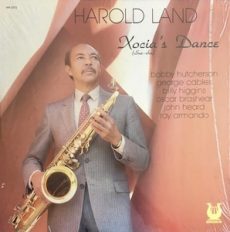
Xocia’s Dance (Sue-sha’s Dance) ~ Harold Land | By Eddie Carter
Harold Land takes the stage for this morning’s discussion with an excellent hard bop album, Xocia’s Dance (Sue-sha’s Dance) (Muse Records MR 5272). He was one of the best West Coast tenor saxophonists during the fifties and sixties. His resume includes playing with the Clifford Brown/Max Roach Quintet, The Curtis Counce Group, The Gerald Wilson Orchestra, and The Timeless All-Stars. Xocia’s Dance reunites Harold with Bobby Hutcherson, who co-led a quintet with him thirteen years earlier. He is joined on this date by Oscar Brashear on flugelhorn (track: B2) and trumpet (A1 to A3), Bobby Hutcherson (A2, A3, B2) on vibes, George Cables on piano, John Heard on bass, Billy Higgins on drums, and Ray Armando (B1) on percussion. My copy is the original 1982 U.S. Stereo release.
Side One opens with Dark Mood, an original by Harold Land that is introduced by the trio ahead of the quintet’s lively theme. Harold gets things started, and then Oscar follows with a clearly inspired performance. George approaches the third reading with driving enthusiasm; then, all three soloists share a moment before the closing chorus and vibrant ending. Daisy Forever is a pretty tune by Oscar Brashear that Bobby gets started ahead of the group’s lovely melody. Brashear leads the way with a solo of seductive warmth; then, Land shows great care in the following reading. Hutcherson enters for the first time and delivers a beautiful interpretation. Cables provides the final gentle verses leading to the group’s closing chorus and slow dissolve.
Xocia’s Dance (Sue-sha’s Dance) comes from the pen of Harold Land, Jr., and the pace moves upward to a lively beat. The trio’s introduction heads toward the ensemble’s medium theme. Harold Sr. has the first solo and gets into a remarkable groove. Oscar answers him with a tasty reading as sweet as honey, and then George provides an exclamation point into the theme’s restatement and close. Side Two opens with Ah, I See, a beautiful tune by Charles Tolliver that starts with Harold’s and Bobby’s tranquil yet haunting theme. Land picks up the pace for a sweetly melodic opening statement, then gives way to Hutcherson’s delightful interpretation. Cables comes in softly and with feeling next before Harold returns for a restrained ending.
The album ends with a romantic postscript by Harold Land. To Lydia, With Love is a touching tribute to his wife and the mood is delicately expressed in the introduction and theme. Harold begins the opening solo lovingly, succeeded by Bobby’s equally thoughtful reading. Oscar’s flugelhorn delights with a beautiful statement. George conveys the feeling of everlasting love in a short anecdote ahead of the ensemble’s closing chorus and fadeout. Esmond Edwards produced Xocia’s Dance, and Jim Mooney was the recording engineer. The album’s sound quality is good, except for a bit of harshness during the piano solo on Ah, I See. The music, however, is terrific and quite capable of brightening anyone’s mood after a long day or week.
In addition to Xocia’s Dance, Harold Land recorded fourteen albums as a leader and appeared in some of the best jazz albums as a sideman. He co-led groups with Billy Higgins, Blue Mitchell, and Red Mitchell. Land later became a professor at the University of California and joined the UCLA Jazz Studies. He passed away on July 27, 2001, from a stroke at age seventy-two but is still remembered as a brilliant improviser and one of the best to play the tenor sax. If you’re a fan of West Coast jazz, I invite you to check out Xocia’s Dance (Sue-sha’s Dance) by Harold Land on your next record shopping trip. It’s a hidden gem in his discography and a personally satisfying album that I can happily recommend for a spot in your library!
~ Harold Land – Source: Wikipedia.org © 2024 by Edward Thomas Carter
More Posts: choice,classic,collectible,collector,history,instrumental,jazz,music,saxophone
ATLANTA JAZZ FESTIVAL
Atlanta Jazz Festival is regarded as one of the largest FREE jazz festivals in the country. An annual celebration of the music, culture and art of jazz begins in April and culminates each Memorial Day weekend, with an outdoor festival featuring jazz artists from all over the world.
Established in 1978, the Atlanta Jazz Festival has become a tradition that draws music lovers from all around the region to experience the latest and greatest in jazz music culture. Mayor Maynard Jackson founded the original jazz festival with the idea to spotlight jazz in the city, because, as he said, “Jazz music is America’s only original art form, and…Atlanta, with its growing reputation as an international center of the arts and education, has both the opportunity and the responsibility to promote an art form whose roots are indigenous to the South.”
Since then, Atlanta Jazz Festival has hosted luminaries of the jazz music tradition including, Lionel Hampton (1980), Dizzy Gillespie (1988/1990), Wynton Marsalis (1989), Nina Simone (2000), Ray Charles (2002), Miles Davis (1983), Herbie Hancock (2000) and many, many more.
The city’s commitment to present a free jazz festival, as it was originally named “The Atlanta Free Jazz Festival,” is representative of a commitment to ensure that everyone who resides in and visits Atlanta will have easy access to high quality cultural experiences.
Lineup:
1 PM – OKAN
3 PM – LUCA CIARLA TRIO
5 PM – JACQUES SCHWARZ-BART
7 PM – OLATUJA
9 PM – PAQUITO D’RIVERA
More Posts: adventure,festival,genius,jazz,music,preserving,saxophone,travel
Daily Dose Of Jazz…
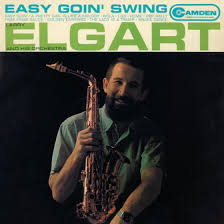
Lawrence Joseph Elgart was born on March 20, 1922 in New London, Connecticut and grew up in Pompton Lakes, New Jersey. His mother was a concert pianist and his father also played piano, though not professionally. With his brother Les they attended Pompton Lakes High School.
Both brothers began playing in jazz ensembles in their teens, and young Larry played with jazz musicians such as Charlie Spivak, Woody Herman, Red Norvo, Freddie Slack and Tommy Dorsey. In the mid-1940s, Les and Larry started up their own ensemble, hiring Nelson Riddle, Bill Finegan and Ralph Flanagan to arrange tunes for them. Their ensemble was not successful, and after a few years, they scuttled the band and sold the arrangements they had commissioned to Tommy Dorsey. Both returned to sideman positions in various orchestras.
In 1953, Larry met Charles Albertine and recorded two of his experimental compositions, Impressions of Outer Space and Music for Barefoot Ballerinas. The recordings were not commercially successful but became collector items for fans of avant-garde jazz. With Albertine they put together an ensemble and using precise microphone placements produced what came to be known as the Elgart Sound. Proved to be very commercially successful, throughout the 1950s they enjoyed a run of successful albums and singles on the Columbia label.
Their initial LP, Sophisticated Swing, released in late 1953, was credited to The Les Elgart Orchestra, because, according to Larry, Les was more interested than his brother in fronting the band. In 1954, the Elgarts left their permanent mark on music history in recording Albertine’s Bandstand Boogie, for the legendary television show American Bandstand. In 1955, the band became The Les and Larry Elgart Orchestra, but the brothers split in 1959, each subsequently releasing his own series of albums.
Larry signed with RCA Victor and his 1959 album New Sounds At the Roosevelt was nominated for a Grammy. From 1960 to 1962, he released music on MGM Records. The brothers reunited in 1963 and recorded several more albums until 1967 they again went their separate ways.
In 1981 he departed from the Elgart Sound for jazz funk and fusion genres, producing Flight of the Condor for the RCA Victor. His biggest exposure came in 1982, with the success of Hooked on Swing. The instrumental was a medley of swing jazz hits In the Mood, Cherokee, Don’t Sit Under the Apple Tree, American Patrol, Sing, Sing, Sing, Don’t Be That Way, Little Brown Jug, Opus #1, “ake the A Train, Zing Went the Strings of My Heart and A String of Pearls.
Alto saxophonist and bandleader Larry Elgart, who was a resident of Longboat Key, Florida died on August 29, 2017 at a hospice center in Sarasota, Florida at the age of 95.

More Posts: bandleader,history,instrumental,jazz,music,saxophone
Daily Dose Of Jazz…
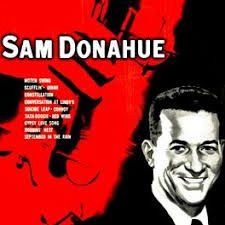
Samuel Koontz Donahue was born on March 18, 1918 in Detroit, Michigan and put together his first band when he was only 15 years old. He played in the bands of Gene Krupa, Harry James, and Benny Goodman. During World War II, he took over the US Navy band of Artie Shaw. After the war, he assembled and led a group that recorded extensively for Capitol Records.
He went on to create a new band enlisting trumpeters Harry Gozzard, Doc Severinsen, Wayne Herdell, arranger Leo Reisman, vocalists Frances Wayne, Jo Stafford and where Frank Sinatra Jr. spent time learning how to sing before it was dissolved in 1951. Then he re-enlisted in the Navy to serve in the Korean War.
His compositions included Quiet and Roll ‘Em with Gene Krupa, Convoy, LST Party, Scuttlin’, Love Scene, Please Get Us Out, Root Toot, Constellation, Conversation at Lindy’s, Saxa-Boogie, and Saxophone Sam. He went on to record with RCA Victor, Acrobat, Arista record labels.
Saxophonist Sam Donahue died from pancreatic cancer on March 22, 1974.
More Posts: bandleader,composer,history,instrumental,jazz,music,saxophone