

Daily Dose Of Jazz…
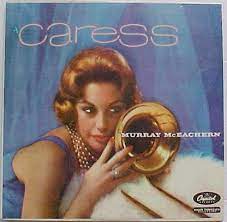
Murray McEachern was born in Toronto, Ontario, Canada on August 16, 1915 and studied the violin at the Toronto Conservatory of Music as a boy, and played his first concert recital at Massey Hall at age 12. As a teenager he studied both the saxophone and clarinet, playing with Lucio Agostini and also appearing on CRBC with Percy Faith. Over time he became proficient on several instruments, including the trombone, bass and trumpet.
In 1936, he went to Chicago, Illinois in search of work and got a break as soloist on trombone for Benny Goodman’s big band. He also worked with the Jack Hylton orchestra and then with the Casa Loma Orchestra led by Glen Gray from 1937-41. In 1941, McEachern joined the Paul Whiteman orchestra and shortly after began entertaining U.S. troops during World War II. Two years after the end of the war he went to work with the Phil Moore orchestra.
Murray did studio work in his later career for Hollywood films, including solo performances in The Glenn Miller Story, Paris Blues and The Benny Goodman Story. In the 1960s he was in the Morey Amsterdam Orchestra for the Morey Amsterdam Show on Television Station KTLA in Los Angeles.
A successful recording artist as leader, McEachern toured Europe in 1972 and briefly worked with the Duke Ellington orchestra the following year. He was owner/director of the Tommy Dorsey orchestra from 1974-77.
Trombonist and alto saxophonist Murray McEachern transitioned on April 28, 1982.

More Posts: bandleader,history,instrumental,jazz,music,saxophone,trombone
Requisites
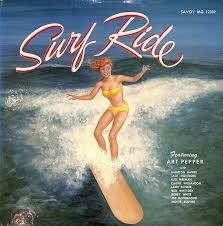
SURF RIDE | ART PEPPER
Saxophonist Art Pepper made his debut recording session of Surf Ride in Los Angeles, California on March 4, 1952, when he recorded tracks 4-6 on the album. Subsequent recording sessions took place on March 29, 1953 when he recorded tracks 1-3 and then on August 25, 1954 recording tracks 7-12. The three sessions resulted in the completion of the twelve takes that ultimately made it to the album.
The album was produced by Ozzie Cadena and originally released as a 12 inch LP on the Savoy label in 1956. The liner notes were written by Yasukuni Terashima and the cover offers a clear though slightly too wholesome California motif to be considered for an addition to the cheesy Fifties Batchelor Collection of “girls on covers “, though the redhead in bikini helps.
TRACKLIST | 37:25 All compositions by Art Pepper except where noted.-
- Tickle Toe (Lester Young) – 2:55
- Chili Pepper – 3:00
- Susie the Poodle – 3:14
- Brown Gold – 2:26
- Holiday Flight – 3:1
- Surf Ride – 2:54
- Straight Life – 2:52
- Cinnamon – 3:11
- Thyme Time – 3:30
- The Way You Look Tonight (Dorothy Fields, Jerome Kern) – 3:48
- Nutmeg – 3:15
- Art’s Oregano – 3:08
- Art Pepper – alto saxophone
- Jack Montrose – tenor saxophone (tracks 7-12)
- Russ Freeman (tracks 1-3), Hampton Hawes (tracks 4-6), Claude Williamson (tracks 7-12) – piano
- Monty Budwig (tracks 7-12), Joe Mondragon (tracks 4-6), Bob Whitlock (tracks 1-3) – bass
- Larry Bunker (tracks 4-12), Bobby White (tracks 1-3) – drums

More Posts: choice,classic,collectible,collector,history,instrumental,jazz,music,saxophone
Daily Dose Of Jazz…
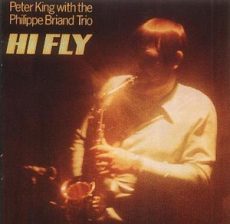
Peter John King was born on August 11, 1940 in Kingston upon Thames, Surrey, England. He took up the clarinet and saxophone as a teenager, entirely self-taught. His first public appearances were in 1957, playing alto in a trad jazz group at the Swan Public House in a group organized by trumpeter Alan Rosewell. After the performance he chose to be a professional musician. He came under the strong musical influence of Charlie Parker developing a bebop style inspired by Parker.
In 1959, at the age of 19, he was booked by Ronnie Scott to perform at the opening of Scott’s club in Gerrard Street, London, England. In the same year, he received the Melody Maker New Star award. He worked with Johnny Dankworth’s orchestra from 1960 to 1961, and went on to work with the big bands of Maynard Ferguson, Tubby Hayes, Harry South, and Stan Tracey, the Brussels Big Band, and the Ray Charles band on a European tour.
He played in small groups with musicians such as Philly Joe Jones, Zoot Sims, Al Cohn, Red Rodney, Hampton Hawes, Nat Adderley, Al Haig, John Burch, Bill Watrous, and Dick Morrissey, Tony Kinsey, Bill Le Sage, Jimmy Witherspoon, Joe Williams, Jon Hendricks, and Anita O’Day. His musical curiosity led him to associate with freer idioms in John Stevens’ ‘Freebop’ group in the 1980s. He appeared on the soundtrack of the 1969 film The Italian Job. He was a member of the Charlie Watts Tentet.
From the early 1990s, his style matured and flourished as an improviser and a composer. He found ways to combine jazz and classical techniques without diluting either and he recorded the results on his albums Tamburello, Lush Life and Janus with the Lyric String Quartet.
He won the BBC ‘Musician of the Year’ award, appeared in the documentary film, No One But Me, discussing jazz vocalist Annie Ross and appeared in the movies Blue Ice and The Talented Mr. Ripley. His autobiography Flying High was widely praised for its candour and honesty about his musical career and personal life, his international associations in the jazz world, and the many years in which he battled addiction. Saxophonist, clarinetist and composer Peter King transitioned on August 23, 2020 in Putney, South London, England at 80.
Daily Dose Of Jazz…
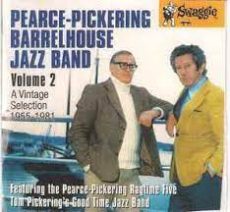
Thomas Mansergh Pickering was born on August 8. 1921 in Burra, South Australia, Australia. When the family moved to Australia’s island state of Tasmania from Burra in the mid-l930s and settled in the house next door to where Ian Pearce lived, the stage was set for the beginning of what was to become a significant part of Tasmania’s jazz history.
In his mid teens, he and Ian discovered British dance bands and over timethey embraced Benny Goodman, Louis Armstrong and the Swing Era musicians. Pee Wee Russell and Bud Freeman came later. At sixteen Tom received his first clarinet, doubling on saxophone and with his brother Cedri on drums, friend Ian playing cornet, pianist Rex Withers-Green, they gave birth to The Barrelhouse Four. He started playing in local bands and the four hit at local jam sessions. With the oncoming of WWII in 1939 they went their separate ways, reuniting in 1946 to record their first commercial pressing.
Pickering played traditional jazz in various parts of Australia during the late 30s and 40s. He continued working throughout succeeding decades, continuing his preference for older styles but also playing effective tenor saxophone in mainstream settings. His playing and recording career continued apace into the 80s, and his contribution to the musical life of his country has been rewarded with a number of honours.
Pickering went on to form his Good Time Jazz Band, which found success until the rising popularity of rock music led to the band’s eventual break up. A trio followed untilhe and Ian put together the Pearce- Pickering Ragtime Five. They had two very long and successful runs at the Tattersall’s Bar and Bistro, and then at Wrest Point Casino.
Ill-health led to Tom’s eventual retirement from music and the end of his playing career. Having qualified as a librarian in 1948, he would go on to work in the State Library of Tasmania, then became Parliamentary Librarian in 1974. He was made a member of the Order of Australia (AM), won the Australian Jazz Convention Composition Competition twice, and received the Satchmo Award.
Clarinetist Tom Pickering transitioned in Hobart, Tasmania on October 26, 2001.
More Posts: bandleader,clarinet,history,instrumental,jazz,music,saxophone
Daily Dose Of Jazz…
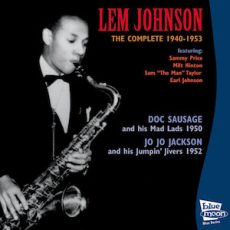
Lemuel Charles Johnson was born August 6, 1909 in Oklahoma City, Oklahoma. He played clarinet in local ensembles in the 1920s, however, he picked up saxophone in 1928, playing with Walter Page’s Blue Devils.
Early in the 1930s he played in the band of Grant Moore from 1931 to 1935 in the Milwaukee, Wisconsin area. Then he went to work with Eli Rice and Earl Hines. By 1937 he was moving to New York City where he played with Fess Williams, Luis Russell and Louis Jordan, before joining Skeets Tolbert’s band in 1939. In Tolbert’s group Johnson sang in addition to playing saxophone.
Lem recorded with Buster Harding, Eddie Durham, Edgar Hayes, Sidney Bechet, Claude Hopkins, St. Louis Jimmy, Sam “The Man” Taylor and Sammy Price. He also recorded with Johnny Long and his Orchestra on Coral Records. He cut several sessions as a leader, which have subsequently been released on compact disc.
After the 1940s he went into semi-retirement and occasionally played into the Sixties. Tenor and soprano saxophonist Lem Johnson transitioned in New York City on April 1, 1989.
More Posts: history,instrumental,jazz,music,saxophone