

Daily Dose Of Jazz…
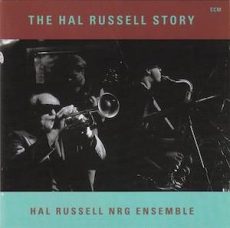
Hal Russell was born Harold Russell Luttenbacher on August 28, 1926 in Detroit, Michigan. Raised in Chicago, Illinois from the eighth grade, he began playing drums at age four, but majored in trumpet at college. He subsequently drummed in several big bands, including those of Woody Herman and Boyd Raeburn.
As with many young players in the mid-1940s, Russell’s life was irreversibly changed by bebop. In the 1950s he worked with Miles Davis, Billie Holiday, Sonny Rollins, John Coltrane, and Duke Ellington. During this period he succumbed to drugs and was a heroin addict for ten years. In 1959, he joined the Joe Daley Trio, whose Newport’ 1963, which was mostly studio material, was reputedly one of the earliest free jazz records.
The early 1970s saw Hal as the regular percussionist for the band at the suburban Chicago Candlelight Dinner Playhouse. He played mostly drums, but occasionally vibes and keyboards. By the end of the decade he formed the NRG Ensemble, which featured saxophonist Mars Williams, multi-instrumentalist Brian Sandstrom, and percussionist Steve Hunt, among others. During this period he started playing tenor and soprano saxophone and trumpet, in addition to drums and vibes.
Issuing his first album in 1981 for the Nessa label, in the late Eighties the group began playing frequently in Europe, and began recording for ECM with The Finnish/Swiss Tour. In addition to the NRG Ensemble, Russell always maintained several bands, the rock-oriented trio NRG 3 and The Flying Luttenbachers.
Tenor and soprano saxophonist, trumpeter, vibraphonist and drummer Hal Russell, shortly after completing the semi-autobiographical album The Hal Russell Story, transitioned from a heart attack on September 5,1992 in La Grange, Illinois.

More Posts: bandleader,drums,history,instrumental,jazz,music,saxophone,trumpet,vibraphone
DUETS: DIANNE REEVES, CHUCHO VALDÉS, JOE LOVANO
Jazz royalty – times three.
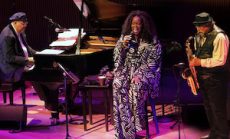
In a rare engagement together and their only joint appearance in NYC, the powerhouse triumvirate of Dianne Reeves, Joe Lovano, and Chucho Valdés joins us for an evening of duets. Don’t miss the preeminent vocalist and NEA Jazz Master, saxophone titan, and leading figure in Afro-Cuban jazz, as they perform in pairings that showcase their artistry in stunning new ways.
More Posts: adventure,club,genius,jazz,music,piano,preserving,saxophone,travel,vocal
JOSHUA REDMAN GROUP
where are we” Tour | Kaufmann Concert Hall
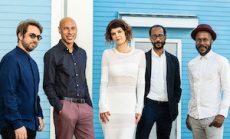
Joshua Redman, saxophone | Gabrielle Cavassa, vocals | Aaron Parks, piano | Joe Sanders, bass | Brian Blade, drums
Widely revered as the greatest jazz saxophonist of his generation, Joshua Redman returns following his sold-out 2022 92NY concert to open our season with a NYC exclusive.
A release concert for his new album “where are we”, the project marks Redman’s first-ever with a vocalist – the mesmerizing Gabrielle Cavassa. Co-winner of the 2021 Sarah Vaughan International Jazz Vocal Competition, Cavassa is an enthralling emerging musician whose artistry is as influenced by Amy Winehouse as by Billie Holiday. She joins Redman with the dynamic newly assembled rhythm section of pianist Aaron Parks, bassist Joe Sanders, and original Redman quartet drummer Brian Blade.
Redman calls “where are we” “a meditation on America and the power and importance of place.” The artists take on music from Rodgers & Hart to Springsteen, all interpreted with the improvisational brilliance and melodic invention that is a hallmark of Redman’s artistry – and of this remarkable ensemble.
More Posts: adventure,club,genius,jazz,music,preserving,saxophone,travel
MAUREESE ITSON
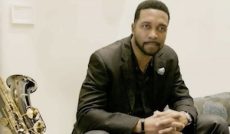
Maureese Itson is a renowned, up and coming Inspirational Saxophonist in the Seattle area. His desire is to inspire people to “Love God, Love People, and Live Amazing” through the gift of music. “It amazes me to see the joy and feel the love from people through music. Music awakens my soul”. He began his love for music growing up in Atlanta, GA. He is a retired Air Force veteran where he spent 20+ years serving. He has a lovely wife and daughter that he loves dearly.
Maureese has been featured on the local Trinity Broadcast Network “Seattle Praise the Lord”, The Washington State Fair, Argosy cruises, the Islander Yacht, and the Gaillard in Charleston, SC. He has performed and shared the stage with artist Michael Bolton, The Mighty Clouds of Joy, Gospel Jazz Artist Ben Tankard, Saxophonist Tom Braxton, Contemporary Christian artists “The Benions”, Jazz Trumpeter Bobby Medina, The Jazz Disciples, Toyin Adekale to name a few. Keep a look out for up coming events in the Seattle area, nationally and abroad from this sought after artist.
Suggested Donation: $5.00 | 25 & Younger: Free | Youth Arive At 6:00pm For Free Dinner
More Posts: adventure,club,genius,jazz,music,preserving,restaurant,saxophone,travel
Daily Dose Of Jazz…
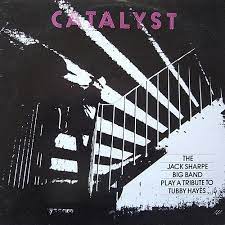
Jack Sharpe was born on August 19, 1930 in London, England. He began playing tenor saxophone at age eighteen. He played with Vic Lewis and Teddy Foster in the early 1950s and freelanced in the London area.
While working as a taxi driver in 1953 he played with Dizzy Reece in 1954, then in Tubby Hayes’s band the following year until 1956. Jack played with Mike Senn in the Downbeaters after 1957, worked further with Hayes, and led his own sextet in 1958. He went on to promote and book other musicians.
In the early 1970s Sharpe managed a nightclub where he led the house band on weekends. By 1975 he had left music intermittently to continue driving a cab. He returned to jazz in 1985, playing with Alan Branscombe and leading a Tubby Hayes tribute band.
Tenor saxophonist and bandleader Jack Sharpe, who was mainly active on the London jazz scene, transitioned on November 4, 1994.
More Posts: bandleader,history,instrumental,jazz,music,saxophone