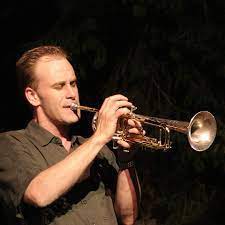
KENNY GARRETT
NEA Jazz Master Saxophonist Kenny Garrett returns! With his illustrious career that includes hallmark stints with Miles Davis, Art Blakey and The Jazz Messengers, Donald Byrd, Freddie Hubbard, Woody Shaw and the Duke Ellington Orchestra, as well as a heralded career as a solo artist that began more than 30 years ago, he is easily recognized as one of modern jazz’s brightest and most influential living masters. And with the marvelous Sounds From The Ancestors, the GRAMMY® Award-winning saxophonist shows no signs of resting on his laurels.
More Posts: adventure,club,genius,jazz,music,preserving,saxophone,travel

Daily Dose Of Jazz…
Corky Corcoran was born Gene Patrick Corcoran on July 28, 1924 in Tacoma, Washington and was considered a child prodigy. He began performing in bands at the age of 16.
Corcoran first played professionally in 1940 with Sonny Dunham, then joined Harry James’s ensemble from 1941 to 1947. Leaving James for a short time, Corky led his own ensemble and worked briefly in Tommy Dorsey’s band before rejoining James in 1949. He continued to work with James until 1957, playing concurrently with his own ensembles. Returning to James in 1962, he stayed almost up to his death.
Tenor saxophonist Corky Corcoran transitioned on October 3, 1979 in his hometown.

More Posts: bandleader,history,instrumental,jazz,music,saxophone
Daily Dose Of Jazz…
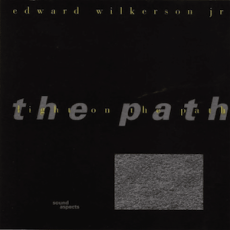
Edward L. Wilkerson Jr. was born in Terre Haute, Indiana on July 27, 1953. Over the course of his career he has associated himself with medium-to large-scale projects and has been a major presence in Chicago, Illinois’s Association for the Advancement of Creative Musicians (AACM), teaching and serving a term as president.
The AACM collective has been a nurturing force for Wilkerson and has informed much of his work. He was an original member of the Ethnic Heritage Ensemble formed by percussionist Kahil El’Zabar and remained with the group from 1976 until 1997. Though he recorded on three albums with the group he was becoming more involved in leading his own projects. His most ambitious project, Shadow Vignettes, was initiated in 1979 with 25 musicians and incorporated dance, poetry, and visual arts. The ensemble’s influences include the big band work of Muhal Richard Abrams, Duke Ellington, Count Basie and Sun Ra.
Wilkerson’s best-documented octet as a leader is 8 Bold Souls, a series of concerts that led Wilkerson to establish the group as a working band. They have released four albums, 8 Bold Souls, Sideshow, Ant Farm, and Last Option. Their music is influenced by the small groups of Duke Ellington and Jimmie Lunceford, but leaves room for adventurous experimentation.
In addition to his work with the preceding groups he has played with the AACM Big Band, Roscoe Mitchell, Douglas Ewart, the Temptations, Chico Freeman, the late Geri Allen, the Lyric Opera of Chicago, Muhal Richard Abrams, Aretha Franklin, and George Lewis.
Wilkerson has received grants from the Illinois Arts Council, the National Endowment for the Arts, Meet the Composer, and the Community Arts Assistance Program, and has been cited in numerous music polls.
Saxophonist, clarinetist, pianist, composer, arranger and educator Ed Wilkerson Jr., who has recorded 14 albums and two soundtracks, continues to teach composition at the AACM School of Music and explore the realms of jazz from his base in Chicago.
More Posts: arranger,bandleader,clarinet,composer,educator,history,instrumental,jazz,music,saxophone

Requisites
Out Of This World ~ Teddy Edwards Quartet | By Eddie Carter
In this morning’s discussion from the library, the Teddy Edwards Quartet comes to play with their delightful 1981 release, Out of This World (SteepleChase Records SCS 1147). Theodore Marcus Edwards was born in Jackson, Mississippi, and comes from a musical family. His father and grandfather were both musicians, and he began playing the alto sax and clarinet at an early age before taking up the tenor sax. He later recorded and played with many great jazz musicians and has an extensive discography as a leader and sideman. He’s joined on this date by an excellent rhythm section, Kenny Drew on piano, Jesper Lundġard on bass, and Billy Hart on drums. My copy is the original U.S. Stereo pressing.
Side One opens with No Name No. 1, the saxophonist’s first of two original tunes. The ensemble starts with a rollicking groove on the opening chorus; then Teddy takes flight with a bright, boppish interpretation. Kenny comes in with a passionate performance; next, Jesper walks his bass briskly. Billy has a short conversation with Teddy leading to the theme’s restatement and abrupt stop. The pace eases the tempo slower for Edwards’ April Love. It’s a pretty song that the trio introduces before the leader steps up to deliver the beautiful theme and opening statement. Drew comes in next with an attractive interpretation complemented by Lundġard and Hart’s foundation preceding the ending theme and summation.
The title tune, Out of This World, by Harold Arlen and Johnny Mercer, debuted in the 1945 romantic comedy of the same name. The quartet swings the melody at a medium beat. Teddy lifts the opening solo to new heights of virtuosity. Kenny follows with a dazzling display of finger dexterity, then Jesper briefly comments ahead of the closing, and the trio dissolves into silence. Summertime by George Gershwin and DuBose Heyward begins Side Two with Teddy’s introduction, which branches into the foursome’s lovely theme. Edwards tells a wonderful story in two gorgeous readings. In between them, Drew presents a statement of great sensitivity. Lundġard matches them in melodic ideas in the closer before Edwards delivers the reprise, and the foursome disappears softly.
The quartet opens another page of The Great American Songbook with That’s All by Alan Brandt and Bob Haymes. It comes to life with Kenny’s deceptively simple introduction and Teddy’s soothing theme. The saxophonist’s opening statement is rendered with incredible beauty and enchantment. Kenny has a brief moment to present an especially warm solo preceding the leader’s return. Cheek To Cheek by Irving Berlin is from the 1935 film Top Hat and concludes the album on an upbeat note. Hart opens with a brisk introduction, setting the stage for Edwards to take off on a spirited melody and opening statement of zestful virtuosity. Drew has the next spot for an equally lively performance, and Hart ends in an enthusiastic whirlwind before Teddy reappears to wrap it up.
Nils Winther produced Out of This World, and Freddy Hansson was the man behind the dials of the recording. The album has a stunning soundstage, and each instrument is captured perfectly. The highs sparkle, the midrange is clean and crisp, and the bass is solid. The record is also incredibly quiet until the music starts. If you’re in the mood for an excellent Hard-Bop album, I invite you to give Out of This World by The Teddy Edwards Quartet a listen at your earliest opportunity. It’s a great album that offers a glimpse into this underrated but talented musician, and I can’t recommend it enough for a spot in your library!
~ Cheek To Cheek, Summertime, That’s All – Source: JazzStandards.com ~ Out of This World – Source: Wikipedia.org © 2023 by Edward Thomas Carter

More Posts: choice,classic,collectible,collector,history,instrumental,jazz,music,saxophone