

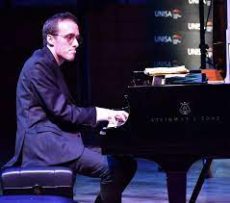
JAZZ DIALOGUE OPEN JAM
Earlybird Show | 6:30pm ~ 8:30pm
Lex Korten (p) | Dave Adewumi (tp) | Carmen Rothwell (b) | Connor Parks (d)
Jazz Dialogue Open Jam | 9:00pm ~ 12:00am
Asaf Yuria (ts) | Brian Charette (org)| Jimmy Macbride (d)
More Posts: adventure,bass,club,drums,genius,jazz,music,organ,piano,preserving,saxophone,travel,trumpet
WAYNE PAGE
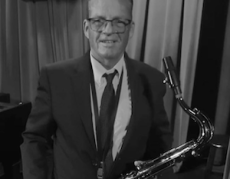
Wayne Page found an active music scene when he arrived at Drake University in 1980, & it did not take him long to be a part of it. There were on the road gigs with the Don Hoy Orchestra as well as opportunities to play with the Des Moines Big Band, a group of which he has been a member since the late 1990s. In addition to his weekly gig with the big band, Wayne performs with the Turner Center Jazz Orchestra, Max Wellman, Fred Gazzo, the Des Moines Symphony, & his own quartet. Wayne is also a first-call saxophonist for national touring acts including Harry Connick Jr., Leslie Gore & The Temptations. In addition to his playing credits, Wayne has been a valued educator, sharing his years of experience & knowledge with middle to high school students in the community.
More Posts: adventure,club,genius,jazz,music,preserving,saxophone,travel
JOHN PERRINE QUARTET
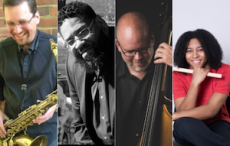
Composer, Saxophonist and Educator John Perrine returns to the BOP STOP! He will be presenting original music with his quartet.
CSU alums Jimmie Parker, piano | CSU faculty member Chris Vance, bass | Crystal Burks, drums
John Perrine, Professor, is Coordinator of Jazz Studies and Director of Jazz Ensembles at Cleveland State University. He has premiered works by Kari Juusela, Aaron Johnson and William Price. Perrine holds a doctorate from Louisiana State University, a masters from Northwestern University, and a BME from Stetson University. His teachers include James Bishop, Fred Hemke, Jonathon Helton and Griffin Campbell. He has studied jazz with Harold Blanchard, Don Owens, Tony Garcia and Michael Koucour.
Recently, Perrine has performed the Bolcom Concert Suite with the Volga Band (Saratov, Russia). Perrine also gave master classes at the Saratov Conservatory and the Rostov On-Don Conservatory and well as at Moscow State University for Culture and Arts where he has been invited back to perform the Ingolf Dahl Saxophone Concerto.
He is a founding member of the Red Stick Saxophone Quartet. The quartet has won national prizes in the MTNA and Fischoff chamber music competitions. Perrine’s composition “Vonnegut: Suite for Saxophone Quartet” was premiered at the North American Saxophone Alliance International Convention in Columbia, South Carolina by the Red Stick Saxophone Quartet.
His recordings “Dance of the Pampanzi” and “Here’s the Thing” are available on most streaming services.
More Posts: adventure,club,genius,jazz,music,preserving,saxophone,travel
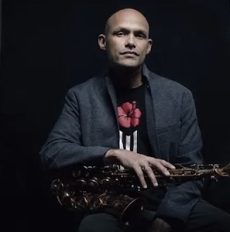
MIGUEL ZENÓN QUARTET
More Posts: adventure,club,genius,jazz,music,preserving,restaurant,saxophone,travel
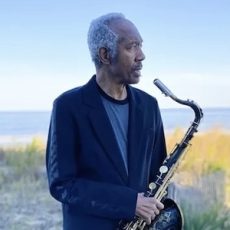
BILLY HARPER QUINTET
Billy Harper – tenor saxophone | Freddie Hendrix – trumpet | Francesca Tanksley – piano | Ben Young – bass | Aaron Scott – drums
“His improvisations are torrential, dance-like and swinging, spiraling upward to mountaintop pronouncements that can leave listeners in a sweat.” – The New York Times Tenor saxophonist Billy Harper leads his celebrated quintet with trumpeter Freddie Hendrix, pianist Francesca Tanksley, bassist Ben Young, and drummer Aaron Scott. One of the indispensable saxophonists of the past 50 years stylistically indebted to Trane, Harper has a distinctive sound and approach that is purely his own. Over the years, he’s worked with Art Blakey, Max Roach, Gil Evans, Elvin Jones, Lee Morgan, and, most recently, the Cookers. The San Francisco Chronicle says, “He is a soul of sensitivity and intelligence, as well as of explosive, majestic passion.” “His viscous, chocolaty tone and depth-charge bursts from the bottom of his range [are] a stark contrast to the current trend for a post-bop homogeneity of tone in the newer generation of saxophone sounds,” reports JazzWise.
More Posts: adventure,club,genius,jazz,music,preserving,restaurant,saxophone,travel