

Daily Dose OF Jazz…
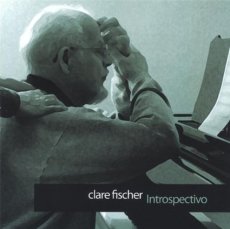
Clare Fischer was born October 22, 1928 in Durand, Michigan and started general music study in grade school with violin and piano as his first instruments. By age 7 he was picking out four-part harmony on the piano and by 12 was composing classical music and creating instrumental arrangements for dance bands.
In high school he added cello, clarinet and saxophone to his arsenal of instruments and studied music theory, harmony and orchestration privately. He started his own band at 15, writing all the arrangements, went on to college studying music composition and theory as a piano major. After graduation and a stint in the Army as the arranger for the U.S. Military Academy Band at West Point, N.Y., he returned to Michigan State and received his Masters in 1955.
He went on to arrange for the vocal quartet Hi-Lo’s that would later become a major influence on Herbie Hancock, would record under his own name in 1962 for Pacific Jazz, play with Bud Shank, Joe Pass and Cal Tjader among others, arrange for Sergio Mendes and Willy Ruff, began playing organ and composed his most famous compositions, Pensativa and Morning.
By the mid-‘70s Fischer was pioneering the electric keyboard, reconnected with Tjader started his group Salsa Picante, won a Grammy for his album 2+2 and Free Fall, forayed into R&B doing orchestral sweeteners, worked with Rufus with Chaka Khan, The Jacksons, Earl Klugh, The Debarges, Shot-gun and Atlantic Starr and pop artists such as Paul McCartney, Prince, Celine Dion and Robert Palmer, picking up numerous gold records.
From the Eighties on Clare has been commissioned to score symphonic work using Duke Ellington and Billy Strayhorn themes, working with Branford Marsalis, the Netherlands Metropole Orchestra, arranged for Spike Lee’s Girl 6, has conducted clinics and master classes at numerous universities, and continued to record in small group and orchestral settings until his death in Los Angeles, California on January 26, 2012 at age 82..

Take A Dose On The Road
More Posts: arranger,bandleader,composer,keyboard,piano,saxophone,synthesizer
Daily Dose Of Jazz…
Alejandro Santos was born on April 11, 1956 in Buenos Aires, Argentina. He is widely-recognized both in his home country of Argentina and internationally as an extraordinary flutist and multi-instrumentalist playing the piccolo, bass flute, native wood-flutes, tenor and soprano sax, piano, and synthesizers.
He has developed a career as a composer with a unique style, which fuses modern jazz with traditional Argentinean rhythms like candombe, tango, and folk music. He has collaborated on recording and performing projects with Dino Saluzzi, Gonzalo Rubalcaba, Anthony Jackson, Bob Moses, Claudio Roditi, Toquinho, Maria Creuza, Fito Paez and others. Since 2001 he has steadily worked with Al Di Meola’s World Symphony and has recorded on De Meola’s latest album “Flesh on Flesh”.
Alejandro released three solo albums with RCA and GNA/Invasion Records, one of them: 5 Carnavales 4, released in the States, received excellent reviews and reached into the top 30 jazz playlist of the Gavin Report magazine. Alejandro Santos currently performs with his quartet that includes bandoneon, bass and drums.
Jazz Is Global – Share
More Posts: flute,piano,piccolo,saxophone,synthesizer
Daily Dose Of Jazz…
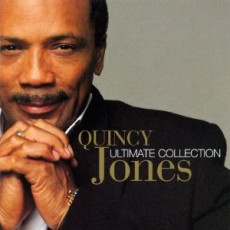
Quincy Delight Jones, Jr. was born on March 14, 1933 in Chicago, Illinois. When he was ten, his family moved to Bremerton, Washington, a suburb of Seattle. He first fell in love with music when he was in elementary school, and tried nearly all the instruments in his school band before settling on the trumpet. While barely in his teens attending Garfield High, Quincy befriended then-local singer-pianist Ray Charles and the two youths formed a combo, eventually landing small club and wedding gigs.
At 18, the young trumpeter won a scholarship to Berklee College of Music in Boston, Massachusetts but dropped out abruptly when he received an offer to go on the road with bandleader Lionel Hampton. The stint with Hampton led to work as a freelance arranger and settling in New York, throughout the 1950s he wrote charts for Tommy Dorsey, Gene Krupa, Sarah Vaughan, Count Basie, Duke Ellington, Dinah Washington, Cannonball Adderley and Ray Charles.
In 1964 Quincy won his first Grammy for Best Instrumental Arrangement of “I Can’t Stop Loving You”, in 1968 he won his second Grammy for Best Instrumental Performance with “Walking In Space” and that same year along with his songwriting partner Bob Russell became the first African Americans to be nominated for an Academy Award for Best Original Song for “The Eyes Of Love” and he became the first African American to be nominated twice within the same year when for Best Original Score for the 1967 film In Cold Blood.
His firsts would continue in 1971 when named musical director/conductor of the Academy Awards ceremony, being first to win the Academy’s Jean Hersholt Humanitarian Award, and He is tied at 7 with sound designer Willie D. Burton as the most Oscar-nominated African American.
His musical achievements are too numerous to list as they span the gambit from film scores such as The Pawnbroker, In The Heat of the Night, The Italian Job, MacKenna’s Gold, The Getaway and The Color Purple to his jazz works “Body Heat” and “Big Band Bossa Nova” from which Soul Bossa Nova was used in the Austin Powers movies to his crowning glories with Miles Davis last release “Live at the Monteux Jazz Festival”, his work with Michael Jackson’s “Thriller” and the charity song “We Are The World”. He continues to produce, conduct, arrange and compose.
More Posts: drums,french horn,piano,synthesizer,trumpet,vocal