


Daily Dose Of Jazz…
Jabbo Smith, born as Cladys Smith on December 24, 1908 in Pembroke, Georgia. At the age of six he went into the Jenkins Orphanage in Charleston, South Carolina where he learned trumpet and trombone. By the age of 10 was touring with the Jenkins Band and at the age of 16, he left the Orphanage to become a professional musician, first playing in bands in Philadelphia, Pennsylvania, and Atlantic City, New Jersey. Around 1925 he made his home in Manhattan, New York City, where he made the first of his well-regarded recordings till 1928.
In 1928 Jabbo toured with James P. Johnson’s Orchestra until the show broke up in Chicago, Illinois. He stayed for a few years and his series of twenty recordings for Brunswick Records in 1929 are his most famous of which 19 were issued. Billed as a rival to Louis Armstrong, unfortunately, most of these records did not sell well enough for Brunswick to extend his contract.
1935 Chicago had him featured in a recording session produced by Helen Oakley under the name of Charles LaVere & His Chicagoans, which included vocals by him and LaVere on LaVere’s composition and arrangement of Boogaboo Blues. In the 1930s, he made his base in Milwaukee, Wisconsin for many years, alternating with returns to New York. While there he collaborated with saxophonist Bill Johnson. Subsequently, Smith dropped out of the public eye, playing music part-time in Milwaukee, and worked a regular job at an automobile hire company.
He made a successful comeback in the late 1960s playing with bands and shows in New York, New Orleans, Louisiana, London, and France through the 1970s and into the 1980s.
He recorded concerts in France, Italy, Switzerland and Netherlands with the Hot Antic Jazz Band. Trumpeter Jabbo Smith, known for his virtuoso playing, passed away on January 16, 1991.
More Posts: bandleader,history,instrumental,jazz,music,trumpet
Daily Dose Of Jazz…
George McKinley Treadwell was born on December 21, 1918 in New Rochelle, New York. He played in the house band at Monroe’s in Harlem from 1941 to 1942 before working with Benny Carter in late 1942 in Florida. Following stints with Ace Harris’s Sunset Royals and Tiny Bradshaw, he worked with Cootie Williams for three years from 1943 to1946.
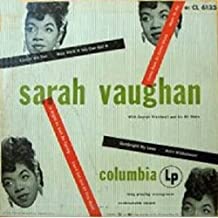
Joining J.C. Heard in 1946 he stayed for a year and the ensemble accompanied Etta Jones and Sarah Vaughan, whom he married in 1947. He also recorded with Dicky Wells and Ethel Waters in 1946.
George quit playing late in the 1940s to work as Vaughan’s manager, and continued in this capacity after their divorce in 1957. He also managed the Drifters and Ruth Brown and did artists and repertoire (A&R) work in the 1950s. After 1959 Treadwell also worked as a songwriter.
Trumpeter George Treadwell, whoalso led a big band and orchestra, passed away on May 14, 1967 in New York City.
More Posts: bandleader,history,instrumental,jazz,music,trumpet
Three Wishes
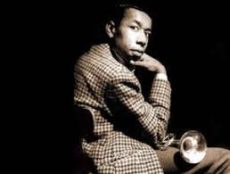
The Baronness inquired of Lee Morgan as to his three wishes and his response was:
- “To be held in high esteem by my fellow jazzmen, as well as by the audiences ~ I mean the jazz public.”
- “To make oodles of money, and use it wisely.”
- “To make a wonderful husband and father.”
*Excerpt from Three Wishes: An Intimate Look at Jazz Greats ~ Compiled and Photographed by Pannonica de Koenigswarter

More Posts: baroness,flugelhorn,history,instrumental,jazz,music,pannonica,three,trumpet,wishes
Requisites
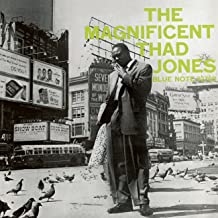
The Magnificent Thad Jones | By Eddie CarterMy next entry from the library is the second of three albums released in 1956 by trumpeter, Thad Jones. The Magnificent Thad Jones (Blue Note BLP 1527) finds him in the company of Billy Mitchell on tenor sax, Barry Harris on piano, Percy Heath on bass, and Max Roach on drums. He comes from a musical family, his older brother is pianist Hank Jones and his younger brother, the dynamic drummer, Elvin Jones. Jones also taught himself to play the cornet, and French horn, becoming a professional musician at sixteen. Thad was also a member of some great big bands including Count Basie, Gil Evans, Quincy Jones, and Ernie Wilkins. Jones also led small groups as well and co-led The Jazz Orchestra with drummer Mel Lewis for twelve-years. He led The Danish Radio Big Band and the Count Basie Orchestra for a time after Basie’s death in 1984. His status as an accomplished arranger and composer has given the music world some of the most beautiful compositions ever written including what many consider his masterpiece, A Child Is Born. My copy used in this report is the 2016 Music Matters Jazz Mono audiophile reissue (MMBLP-1527).
April In Paris, written in 1932 by Vernon Duke and E.Y. Harburg begins our five-song journey. It premiered in the Broadway musical Walk a Little Faster that year, later becoming a favorite song among jazz and pop musicians and vocalists. Percy and Max introduce the tune softly, then the front line and piano enter for the melody with Thad dispensing a mellow tone from his horn. Billy makes a brief comment during the opening and ending chorus. Jones opens with a quote from the English nursery rhyme and children’s song, Pop Goes The Weasel. His ensuing verses flow at a relaxing pace into the reprise and fadeout.
Thad’s Billie-Do is a blues characterized by the quintet’s carefree feeling from the brief introduction of the trio into the opening chorus providing a delightful treat of what’s to come. Everyone kicks back individually except Max who provides pleasant brushwork behind each soloist. Jones begins the lead solo with a sweet-toned delivery, then Mitchell conveys a bluesy impression of playful relaxation with a down-home flavor. Harris swings easily on the third reading, then Percy illustrates his rhythmic ingenuity on an abbreviated closer before the quintet takes the song out.
If I Love Again, the 1932 ballad written by Ben Oakland and J.P. Murray ends Side One at an upbeat pace with the quintet delivering high-spirited energy on the melody. Barry opens the soloing with a jubilant performance, then Billy takes over for a vigorously brisk workout. Thad follows with a captivating reading, then Max closes with a clear, crisp attack providing some irresistible musical thrills swinging to the ensemble’s finale.
If Someone Had Told Me is a little-known ballad by Peter DeRose and Charles Tobias that I believe was written in 1952 because the two earliest vocals of the song were released that year. The first was by vocalist Dolores Gray, and the second was done by Sarah Vaughan. The version heard here is a quartet presentation and an attractive feature for Thad who is the only soloist with the trio providing an elegantly lush foundation under him. The trumpeter delivers a performance of beguiling warmth reflecting a bittersweet, poignant moment into a delicately tender finale as good as any you’ve ever heard or will hear.
Side Two closes with Thedia, a cheerfully joyful tune written for and named after Thad’s young daughter. The rhythm section makes a brief introduction for both horns to walk comfortably at an easy beat during the main theme. Billy takes the first solo, establishing a nice momentum in a meticulously conceived and well-executed performance. Barry is next in the spotlight, strolling and swinging to an intriguing beat. Perry grabs and holds the listener’s attention on the third interpretation with two brief choruses that’ll make him or her feel right at home. Thad takes a long, lengthy ride, soaring to the heights on the next statement seamlessly. Max shares the final spot with the leader in several exceptional exchanges ahead of the ensemble’s closing chorus and exit. The sound quality on The Magnificent Thad Jones is positively stunning with an excellent soundstage and tonal balance between the highs, midrange, and bass that transports your sweet spot to the studio hearing the musicians at their best.
The MMJ reissues also include exceptional front and rear covers, high-definition gatefold photos and the pressings by RTI are on 180-gram Virgin Vinyl. If you’re a fan of Hard-Bop or are just discovering Thad Jones, you’ll be delightfully surprised by The Magnificent Thad Jones. It’s jazz at its best and a title I’m certain you’ll enjoy for a very long time! During the fifties, Blue Note employed a sales strategy of giving distinguishing names to some of the artists on its label to spark the public’s interest in their albums and possibly boost their sales. Other examples of this are The Fabulous Fats Navarro, The Amazing Bud Powell, and The Incredible Jimmy Smith. In the cases of the artists listed above, the strategy succeeded beyond their expectations and the names stuck. Debut Records also used this method for The Fabulous Thad Jones in 1954!
~ April in Paris (Verve Records MG V-8012); The Fabulous Thad Jones (Debut Records DLP-12); If Someone Had Told Me (Decca Records 28051), (Columbia 4-39719, 39719) – Source: Discogs.com
~ April in Paris – Source: JazzStandards.com ~ If I Love Again – Source: MusicNotes.com ~ Thad Jones, Pop Goes The Weasel – Source: Wikipedia.org ©2020 by Edward Thomas Carter
More Posts: choice,classic,collectible,collector,history,instrumental,jazz,music,trumpet
Daily Dose Of Jazz…
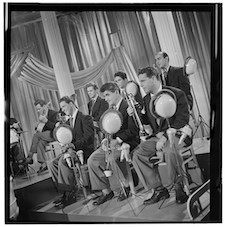
Louis Raphael Mucci was born on December 13, 1909 in Syracuse, New York and began as a baritone horn player. By age ten, he was appearing in professional settings. As a teenager, he switched to trumpet and worked in the late 1930s with Mildred Bailey and Red Norvo before joining Glenn Miller’s ensemble in 1938-1939.
During World War II he played in the bands of Bob Chester, Hal McIntyre, Claude Thornhill, and Benny Goodman. In the first half of the 1950s, he worked as a house musician for CBS and also recorded with Buddy DeFranco and Artie Shaw.
The late 1950s saw him working with Miles Davis, Helen Merrill, and John LaPorta. His association with Davis lasted into the early 1960s and he played with Kenny Burrell in 1964. Trumpeter Lou Mucci passed away on January 4, 2000.
More Posts: history,instrumental,jazz,music,trumpet