

Daily Dose Of Jazz…
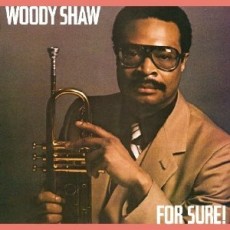
Woody Shaw born December 24, 1944 in Laurinburg, North Carolina with a photographic memory and perfect pitch. Growing up in Newark, New Jersey from the age of one, he began playing bugle at age 9 and performed in the Junior Elks, Junior Mason, and Washington Carver Drum and Bugle Corps. Though not his first choice of instrument, wanting to play the violin, he began studying classical trumpet at Cleveland Junior High School at the age of 11.
Shaw skipped two grades and began attending Newark Arts High School, pursuing an education at Julliard School and his interest in jazz, as his first influences were Louis Armstrong and Harry James. As a teenager, he worked professionally at weddings, dances, and nightclubs. He eventually left school but continued his study of the trumpet under the influence of Dizzy Gillespie, Fats Navarro, Clifford Brown, Booker Little, Lee Morgan and Freddie Hubbard.
In 1963, after many local professional jobs, Woody worked for Willie Bobo with Chick Corea and Joe Farrell before moving to Paris at age 19. There he gigged with Nathan Davis, Bud Powell, Kenny Clarke, Johnny Griffin and Art Taylor. In England he played with Davis, and childhood friends Larry Young and Billy Brooks.
Returning to the States in 1964, Shaw began his career as one of Blue Note Records’ formidable “house” trumpet players. He replaced Carmel Jones in the Horace Silver Quintet, and made his first Blue Note debut on Larry Young’s famed Unity album (1965), upon which three of his compositions “Zoltan”, “Moontrane”, and “Beyond All Limits” would appear.
Over the course of his career he would collaborate frequently and record with Chick Corea, Jackie McLean, Booker Ervin, McCoy Tyner, Andrew Hill, Herbie Hancock, Bobby Hutcherson, Max Roach, Art Blakey & The Jazz Messengers, Onaje Allan Gumbs, Mulgrew Miller, Steve Turre and others. He travelled all over Europe, performed with Max Roach in Iran in 1969, toured Japan, England, Italy, Germany Sweden, Switzerland, Egypt, Sudan, UAE, and India.
He would work as a studio musician and in pit orchestras and on Broadway musicals. He released several albums for Muse and Columbia record labels, was nominated for two Grammy Awards, and was voted Best Jazz Trumpeter of the Year among other accolades and honors. As an educator he taught countless clinics, master classes and private lessons to students around the world, was on the faculty of Jamey Aebersold’s jazz camp, taught Wynton Marsalis, Ingrid Monson, Chris Botti, Wallace Roney and Terence Blanchard among others.
Trumpeter Woody Shaw passed away at age 44 of kidney failure on May 10, 1989, leaving a memorable catalogue of more than sixty albums as a leader and sideman.

More Posts: trumpet
Daily Dose Of Jazz…
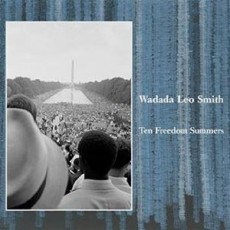
Leo Smith was born Ishmael Wadada Leo Smith on December 18, 1941 in Leland, Mississippi. He started out playing drums, mellophone and French horn before he settled on the trumpet. He played in various R&B groups and by 1967 became a member of the AACM and co-founded the Creative Construction Company, a trio with Leroy Jenkins and Anthony Braxton. In 1971 he formed his own label, Kabell, formed another band, the New Dalta Ahkri, with members including Henry Threadgill, Anthony Davis and Oliver Lake.
In the Seventies, Smith studied ethnomusicology at Wesleyan University and spent this time playing again with Anthony Braxton and recording with Derek Bailey’s Company. In the mid-1980s, Smith became Rastafarian and began using the name Wadada. In 1993, he began teaching at Cal Arts, a position he presently holds and has taught instrument making.
By 1998, Leo and guitarist Henry Kaiser released Yo, Miles! a tribute to Miles Davis’s lesser-known electric period. He has performed and/or recorded with Jack DeJohnette, Malachi Favors, John Zorn, Marion Brown, Frank Lowe and Matthew Shipp among others. In addition to playing the trumpet and flugelhorn, he plays several world music instruments, including the koto, kalimba and the ateneben.

More Posts: flugelhorn,trumpet
Daily Dose Of Jazz…
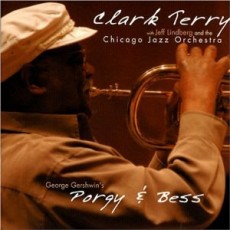
Clark Terry was born on December 14, 1920 in St. Louis, Missouri. After high school he started his professional career in the early 40s playing in local clubs, and then served as a bandsman in the U.S. Navy during World War II. He influenced both Quincy Jones and Miles Davis, teaching the later while in St. Louis.
Terry’s years with Basie and Ellington in the late 1940s and 1950s established him as a world-class jazz artist, blending the St. Louis tone with contemporary styles. After leaving Ellington, Clark’s international recognition soared when he became NBC’s first African-American staff musician. He a ten-year member of The Tonight Show band where his unique “mumbling” scat singing became famous when he scored a hit with “Mumbles.”
Terry continued to play with musicians such as J. J. Johnson and Oscar Peterson, and led a popular group with Bob Brookmeyer in the early 1960s. In the 1970s he concentrated on the flugelhorn, performed studio work and teaching at jazz workshops, toured regularly in the 1980s with small groups and performed as the leader of his Big B-A-D Band.
At the behest of Billy Taylor, early in his career he and Milt Hinton bought instruments and gave instruction to young hopefuls and the idea was planted the seed that became Jazz Mobile in Harlem. He toured with the Newport Jazz All Stars and Jazz at the Philharmonic, recorded for the Red Hot + Rhapsody and Red Hot + Indigo albums, composed more than two hundred songs, performed for seven U.S. Presidents, has been both leader and sideman on more than three hundred albums performing with Clifford Brown, Gary Burton, Charlie Byrd, Tadd Dameron, Eddie “Lockjaw” Davis, Lionel Hampton, Paul Gonsalves and Milt Jackson among others, recorded with symphonies and orchestras and established the Clark Terry Archive at William Paterson University.
Swing and bop trumpeter, pioneer of the flugelhorn and educator Clark Terry has received over 250 awards, medals and honors including a NEA Jazz Masters Award, has received a Grammy Lifetime Achievement Award, 16 honorary degrees, a knighthood, keys to several cities, the French Order of Arts and Letters and over the course of a seventy year career is the most recorded trumpet player of all time appearing on more than 900 known recording sessions.
Trumpeter, and flugelhorn player Clark Terry passed away from complications from advanced diabetes on February 21, 2015 at the age f 94 in Pine Bluffs, Arkansas.

More Posts: flugelhorn,trumpet

Daily Dose Of Jazz…
Jack Purvis was born John Purvis on December 11, 1906 in Kokomo, Indiana. After his mother’s death in 1912 his behavior became uncontrollable, and, as a result of many acts of petty larceny that would remain a part of his adult life, he was sent to a reform school. While there, he discovered that he had an uncanny musical ability, and soon became proficient enough to play both the trombone and trumpet professionally. This also enabled him to leave the reformatory and continue his high school education, while he was playing paying gigs on the side.
One of the earliest jobs he had as a musician was with a band led by the Royal Canadian Mounted Police and not long afterward he was working with the Hal Denman dance band. After high school he played with the Original Kentucky Night Hawks, then Bud Rice, Whitey Kaufman’s Original Pennsylvanians, Arnold Johnson’s orchestra, and then traveled to France with the George Carhart band. The balance of the decade he spent recording as a leader and sideman with several bands.
In 1930, Purvis led a couple of racially mixed recording sessions including the likes of J.C. Higginbotham and Adrian Rollini. He would work with the Dorsey Brothers, Fletcher Henderson, Fred Waring, Charlie Barnet and the New Orleans Symphony Orchestra. His move to California had him in radio broadcasting, working at Warner Studios and with the George Stoll Orchestra.
By the mid Thirties he was back in New York playing with Frank Froeba’s Swing Band but this engagement and subsequent recordings were the end of his recording career. He disappeared from the music world, ultimately being sent to jail in Texas for robbery. After his second conviction and release Purvis worked as a chef, aviator, carpenter, radio repairman and even a mercenary in South America.
One account of trumpeter Jack Purvis’ death is that he gassed himself in San Francisco, California on March 30, 1962. However, his death certificate indicates the cause of death to be fatty degeneration of the liver. He was best known as the composer of Dismal Dan and Down Georgia Way, also played trombone, harp and a number of other instruments, and was one of the earliest trumpeters to incorporate the innovations pioneered by Louis Armstrong.

Daily Dose Of Jazz…
Chuck Mangione was born Charles Frank Mangione on November 29, 1940 in Rochester, New York. He attended the Eastman School of Music from 1958 to 1963, afterwards joining Art Blakey’s Jazz Messengers, for which he filled the trumpet seat.
In the late 1960s, Mangione was a member of the band The National Gallery, then served as director of the Eastman jazz ensemble from 1968 to 1972, and during this time returned to recording with the album Friends and Love, with the Rochester Philharmonic Orchestra.
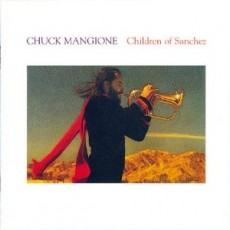
Mangione’s quartet with saxophonist Gerry Niewood recorded “Bellavia” that won him a Grammy for Best Instrumental Composition. His music has been used during two Olympics, performed at the closing ceremonies, and composed the soundtrack for The Children of Sanchez starring Anthony Quinn, winning his second Grammy Award.
Chuck composed and performed the theme for The Cannonball Run among other films. Proficient on both trumpet and flugelhorn, he has performed with a 70-piece orchestra, recorded his hit album Feels So Good, and has worked with Dizzy Gillespie, Steve Gadd, and Chick Corea among other jazz luminaries.
Mangione, along with his brother Gap worked as the Jazz Brothers, recording three albums with Riverside Records. Later worked in one another’s band and orchestra. He has a recurring voice-acting role on the animated King of the Hill, and continues to perform and record with his current band.

More Posts: flugelhorn,french horn,piano,trumpet