

Daily Dose Of jazz…
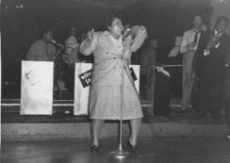
Ernestine Davis was born on August 5, 1907 in Memphis Tennessee. Little is known about her early life but along the way to becoming a vocalist and trumpeter. In 1937, the Piney Woods Country Life School of Mississippi founded to educate black children, created a 16-piece band known as The International Sweethearts of Rhythm to financially support the school.
In 1941, the International Sweethearts of Rhythm severed their ties with the school, moved to Virginia and recruited seasoned professionals of all ethnicities to join their band such as singer Anna Mae Winburn, Ernestine “Tiny” Davis, and alto saxophonist Roz Cron.
Holding their own during the Swing Era, the ladies toured the United States extensively up until 1945 with the end of the war and opportunities dried up as the men returned home. Their high points of touring were the Apollo Theater in New York, the Regal Theater in Chicago, and the Howard Theater in Washington, D. C., where their debut set a box office record of 35,000 patrons in one week.
One such engagement was at The Apollo where the audience was on their feet, Louis Armstrong and Eddie Durham stood in the wings, smiling broadly as Ernestine “Tiny” Davis took off in a riveting solo. The band pushed the fevered audience to new levels as Edna Williams, Willie Mae Wong, and Ruby Lucas upped the ante on the song “Swing Shift.”
Admired by the likes of Count Basie and Louis Armstrong, the later unsuccessfully attempted to lure Davis away at ten times her salary when she was at the height of notoriety. They recorded “The Jubilee Sessions” for radio broadcasts aimed toward America’s black soldiers serving during 1943 to 1946. However, because of the racial makeup of the Sweethearts, they did not get as much exposure to mainstream audiences in the South.
While their exposure to white audiences was somewhat limited, they were extremely popular with black audiences. Tiny and her partner Ruby Lucas owned Tiny and Ruby’s Gay Spot in Chicago during the 1950s.
In 1988, a short film titled “Tiny & Ruby: Hell Divin’ Women” was made as a tribute to Davis, and her lesbian partner of 40 years, drummer Ruby Lucas. Trumpeter and vocalist Ernestine “Tiny” Davis died in 1994.
Daily Dose Of Jazz…
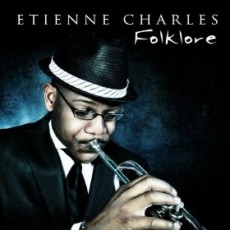
Etienne Charles was born in Trinidad on July 24, 1983 into a family with four generations of musicians. He was immersed in the folk music of his country suffused with the sounds of calypso, steel pan and African Shango drumming to create the diverse colors of his harmonic palette.
The Bishop Anstey Junior School proved to be a potent incubator where he began playing the recorder, followed by trumpet at 10 and formal lessons. An athlete with prowess, Etienne eclipsed his musical success with academics with football, cricket, swimming and water polo teams at Fatima College, winning the Provincial Cup three times, first at the age of 13. He studied privately, at the Brass Institute, become a member of the band, added drums and percussion, landed his first job in a pit orchestra, worked with his father on the road during carnival and with Phase II for the Panorama steel pan competition.
By sixteen Charles was attending the summer performance program at Berklee College of Music, then on to Florida State University, placed or won several competitions, performed at North Sea Jazz Festival, attended the Henry Mancini Institute and received his Master’s from Julliard School of Music.
Etienne has toured, performed or recorded with the Juilliard Jazz Orchestra, Grammy Award winners Roberta Flack, Wynton Marsalis, Johnny Mandel, Ralph MacDonald, Maria Schneider and the Count Basie Orchestra as well as Marcus Roberts, Monty Alexander, Frank Foster, Wycliffe Gordon, Rene Marie, Lord Blakie and David Rudder.
He released his debut album “Culture Shock” in 2006 was followed by “Folklore” three years later and then “Kaiso”. Trumpeter and composer Etienne Charles stands at the vanguard of a new generation of Caribbean musicians and he continues to record, perform and tour.
More Posts: trumpet
Requisites
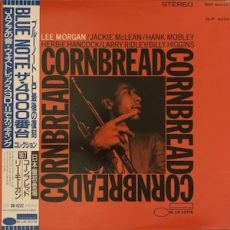
Cornbread ~ Lee Morgan | By Eddie Carter
A few nights ago, I was thinking about my mom and one of her favorite Sunday dinner meals for my sister and me growing up. It consisted of chicken wings, collard greens, macaroni and cheese, black-eyed peas and cornbread. This morning’s album from the library is Cornbread (Blue Note BLP 4222/BST 84222) by Lee Morgan. It was recorded in 1965 but not released until 1967, and is one of the best albums in the trumpeter’s catalog. He’s joined by a superb ensemble: Jackie McLean on alto saxophone; Hank Mobley on tenor saxophone; Herbie Hancock on piano; Larry Ridley on bass; and Billy Higgins on drums. The copy I own is the 1991 Toshiba-EMI Japanese Stereo reissue from Blue Note’s The 4000 Series Collection, sharing the original catalog number.
Side One opens with the title track, Cornbread by Lee Morgan. The rhythm section offers a soulful introduction, leading into the ensemble’s melody. Lee sets the table with a spirited main course, then Hank serves a succulent blues dish. Jackie brings the next plate of savory notes, followed by Herbie’s delicious dessert, completing the meal before the theme’s reprise and the trio’s tasty fadeout. Our Man Higgins, Lee’s tribute to Billy Higgins, showcases the lively interaction between the front line and the drummer during the theme. Jackie gets things started with a spirited interpretation, then Lee responds with a lively statement. Hank steps in next, paying dividends with an invigorating solo. Herbie follows with a captivating presentation, and Billy delivers the goods in a short workout before the sextet returns to take it out.
The second side opener shows that Lee Morgan could compose beautiful ballads, as in his Ceora. Herbie’s gentle, gracious introduction segues into the ensemble’s delicately polite melody. Lee brings soothing lyricism and warm affection to the lead solo. Hank then shares his heartfelt feelings with sincerity and sentimentality next. Herbie adds a romantic touch to the closing solo, leading to the group’s touching, emotional climax. Ill Wind by Harold Arlen and Ted Koehler is a song from the thirties that begins with the trio’s introduction to the ensemble’s melody, with Lee on the mute throughout. Morgan then elegantly welcomes the lead solo like an old friend. Herbie breathes warmth into the second statement, then Lee and Hank give two concise comments preceding the closing chorus and soft finale.
Lee Morgan’s Most Like Lee wraps up the album with an energetic vibe, letting the group dive right into the melody. Hank starts things off with a vibrant, joyful solo, followed by Lee, who keeps the audience engaged with his captivating performance. Jackie glides smoothly into the third solo with his signature swing. Herbie follows with a very relaxing reading. Larry gets the last word and takes a short walk toward the theme’s reprise and climax. Alfred Lion produced the session, and Rudy Van Gelder managed the recording console. The album’s sound quality offers a sit-down listening experience, with a wide soundstage across the treble, midrange and bass that transports the musicians to your listening room with stunning fidelity.
If you’re a seasoned Lee Morgan fan or a new listener that’s looking for an album that can brighten any moment of the day or evening, or can be enjoyed whether you’re in a relaxed or serious mood, I happily recommend and invite you to pick up Cornbread the next time you’re at the record store. It’s a tasty, soulful, and nourishing slice of hard bop and post-bop music that’s not only a wonderful addition to your library but also perfect for spinning on your turntable!
~ Ill Wind – Source: JazzStandards.com © 2026 by Edward Thomas Carter

More Posts: choice,classic,collectible,collector,history,instrumental,jazz,music,piano,trumpet
WYNTON MARSALIS
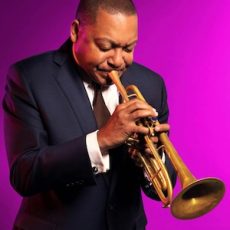
Trumpeter, composer, and 2011 NEA Jazz Master Wynton Marsalis brings the most recent iteration of his iconic Septet to the Miner stage for four performances over two days.
The most famous jazz musician alive, Marsalis is a towering figure in the evolution of the art form. From his New Orleans beginnings and fiery debut with legendary drummer Art Blakey’s Jazz Messengers to his string of acclaimed albums and role as Artistic Director of Jazz at Lincoln Center, Marsalis has amassed a staggering list of accomplishments including nine GRAMMYs and the Pulitzer Prize for Music for his long-form work Blood on the Fields — the first ever awarded to a jazz artist. He received the SFJAZZ Lifetime Achievement Award at SFJAZZ Gala 2022 and made news in 2026 by announcing his departure from his leadership position at Lincoln Center after nearly 40 years.
Marsalis returns following his sublime performance of his score accompanying a screening of the 2010 silent Louis Armstrong biopic Louis during the 2025-26 Season with his vaunted Septet — a format that has remained his most enduring creative outlet and yielded a procession of masterful albums including 1992’s Blue Interlude, 1993’s Citi Movement, 1999’s Mr. Jelly Lord, and 2007’s Here…Now, among others.
Cover: $60.00 ~ $210.00
More Posts: adventure,bandleader,genius,instrumental,jazz,music,preserving,travel,trumpet
Daily Dose Of Jazz…
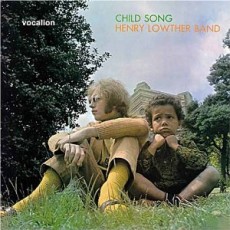
Henry Lowther was born Thomas Henry Lowther on July 11, 1941 Leicester, Leicestershire, England. Learning trumpet, his first experience was on cornet in a Salvation Army band. He studied violin briefly at the Royal Academy of Music but returned to trumpet by 1960 though he sometimes played violin professionally.
In the 1960s, he worked with pianist and composer Mike Westbrook, a relationship that lasted into the 80s, Manfred Mann, John Dankworth from 1967-77, Graham Collier, John Mayall, John Warren, and would appear with the Keef Hartley Band.
The Seventies brought work with Mike Gibbs, Kenny Wheeler, Tony Coe, Gordon Beck and Barbara in addition to his own ensemble, Quaternity. In the 80s Henry worked with the Buzzcocks, Talk Talk, Peter King, Gil Evans, Humphrey Lyttleton on a Buddy Bolden documentary.
He played with Charlie Watts’ band in the late 80s, and then led his own band, Still Waters. From the late 1980s he did much work in big bands, such as the Berlin Contemporary Jazz Orchestra and the London Jazz Composers Orchestra; in the Nineties he worked with Kenny Wheeler’s group, The Dedication Orchestra, the London Jazz Orchestra, George Russell’s Living Time Orchestra, and the Creative Jazz Orchestra. Trumpeter Henry Lowther most recently plays in the band Jazzmoss.