

Daily Dose Of Jazz…
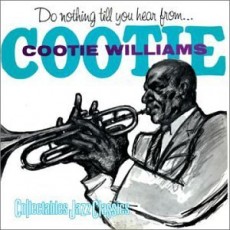
Cootie Williams was born Charles Melvin Williams on July 10, 1911 in Mobile, Alabama and began his professional career with the Young Family band, which included saxophonist Lester Young, when he was 14 years old. In 1928, he made his first recordings with pianist James P. Johnson in New York, where he also worked briefly in the bands of Chick Webb and Fletcher Henderson.
Williams rose to prominence as a member of Duke Ellington’s orchestra, with whom he performed from 1929 to 1940. He recorded his own sessions during this time, both freelance and with other Ellington sidemen. In 1940 he joined Benny Goodman’s orchestra, then a year later formed his own orchestra. Over the years he employed Charlie Parker, Eddie “Lockjaw” Davis, Bud Powell, Eddie Vinson and other important young players.
In 1947, Williams wrote the song “Cowpox Boogie” while recuperating from a bout with smallpox; began playing more rhythm and blues in the late 1940s, in the Fifties he toured with small groups and fell into obscurity. By 1962, he rejoined Ellington, stayed with the orchestra until 1974, after Ellington’s death, and in 1975, and performed during the Super Bowl IX halftime show.
Trumpeter Cootie Williams, who was noted for his occasional singing, renowned for his growling “jungle” style trumpet playing, reputed to have inspired Wynton Marsalis, and was inducted into the Alabama Jazz Hall of Fame, passed away in New York on September 15, 1985, at age 74.
More Posts: trumpet
Requisites
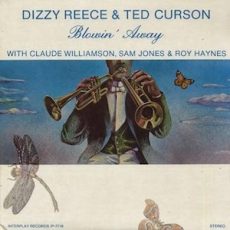
Blowin’ Away ~ Dizzy Reece and Ted Curson | By Eddie Carter
This morning’s album from the library is an obscure gem from 1978. Blowin’ Away (Interplay Records IP-7716) is a terrific hard bop session that unites two outstanding musicians of the 50s and 60s, Dizzy Reece on trumpet (tracks: A1, A3, B2, B3) and Ted Curson on flugelhorn (track: A2) and trumpet (tracks: A3, B2, B3). They’re joined by an exceptional rhythm section: Claude Williamson on piano; Sam Jones on bass; and Roy Haynes on drums. The copy I own is the 1978 U.S. Stereo release. Dizzy and the trio open the album with Stella By Starlight by Victor Young and Ned Washington. The trumpeter gets things going with a solo introduction leading to the quartet’s medium melody. Dizzy opens and closes with two readings that are as smooth as glass. Claude contributes a fine solo in between them propelled by Sam’s and Roy’s peppy support.
Ted steps in next to lead the trio on flugelhorn for the ageless chestnut, All The Things You Are by Jerome Kern and Oscar Hammerstein II. Curson launches the first solo with a bouncy, up-tempo swing. Next up, Williamson delivers a captivating interpretation, gracefully darting around the rhythm section like fleeting shadows. Ted and Haynes close out the solos with an engaging conversation before the foursome’s exit. Bass Conclave by Dizzy Reece begins with Roy’s introduction ahead, both trumpets taking the spotlight with the mute on for the quintet’s easy beat theme. Dizzy takes the opening statement with the mute off, making every note count with surgical precision. Ted moves in next to tell a swinging story, then Claude shows youthful exuberance next. Sam makes a quick comment preceding the reprise and a quick stop.
The second side’s spotlight shines on the trio for Charlie Parker’s Moose The Mooche. Roy opens the door to this bebop classic leading to the ensemble’s swinging melody. Claude takes the opening solo for a sizzling ride, then Sam takes a short vibrant walk. The pianist and Roy share a concise conversation leading to the closing chorus. The quintet returns as the beat slows down for Marjo by Ted Curson. Claude starts things off with a pretty introduction to both horns taking charge as the theme unfolds. Ted has the first say, and gives a delicately tender opening statement. Claude is up next and delivers his message with gentle beauty, then Ted returns for a few final thoughts setting up the quintet’s restatement of the theme and the finish!
The album wraps up with the quintet turning the temperature up with the rhythm section’s introduction to Walkin’ by Richard Carpenter. The front line takes over and drives the melody. Dizzy leads the way with enough high voltage to charge a city, then Claude builds on the rising intensity in the following solo. Ted turns up the heat further in the following reading, followed by both horns chasing each other into the theme’s reprise and climax. Toshiya Taenaka produced Blowin’ Away and Mike Ewasko managed the recording console. The album delivers an exceptional soundstage in the highs, midrange, and bass with superb fidelity that makes it feel as though the quintet is performing right in front of your sweet spot. The chemistry between Reece and Curson on the three quintet tunes are a perfect complement to the rhythm section’s superb support.
If you’re in the mood for a terrific hard bop album and enjoy the music of Dizzy Reece and Ted Curson, I enthusiastically recommend Blowin’ Away the next time you’re out record-shopping. It’s a memorable entry in both their discographies, and is sure to delight novice and seasoned fans alike!
~ All The Things You Are, Stella By Starlight – Source: JazzStandards.com ~ Moose The Mooche – Source: Wikipedia.org © 2026 by Edward Thomas Carter

More Posts: choice,classic,collectible,collector,history,instrumental,jazz,music,piano,trumpet
Daily Dose Of Jazz…
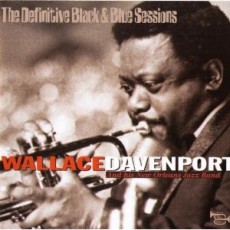
Wallace Foster Davenport was born on June 30, 1925 in New Orleans, Louisiana. He started on trumpet at age 13 with The Young Tuxedo Brass Band. In 1941 he played with Papa Celestin before leaving New Orleans to serve in the Navy. Returning home after WWII, Wallace easily transitioned to bop and swing with various bands, recording with Roy Brown and touring Europe and the U.S. with Lionel Hampton and recording with Mezz Mezzrow in 1950s Paris.
Davenport played and recorded with Count Basie in the mid 60s, toured with Ray Charles and Lloyd Price but by the end of the decade returned to traditional jazz, releasing albums on his own label My Jazz from 1971-76. He recorded again in Europe with George Wein in ’74, with Panama Francis and Arnett Cobb in 1976, reunited with Hampton and recorded with Earl Hines this same year.
In the eighties, Davenport worked with both traditional units as The Alliance Hall Dixieland Band and gospel groups like The Zion Harmonizers and Aline White; and backed vocalists Sammy Davis Jr. and Frank Sinatra. He routinely went on impromptu tours in Asia and Europe, once played expressly for the Norway King Olav V, played regularly at the New Orleans Jazz & Heritage Festival and received numerous awards and accolades for his musical contributions. Trumpeter Wallace Davenport died in New Orleans, Louisiana, at 78 years of age on March 18, 2004. He was one of the few 1930s traditional trumpeters able to branch out into bop and swing.
More Posts: trumpet
Daily Dose Of Jazz…
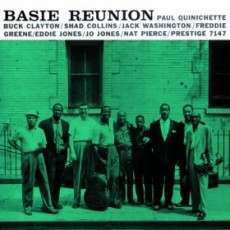
Shad Collins was born Lester Rallingston Collins on June 27, 1910 in Elizabeth, New Jersey. He learned to play the trumpet and acquired the nickname Shad in his teens. The late 1920s saw him joining Charlie Dixon’s band and performing with pianist Eddie White before joining Chick Webb’s band in 1931. In the mid 1930s he played and toured Britain and Europe with Teddy Hill and then joined the Count Basie Orchestra.
Collins performed in Basie’s band at the From Spirituals to Swing concerts in New York City in 1938 and 1939. By the late 1930s he was working in the bands led by Benny Carter, Lester Young and Don Redman among others.
In 1941, he replaced Dizzy Gillespie in Cab Calloway’s band for two years, then sporadically through 1946. He worked and recorded in the 1940s with Oran “Hot Lips” Page, in the 50s with Jimmy Rushing, Lester Young and Sam “The Man” Taylor, when the later ventured into a more rhythm and blues sound.
Though he worked more on a part-time basis during the Sixties, he never recorded as a leader but was known for composing and arranging the frequently recorded tune “Rock-A-Bye Basie”. On June 6, 1978 trumpeter, composer and arranger Shad Collins passed away.
More Posts: trumpet
Daily Dose Of Jazz…
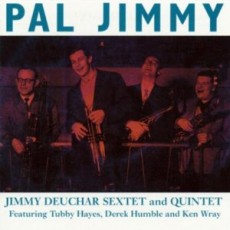
Jimmy Deuchar was born James Deuchar on June 26, 1930 in Dundee, Scotland. Taught trumpet by WWI bugler John Lynch, after national service he began his professional career in the John Dankworth Seven in 1950. He would go on to work with the Oscar Rabin Band, Ronnie Scott, and Kurt Edelhagen’s Orchestra through the decade.
By the Sixties he was working with Tubby Hayes and sitting in with visiting Americans at Ronnie Scott’s club. A highly gifted player and a leading exponent of the “modern” style, he was in demand and achieved success as a touring player in Europe and the United States.
He joined the Kenny Clarke-Francy Boland Big Band during the late 60 and early 70s, returned to London and freelanced, arranged for the BBC Big Band, the BBC Scottish Radio Orchestra and played in a number of settings.
He recorded a number of albums as a leader and sideman beginning in the Fifties utilizing many of his compositions on albums such as The Deuchar Plays Deuchar, Down In The Village, Pal Jimmy and Live In London.
With his health deteriorated, on September 9, 1993 jazz trumpeter and arranger Jimmy Deuchar, who was influenced by Fats Navarro and whose small range was broad and fat toned, passed away at age 63.
More Posts: trumpet