

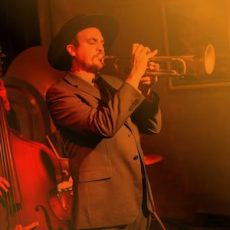
JON BAUER QUARTET
Jonathan Bauer is a multi-talented trumpeter, singer and composer, most notably of the Grammy award-winning New Orleans Jazz Orchestra. In 2019, he burst onto the scene with his highly acclaimed debut album, “Walk Don’t Run.” Jonathan returns with his sophomore release, “Sings and Plays”, introducing him self to the world as part of the rich lineage of trumpeters who front their bands as singers.
An internationally recognized and touring artist, Jonathan is widely celebrated for his dark and buttery sound. While earning his Master’s at the University of New Orleans, Jonathan quickly became arising talent in one of the world’s most important musical communities. He has had the opportunity to study and perform with living legends Nicholas Payton, Robert Glasper, Ellis Marsalis and Wendell Brunious among others. A versatile musician, Jonathan enthusiastically crosses genres performing with R&B titans, such as Sheila E., Ledisi, and Eric Benét.
More Posts: adventure,bandleader,club,genius,jazz,music,preserving,trumpet

MIKE VAX QUINTET FEATURING DENNIS ROWLAND
Mike Vax played with Art Pepper, Freddie Hubbard, Clark Terry, and the Glen Miller and Jimmy Dorsey Orchestras. But he is acclaimed as the first trumpet and co-leader of the historic “ahead of its time” Stan Kenton Orchestra and the ongoing Stan Kenton Alumni Band.
Dennis Rowland was the vocalist with the original Count Basie Orchestra for the from 1977 to until the Count’s passing in 1983, after which Dennis has had an illustrious solo career that included tours in Russia and several albums as a Concord Jazz Recording Artist.
Mike Vax-trumpet, Tony Vacca-sax/flute, Joel Robin-piano, Howard Alden-guitar, Selwyn Reams-bass, Van Katz-drums, with Dennis Rowland-vocals
More Posts: adventure,bandleader,club,genius,jazz,music,preserving,travel,trumpet,vocal
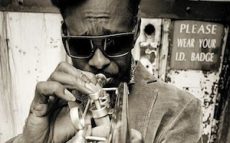
THE ABNEY EFFECT
Chicago born and raised jazz trumpeter Mario Abney now of New Orleans fuses traditional and extended trumpet techniques in a most inventive way; his strikingly personal instrumental vision endows the music with an infinite array of tonal color. Recognized for his ability to create pure musical dialog, and hear music in a universally spiritual way, he is definitely one of New Orleans most pioneering young jazz musicians.
Marioʼs first experience hearing jazz was the music of trumpeter Wynton Marsalis. After jazz trumpet peaked his interest in music Mario began to absorb the music of Louis Armstrong, Dizzy Gillespie, Miles Davis, and all the great trumpeters who pioneered the music.
With a band scholarship in hand, Mario attended Central State University, Ohio, majoring in Music Education with a minor in jazz studies. “During my college years I became involved in the jazz scene in Dayton playing trumpet in several professional ensembles such as the Afro-Cuban Jazz ensemble, Babalu, the Chicago based House of Twang, The Afro-Rican Ensemble, SYM, and several other ensembles. I
n 2001, after several years of playing as a side man Abney was inspired to lead his own Quintet. During a performance at the Dayton RiverWalk festival in 2007 Mario became interested in going to New Orleans after hearing the Hot 8 Brass Band perform. By spring of 2008 Abney and two members from his quintet moved to New Orleans to absorb its rich musical culture and become part of the music scene.
More Posts: adventure,bandleader,club,genius,preserving,travel,trumpet
Requisites
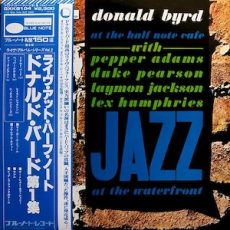
Donald Byrd at The Half Note Café, Volume 1 | By Eddie Carter
I was still in the mood to hear another trumpet album after listening to Harry “Sweets” Edison when my search led me to another of my Mom’s favorite records. Donald Byrd and Pepper Adams were two musicians she enjoyed listening to and this morning’s record from the library brings them together in a great live date. Donald Byrd at The Half Note Café, Volume 1 (Blue Note BLP 4060/BST 84060) captures the trumpeter’s quintet featuring Pepper Adams (tracks: A1, A2, B2, B3) on baritone sax, Duke Pearson on piano, Laymon Jackson on bass and Lex Humphries on drums in performance at one of New York’s best jazz clubs. This album holds a special place in my heart because it reminds me of the music my Mom and I used to enjoy together during Sunday dinner. My copy is the 1978 King Record Company Japanese Stereo reissue (Blue Note BST 84060 – GXK-8104).
Ruth Mason is our Mistress of Ceremonies for the evening and starts the set with the musician’s introductions. The quintet then launches into the upbeat melody of My Girl Shirl by Duke Pearson. Donald kicks off the solos with an invigorating statement; then Pepper succeeds him with a joyfully spirited solo. Duke emerges next for a brisk presentation, and the front line cooks with Lex ahead of the close. Donald introduces the next tune, his own Soulful Kiddy, a blues that slows the beat down for the ensemble’s marching melody. Pepper serves up some down-home cooking in the opening solo. Donald comes into the second reading with carefree enthusiasm; then Duke eases into the spotlight last, leading to the theme’s restatement and climax.
Side Two opens with Donald’s introduction to A Portrait of Jennie by J. Russel Robinson and Gordon Burdge. The quartet showcase begins with the trumpeter’s romantically warm introduction to the melody. He continues mining a rich vein of sentimentality in the first solo. Duke takes over to deliver a very pretty reading until Donald’s return to add a few more comments into the reprise and close. Cecile by Donald Byrd brings the quintet back for a medium blues that commences with the trio’s introduction to the front line, taking the lead in the melody. Pepper takes off first, cruising at a comfortable pace. Donald gets to work next with an impressive interpretation, and then Duke completes the infectious beat in the finale ahead of the quintet’s closing moments.
The set climaxes with the group’s theme, Pure D. Funk. Donald has the showcase to himself in a concise theme and the song’s only solo into the ensemble’s conclusion. Alfred Lion produced Donald Byrd at The Half Note Café, Volume 1, and Rudy Van Gelder was behind the dials. The reissue has an excellent soundstage transporting the listener to the club audience with excellent fidelity. The unique sound of this album, with its stellar rhythm section and the great chemistry between Donald Byrd and Pepper Adams, is sure to captivate any jazz enthusiast. I invite you to pick up Donald Byrd at The Half Note Café, Volume 1, on your next record shopping trip. It’s a delightful live album that is sure to enjoy repeated plays on the turntable!
Postscript: For those who are unaware, Ruth Mason was a singer and WOV on-air personality who would become Mrs. Alfred Lion. She is also the lovely young woman who appears on the cover of Moods by The Three Sounds.
~ Moods (Blue Note BLP 4044/BST 84044) – Source: Discogs.com © 2024 by Edward Thomas Carter
More Posts: choice,classic,collectible,collector,history,instrumental,jazz,music,trumpet

Daily Dose Of Jazz…
Emmett Berry was born on July 23, 1915 in Macon, Georgia and began to study classical trumpet, but by 18 had switched to jazz and moved to New York City. Becoming a member of Fletcher Henderson’s band he later replaced Roy Eldridge as soloist.
In the 1940s he worked in Eldridge’s Little Jazz Trumpet Ensemble. He also played in Count Basie’s band. He is known as an accompanist for Billie Holiday, was in the photograph known as A Great Day in Harlem, and the special The Sound of Jazz.
He recorded 39 albums as a sideman with Buck Clayton, Johnny Hodges, Sammy Price, Jimmy Rushing, Cannonball Adderley, Count Basie, Sidney Bechet, Ruby Braff, Bobby Donaldson, Dizzy Gillespie, Edmond Hall, Coleman Hawkins, Fletcher Henderson, Claude Hopkins, Jo Jones, Red Prysock, Buddy Rich, Pee Wee Russell, Maxim Saury, Buddy Tate, Joe Williams, and Jimmy Witherspoon.
Trumpeter Emmett Berry, who also played flute, piano, vibraphone, congas, and drums, died in Cleveland, Ohio on June 22, 1993.

More Posts: history,instrumental,jazz,music,trumpet