

Daily Dose Of Jazz…
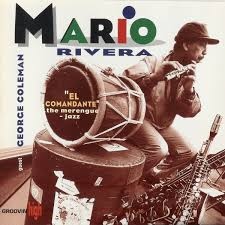
Mario Rivera was born on July 22, 1939 in Santo Domingo, Dominican Republic and learned to play during his childhood. Moving to New York City in 1961 at 22 he started working with singer Joe Valle as his accompanist. He spent two years with bandleader Tito Rodríguez. During his career he worked with Mongo Santamaria, Eddie Palmieri, and Machito.
From the 1970s to the 1990s he worked with Tito Puente. Both appeared in the films Calle 54 and The Mambo Kings. In 1988 he became a member of the United Nations Orchestra led by Dizzy Gillespie. He was also a member of the Afro-Cuban Jazz Band led by Chico O’Farrill. His only solo album, El Commandante, was released in 1996.
He recorded seventy-six albums as a sideman with Willie Colon, Cheo Feliciano, Dizzy Gillespie, Kip Hanrahan, Conrad Herwig, Giovanni Hidalgo, Chico O’Farrill, Eddie Palmieri, Tito Puente, Tito Rodriguez, Típica 73, Africando, Alfredo “Chocolate” Armenteros, Soledad Bravo, George Coleman, Junior Cook, Rafael Cortijo, Tito Gomez, Jerry Gonzalez, Juan Luis Guerra, La Lupe, Machito, Arturo O’Farrill, Pat Patrick, Bobby Paunetto, Daniel Ponce, Louie Ramirez, Paquito D’Rivera, Alfredo Rodriguez, Mongo Santamaria, Laba Sosseh, Juan Pablo Torres, Stanley Turrentine, Dave Valentin, Fernando Villalona, and Pete Yellin.
Saxophonist Mario Rivera, who also played trumpet, flute, piano, vibraphone, congas, and drums, died from cancer on August 10, 2007 in New York City.

More Posts: bandleader,congas,drums,flute,history,instrumental,jazz,music,piano,saxophone,trumpet,vibraphone
Requisites
Patented By Edison ~ The Harry “Sweets” Edison Quintet | By Eddie Carter
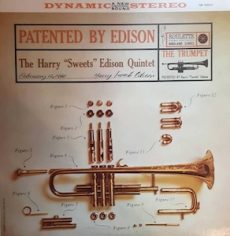
Harry “Sweets” Edison was one of the most sought-after musicians in jazz. This morning’s album from the library is a little-known 1960 release titled Patented By Edison (Roulette R-52041/SR-52041) by The Harry “Sweets” Edison Quintet. He was one of the most talented trumpeters of the Swing and hard bop eras, performing with some of the great jazz orchestras. “Sweets” got his nickname from Lester Young and eventually settled on the West Coast to become a successful arranger, composer and musician. On his eleventh date, he assembled a stellar group: Jimmy Forrest (tracks: A1 to A3, A6, B5, B6) on tenor sax, Tommy Flanagan on piano, Tommy Potter on bass, and Elvin Jones on drums. My copy is the 1967 U.S. Stereo reissue.
The album opens with Witchcraft by Cy Coleman and Carolyn Leigh. The rhythm section introduces the tune before the ensemble starts the easy-flowing melody. “Sweets” is on muted trumpet and glides through the song’s only solo with meticulous execution ahead of the reprise and soft ending. Blues Skies by Irving Berlin begins with Jimmy’s brief introduction, setting the tone for the leader taking charge of the beautifully articulated muted theme and a fine solo spot ahead of the saxophonist leading the ensemble out. Confessin’ That I Love You by Doc Daugherty, Ellis Reynolds and Al Nieburg begins with a pleasant presentation by the quintet. “Sweets” shows off his sentimental side in a performance of innocence and loveliness before the close.
Ain’t Misbehavin’ by Harry Brooks, “Fats” Waller, and Andy Razaf was introduced in the 1929 all-black musical revue Hot Chocolates. It became a huge hit among musicians and vocalists. It is a quartet showcase for “Sweets” doing the honors using the mute for the song’s opening chorus and a delightful solo that concludes softly. The first of three creations from Edison’s pen is up next. Candied Sweets is the album’s second quartet presentation beginning with Flanagan’s introduction. “Sweets” unfolds an attractive muted melody anchored by the trio’s gentle groundwork into his opening statement. The pianist complements the leader in a short, relaxing interpretation, leading to his return for the theme’s restatement and a slow dissolve.
The first side closes with They Can’t Take That Away From Me by George, and Ira Gershwin opens with the mute removed for “Sweets” to lead the quintet through the theme. “Sweets” ignites the first solo with an impeccable display of his playing. Flanagan follows him with a short, sparkling statement leading back to the closing chorus and climax. Side Two starts with the mute back on for the album’s third quartet performance, Tea For Two by Vincent Youmans and Irving Caesar. A catchy tune, with the foursome laying down a gorgeous mid-tempo beat for the theme. “Sweets” blends comfortably with the rhythm section’s accompaniment in the song’s only spotlight displaying a marvelous tone into the theme’s reprise and fadeout.
Up next is There Is No Greater Love by Isham Jones and Marty Symes. This gorgeous standard receives a gorgeous treatment beginning with Flanagan’s introduction to a thoughtfully tender melody by “Sweets.” The leader continues with a soft touch of elegance in the first interpretation. Flanagan also adds a dreamlike softness in a short solo preceding the theme’s restatement and climax. Harry Edison’s Twenty–Forty picks up the pace in a swinging quartet showcase. “Sweets” gets things off to a good start during the muted melody and then makes quick work in the opening statement. Potter gets his first opportunity to solo, and he moves sprightly along off the drive of the rhythm section into the ending theme and close.
It’s Easy To Remember (So Hart To Forget) comes from the pen of Richard Rodgers and Lorenz Hart. The rhythm section’s gentle introduction sets the mood for “Sweets,” who handles the muted melody and song’s only solo with so much emotion and sensitivity that it’ll bring tears to your eyes. We’re invited to join the quintet for some Sweetcakes by Harry Edison next. Jimmy is featured in the opening and closing choruses but does not solo. The melody begins with a bluesy beat that might get some fingers popping and toes tapping along. “Sweets” starts the solos with a delightful interpretation that flows with smooth efficiency. Flanagan comes in next to make a concise comment, which wraps everything up nicely ahead of the reprise of the theme.
The album’s final track is Angel Eyes by Matt Dennis and Earl K. Brent. Jimmy introduces the standard alongside the rhythm section before “Sweets” removes the mute to deliver the intimately personal melody. He has the showcase to himself in a beautiful and deeply moving statement that’s romantic and touching into a gorgeous ending. Teddy Reig produced Patented By Edison, and the recording engineer is unknown. However, the album’s sound quality is very good, possessing an excellent soundstage that brings the musicians to the sweet spot in your listening room with stunning fidelity. If you’re a fan of the trumpet, Harry “Sweets” Edison, or enjoy the sound of swing, I offer for your consideration and highly recommend Patented By Edison by The Harry “Sweets” Edison Quintet. It’s an underrated, excellent album by one of jazz’s best trumpet players and shouldn’t be missed on your next record hunt!
~ Ain’t Misbehavin’, Angel Eyes, Blue Skies, Confessin’ That I Love You, It’s Easy To Remember (So Hard To Forget), Tea For Two, There Is No Greater Love, They Can’t Take That Away From Me – Source: JazzStandards.com ~ Witchcraft – Source: Wikipedia.org © 2024 by Edward Thomas Carter
More Posts: choice,classic,collectible,collector,history,instrumental,jazz,music,trumpet
Daily Dose Of Jazz…
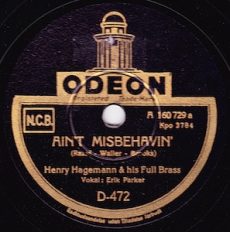
Erik Parker was born July 13, 1918 in Århus, Denmark. By 1938 he became a member of the Svend Asmussen Orchestra and from 1939 to 1945 was involved in Leo Mathisen’s Orchestra, where he performed both as an instrumentalist and a vocalist.
He worked as a club manager, and from 1945-1951 he was an actor. In 1953 he emigrated to the United States, where he settled in Los Angeles, California where he became a restaurateur and trumpet teacher.
Throughout his career he was a member of the All Danish Starband, Henry Hagemann & His Full Brass, Henry Hagemann’s Sextet, Kai Ewans And His Swinging 16, Leo Mathisens Band, Leo Mathisens Orkester, Leo Mathisens Ønskeorkester, and Roger Henrichsen Trio.
Trumpeter and vocalist Erik Parker, who is considered one of the most significant Danish jazz musicians and a distinguished representative of golden age jazz, died in 2003.
BRUCE FORMAN
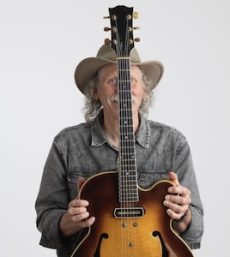
San Francisco’s Bard of Bop comes home for a night of jazz guitar stunts, storytelling, and mayhem. With his SF trio most anything can happen…and it usually does!
A hectic touring schedule; twenty-one recordings as a leader, countless sideman recordings including Ray Brown, Bobby Hutcherson, Roger Kellaway; soundtrack performances on three of Clint Eastwood’s distinguished films—most notably Academy Award-winning Million Dollar Baby; raconteur, arranger, acclaimed educator, in residence at USC’s Studio/Jazz Guitar Dept., when does Bruce Forman rest?
More Posts: adventure,club,genius,guitar,jazz,music,oud,preserving,travel,trumpet

MINGUS DYNASTY
Mingus Dynasty was the first band Sue Mingus organized after Charles Mingus’ death in 1979, collaborating with his own sidemen to honor his life and work. Although Mingus was an iconic and trailblazing bassist, he always said he was first and foremost a composer, and he left behind over 300 composition that deserved to be played. So a band carrying on his music became a natural, if unanticipated, mission. Today, four decades later, the powerful legacy of Mingus Music ignites bandstands as new generations of musicians express their individual voices and musical personalities, and celebrate and explore this rich and varied musical legacy.
Please arrive 30 minutes before the show your attending. Call for ticket information.
Philip Harper | Trumpet
Mark Gross | Alto Saxophone
Abraham Burton | Tenor Saxophone
Robin Eubanks | Trombone
Miki Yamanaka | Piano
Barry Stephenson | Bass
Donald Edwards | Drums
More Posts: adventure,bass,club,drums,genius,jazz,music,piano,preserving,saxophone,travel,trombone,trumpet