


ODE FOR JOE: CELEBRATING THE MUSIC OF JOE HENDERSON
Nicholas Payton – trumpet | Walter Smith III – tenor saxophone (Wed – Fri, 4/17 – 4/19) | Melissa Aldana – tenor saxophone (Sat – Sun, 4/20 – 4/21) | Renee Rosnes – piano | Peter Washington – bass | Al Foster – drums
An all-star group performs the music of Joe Henderson, one of the most distinctive and admired artists in jazz history. Henderson was a prolific composer who wrote numerous jazz standards and was a transcendent soloist who left a discography of classic albums. The Guardian called him “a giant of the jazz saxophone.” The New York Times added, “Mr. Henderson was unmistakably modern,” and quoted the great Benny Golson, “Joe had one foot in the present, the other in the future, and he was just a step away from immortality.” Pianist Renee Rosnes and drummer Al Foster each spent significant parts of their careers working alongside Henderson. They celebrate Henderson’s April 24th birthday.
***PLEASE NOTE: All 7PM and 9PM shows at Smoke are Dinner Shows | Fees apply to all tickets
More Posts: adventure,bass,club,drums,genius,jazz,music,piano,preserving,restaurant,saxophone,travel,trumpet

WCLK AT 50 | LIL JOHN & HIS ALL-STAR BAND
To celebrate WCLK 91.9’s 50th Anniversary the Atlanta Jazz Festival is presenting WCLK At 50: Featuring Lil John Roberts with an Atlanta All-Star Band.
Award-winning drummer Lil John Roberts will lead an Atlanta All-Star Band including these outstanding musicians: Phil Davis, Rodney Edge, Tres Gilbert, Derek Scott, Miguel Gaeten, Melvin Jones, Joe Gransden, Kebbi Williams, Jamel Mitchell, Mike Burton, Saunders Sermons, and Daniel Wytanis.
There will be special guest performances by Kathleen Bertrand, Cleveland Jones, Rhonda Thomas, Imani Grace-Cooper, Julie Dexter, Tony Hightower, Dashill Smith, and Alexandra Jackson.
As the Narrator, Jon Goode will weave in stories about the history and legacy of WCLK. Lil John Robert serves as the concert’s Music Director. The event is Co-Produced by Jamal Ahmad, Lil John Roberts, and Ray Cornelius.
More Posts: adventure,bass,concert,drums,festival,genius,jazz,music,percussion,piano,preserving,restaurant,travel,trumpet,vocal
Requisites
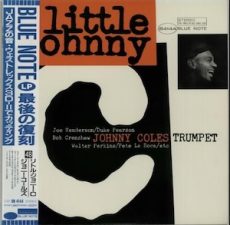
Little Johnny C ~ Johnny Coles | By Eddie CarterIt happened like this: after listening to Bass on Top, my memories of my mom led me to another of her favorite jazz albums. Little Johnny C (Blue Note BLP 4144/BST 84144) by Johnny Coles is the trumpeter’s second release as a leader and his only Blue Note session. It was recorded in 1963 and released the following year. Johnny’s joined on this hard bop date by Leo Wright on alto sax (tracks: A1 to A3, B2, B3) and flute (B1), Joe Henderson on tenor sax, Duke Pearson on piano, Bob Cranshaw on bass, Walter Perkins (A1 to A3), and Pete La Roca (B1 to B3) on drums. My copy is the 1990 Toshiba EMI Japanese Stereo reissue sharing the original catalog number.
Little Johnny C is the first of five tunes by Duke Pearson. It kicks off Side One at a fast tempo with Duke’s brisk introduction to the front line’s lively theme. Leo comes out cooking first; then Johnny steps swiftly into the second statement. Joe wails in the following solo; then Duke shows his impressive skills into the group’s climax. Hobo Joe by Joe Henderson is a Latin-flavored blues that opens with the trio’s introduction, ahead of the sextet’s easy going melody. Coles begins this pleasant trip; then, Pearson picks up the next part of the journey. Wright continues the leisurely caravan, and Henderson concludes the trek in a fine finale ahead of the theme’s return and the trio’s fadeout.
Jano picks up the beat to end the first side with the ensemble’s medium melody. Leo sets the scene in the opening solo. Johnny takes over for a lengthy reading; then Joe builds the third statement exquisitely. Duke provides the closing remarks before the group returns to take the song out. My Secret Passion is a pretty ballad taken at a medium bounce, with Johnny leading the sextet in the melody and Pete La Roca taking over on drums. Coles opens the solos with a warm tone. Henderson displays delicacy and sensitivity in the following reading. Wright comes in next on the flute and gives a heartwarming statement. Pearson’s soulful interpretation brings us back to the reprise and ending.
Heavy Legs delivers an upbeat invitation to relax and enjoy the sextet’s ride through the opening chorus. Johnny is concise and to the point in the first reading. Joe follows with an equally enjoyable solo; then Leo steps in next for a rousing interpretation. Duke brings the solos to a happy conclusion ahead of the sextet’s theme restatement, slowly dissolving into nothingness. So Sweet My Little Girl is Pearson’s tribute to his then seven-year-old daughter, Cynthia. Johnny starts the melody softly with the saxes in the background. It sets the scene for the pianist’s tender performance as the song’s only soloist, leading to the front line’s return for a gentle climax.
Alfred Lion produced Little Johnny C and Rudy Van Gelder was the man behind the dials of the recording. The album sounds amazing, with a stellar soundstage that’s so good you’ll think you’re in the studio with the musicians as they are playing. Toshiba EMI did an excellent job with this reissue and the record is also very quiet until the music starts. Johnny only recorded five albums as a leader but has an extensive discography as a sideman. If you’re a hard bop fan and unfamiliar with Johnny Coles, I invite you to look out for Little Johnny C on your next record shop visit. It’s simply a great jazz album that I’m sure would make a perfect addition to any library and become a favorite on your turntable! © 2024 by Edward Thomas Carter

More Posts: choice,classic,collectible,collector,history,instrumental,jazz,music,trumpet
AHMED ABDULLAH
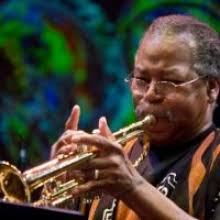
The trumpeter performed in New York’s loft scene with various groups including the Melodic Art-Tet (Charles Brackeen, Roger Blank and Ronnie Boykins, later William Parker). Ahmed Abdullah formed his own band in 1972, and joined the Sun Ra Arkestra in 1975, working there on and off until 1993, when Sun Ra died. He stayed on with the Arkestra after Sun Ra’s demise working under the leadership of John Gilmore and then Marshall Allen. During his time with the Arkestra, Abdullah participated in more than 25 recordings and traveled extensively with Sun Ra. After leaving the Arkestra, Abdullah wrote memoirs of his time with that organization. In 2002, Ahmed began teaching a course on the Music and Philosophy of Sun Ra at the New School for Jazz and Contemporary Music.
More Posts: adventure,club,genius,jazz,music,preserving,travel,trumpet
VANESSA RUBIN
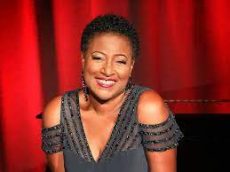
Revered as both a torchbearer and a storyteller, jazz vocalist Vanessa Rubin possesses a voice hailed for crystalline clarity, hearth-like warmth and playful lioness sass. The Cleveland native brings a wealth of diverse influences to her vocal performance from both the Trinidadian/Caribbean roots of her mother and traditional jazz by way of her Louisiana-born father. Additional homespun influences include the melodic bell tone clarity of a young Capital Records recording artist, Nancy Wilson, the fire of Lambert, Hendricks & Ross, the sweet sounds of trumpeter Blue Mitchell as well as her love of the Motown Sound…especially girl groups like the Supremes.
Rubin’s passion for rich musical stories are evidenced throughout her eight albums thus far plus numerous guest appearances. Highlights include the evocative “Voyager II” from the pen of Teri Thornton, “Inside a Silent Tear” written by Blossom Dearie, a refashioned waltz version of John Coltrane’s “Giant Steps” lyricized by New York Voices and an arrangement of “Superwoman” by Stevie Wonder insipired by the Ahmad Jamal recording of “Poinciana”. So while she has one foot planted in tradition – sticking close to timeless melodies and exquisite vocal forms – Rubin waxes adventurous, embracing stories lesser told while employing lessons of acclaimed storytellers in song such as Carmen McRae, Shirley Horn and Freddy Cole.
More Posts: adventure,album,club,genius,jazz,music,preserving,travel,trumpet,vocal