Daily Dose Of Jazz…
Oliver Edward Mitchell was born April 8, 1927 in Los Angeles, California. He was the son of Harold Mitchell, lead trumpeter for MGM Studios, who taught him to play the trumpet.
Mitchell would go on to play in big bands for Harry James, Buddy Rich and Pérez Prado, among others, as well as the NBC Symphony Orchestra. In the 1960s, he joined The Wrecking Crew, a group of studio and session musicians who played anonymously on many records for popular singers of the time, as well as theme songs for television, film scores, and advertising jingles.
Mitchell was an original member of Herb Alpert’s Tijuana Brass. He would go on to have his own bands, Ollie Mitchell’s Sunday Band, and the Olliephonic Horns
Moving to Puako, Hawaii in 1995 he founded the Horns. In 2010, he published his memoir, Lost, But Making Good Time: A View from the Back Row of the Band. He stopped playing the trumpet toward the end of his life, due to macular degeneration and hand problems from an automobile accident.
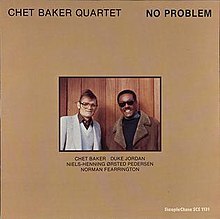
Trumpeter Ollie Mitchell, who recorded with Chet Baker, Harry James, Stan Kenton, Irene Kral, Shorty Rogers, Pete Rugolo, Dan terry and Gerry Wilson among others, suffered from cancer and passed away on May 11, 2013.
More Posts: bandleader,history,instrumental,jazz,music,trumpet
Daily Dose Of Jazz…
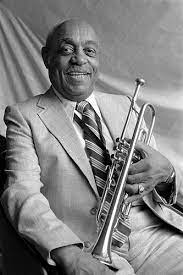
William Franklin Hardman, Jr. was born on April 6, 1933 in Cleveland, Ohio and growing up there worked with local players including Bobby Few and Bob Cunningham. While in high school he played with Tadd Dameron, and after graduation he joined Tiny Bradshaw’s band.
Hardman’s first recording was with Jackie McLean in 1956 and following this he played with Charles Mingus, Art Blakey and the Jazz Messengers, Horace Silver, and Lou Donaldson. He led a group with Junior Cook and as a leader recorded Saying Something on the Savoy label, receiving critical acclaim in jazz circles, but was little known to the general public.
He had three periods in as many decades with Art Blakey’s Jazz Messengers, however, his misfortune was not to be with him during their popular Blue Note recording years. Bill would go on to record three albums for Muse and one for Steeplechase record labels. He recorded forty-three albums as a sideman between 1956 and 1987 working with among others Hank Mobley, Charles Earland, Walter Bishop Jr., Curtis Fuller, Eddie Jefferson and Benny Golson.
On December 5, 1990 hard bop trumpeter and flugelhornist Bill Hardman, whose most prolific recording period as a sideman was with Blakey, passed away of a brain hemorrhage in Paris, France at the age of 57.
More Posts: bandleader,flugelhorn,history,instrumental,jazz,music,trumpet

Daily Dose Of Jazz…
Dave Douglas was born on March 24, 1963 in Montclair, New Jersey and grew up in the New York City area, attending Phillips Exeter Academy, a private high school in New Hampshire. He was introduced to jazz by his father and as a young teen was shown jazz theory and harmony by pianist Tommy Gallant. He began performing jazz as a trumpeter during his junior year in high school while on an abroad program in Barcelona, Spain. After graduating from high school in 1981, he studied at the Berklee College of Music and New England Conservatory, both located in Boston, Massachusetts.
A move to New York City in 1984 had him studying at New York University with Carmine Caruso, and finished a degree in music. Early gigs included the experimental rock band Dr. Nerve, Jack McDuff, Vincent Herring as well as street bands around New York City. He played with a variety of ensembles and came to the attention of the jazz pianist, composer, and bandleader, Horace Silver, with whom he toured the US and Europe in 1987.
During the late 1980s, Douglas began playing with bands led by Don Byron, Tim Berne, Marty Ehrlich, Walter Thompson, and others in New York. He also played in the composer collectives Mosaic Sextet and New and Used.
Trumpeter, composer, and educator Dave Douglas has more than fifty recordings as a leader and over 500 published compositions. Has led and co-led quintets and sextets as well as electronic ensembles, won a Doris Duke Performing Artist Award, a Guggenheim Fellowship, an Aaron Copland award, and received Grammy Award nominations. As a composer, has received several commissions from among others from the Birmingham Contemporary Music Group, Essen Philharmonie, The Library of Congress, Stanford University and Monash Art Ensemble, which premiered his chamber orchestra piece Fabliaux in 2014.
He has served as artistic director of the Workshop in Jazz and Creative Music at the Banff Centre in Canada, co-founded the Festival of New Trumpet Music in New York, serving as its director. He is on the faculty at the Mannes School of Music and is a guest coach for the Juilliard Jazz Composer’s Ensemble. In 2016, he accepted a four-year appointment as the artistic director of the Bergamo Jazz Festival.
In 2005 Douglas founded Greenleaf Music, a record label for his albums, sheet music, podcasts, as well as the music of other modern jazz musicians. Greenleaf has produced over 70 albums.
More Posts: bandleader,educator,history,instrumental,jazz,music,producer,trumpet

Daily Dose Of Jazz…
Albert Aarons was born in Pittsburgh, Pennsylvania on March 23, 1932 and graduated from Wayne State University in Detroit, Michigan. He began to gain attention as a trumpeter by 1956 and started working with saxophonist Yusef Lateef and pianist Barry Harris in the latter part of that decade in Detroit.
After a period playing with jazz organist Wild Bill Davis, he played trumpet in the Count Basie Orchestra from 1961 to 1969. The 1970s saw Aarons working as a sideman for singers Sarah Vaughan and Ella Fitzgerald, and saxophonist Gene Ammons.
Contributing to jazz fusion, playing on School Days with Stanley Clarke, he appeared with Snooky Young on the classic 1976 album Bobby Bland and B. B. King Together Again…Live. Trumpeter Al Aarons passed away on November 17, 2015 at age 83 in Laguna Woods, California.

Requisites
Star Bright ~ Dizzy Reece | By Eddie Carter 3.7.21
This morning’s choice from the library comes from a young man from Kingston, Jamaica. Alphonso Son Reece attended the Alpha Boys School where he began playing the baritone sax before switching to the trumpet at age fourteen. It’s also during this time where he got his nickname Dizzy, which had nothing to do with Dizzy Gillespie. He became a professional musician at sixteen and has played with some of the greatest jazz musicians in England, France, and the United States. Star Bright (Blue Note BLP 4023/BST 84023) was released in 1959 and is his third album as a leader following Progress Report (1957), and Blues In Trinity (1958). He’s backed on this date by three musicians he only knew from their records, Hank Mobley on tenor sax, Wynton Kelly on piano, and Paul Chambers on bass. Completing the quintet is Art Taylor on drums who played with Dizzy on Blues In Trinity. My copy used in this report is the 2003 Classic Records Mono audiophile reissue (BLP 4023 – BN 4023).
Side One starts at a relaxed tempo with The Rake, one of four tunes Reece composed for the 1958 British film, Nowhere To Go. The quintet opens with a laid-back stroll through the melody, and Dizzy lays down an easy-going opening solo. Hank follows with a reading so comfortable and cozy, you almost feel his warm personality coming from your speakers. Wynton glides into the closing statement gracefully with Paul and Art backing him leading to the reprise.
The pace picks up for the 1945 tune, I’ll Close My Eyes by Billy Reid and Buddy Kaye. Reid originally wrote this song as one of regret and remorse, but Kaye updated the lyrics, making the song upbeat. The trio creates the down-home atmosphere for the leader’s perfectly crafted opening chorus. Mobley begins with a stirring performance, followed by a spirited statement by Reece. Kelly achieves a wonderful groove on the next reading and Chambers walks with passionate precision on the climax.
The quintet takes a trip to Groovesville next, an impromptu blues by Dizzy beginning with the first of two statements by Wynton. The pianist opens this happy swinger with a blues-rooted energy that’s highly contagious. Dizzy takes charge next with a cheerfully buoyant interpretation, then Hank expresses his excitement on the third reading. Wynton picks up where he left off with a second clever statement preceding the front line splitting the closing chorus and the coda.
Side Two gets underway with Dizzy’s The Rebound, a medium-fast original that commences with the ensemble stating the melody collectively. Reece kicks things off with a feisty first reading, then Mobley takes the next spot, his tenor sax soaring with a soulful charm. Kelly answers enthusiastically with a high-spirited interpretation, and Chambers makes the final solo sparkle with a concise contribution before the ensemble takes the song out.
I Wished On The Moon was written in 1935 by Dorothy Parker and Ralph Rainger. It would become a big hit for Bing Crosby who recorded it that year with The Dorsey Brothers Orchestra. The group’s approach to this familiar evergreen is laid-back with Dizzy leading the trio through the carefree theme and finale with inspired interpretations by Dizzy, Hank, and Wynton who make it look so easy. Dizzy’s A Variation on Monk sets off at a brisk uptempo pace by Kelly, and the rhythm section evolves into a vigorous collective opening chorus. Mobley charges into the lead solo with an invigorating performance, then comes Reece who’s firing on all cylinders with an exhilarating statement. Kelly matches the front line’s intensity with a marvelous presentation that’s over too quickly. Taylor begins his only solo opportunity with an exchange of ideas between himself and both horns, then gives the final statement some vigorous brushwork ahead of the closing chorus.
A lot of thought and care went into the remastering of Rudy Van Gelder’s original tapes by Bernie Grundman of Bernie Grundman Mastering. The music is superbly recorded with a breathtaking soundstage and the instruments emerging from your speakers as if the musicians are playing right in front of you. The record was pressed on 200–gram Quiex SV–P Audiophile Vinyl with a flat–edge and deep groove on the label. It’s silent until the music begins. If you’re a fan of Hard-Bop from that magic year of 1959 and aren’t familiar with Dizzy Reece, I offer for your consideration, Star Bright, a stellar album that’s one of the brightest stars in his discography and one I can happily recommend for your library!
~ Blues In Trinity (BLP 4006/BST 84006), I Wished on The Moon (Decca 39857), Progress Report (Tempo Records TAP 9) – Source: Discogs.com ~ Alphonso Son Reece, I’ll Close My Eyes, I Wished on The Moon – Source: Wikipedia.org © 2021 by Edward Thomas Carter
More Posts: choice,classic,collectible,collector,history,instrumental,jazz,music,trumpet