

Daily Dose Of Jazz…
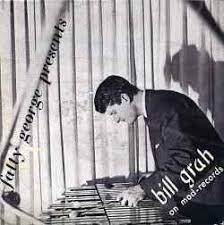
Wilhelm Josef Grah was born on June 24, 1928 in Bergisch-Gladbach, Germany. He led his own quintet from 1949 to 1953, then performed and recorded with Fatty George 1954-1959. I
During the 1960s he moved to Austria where he hosted a radio show in Vienna. He officially became a citizen in 1970. In the 1970s he played with the Austrian Barrelhouse Jazz Band and also led his own quintet.
Pianist and vibraphonist, who led a trio, quintet, sextet, big band and orchestra, transitioned on September 17, 1996 in Vienna.

More Posts: bandleader,history,instrumental,jazz,music,piano,vibraphone
Daily Dose Of Jazz…
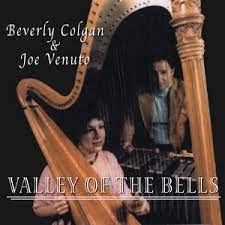
Joseph A. Venuto, Jr. was born on June 20, 1929 in Bronx, New York into an Italian immigrant family where he received his first drum kit from his grandfather. Having had lessons with Henry Adler, he moved on to Phil Kraus to learn mallet percussion. After earning a master’s degree from the Manhattan School of Music, he became a member of the Sauter-Finegan Orchestra, with whom he made his first recordings Doodletown Races on the RCA label in 1953. He was a featured soloist with the orchestra on Solo for Joe and Swingcussion. The DownBeat Reader’s Poll voted him the best vibraphonist that year.
From the mid-1950s, Venuto worked with Billy Byers in the Westchester Workshop, the Kent Harian Orchestra, Bobby Dukoff, and the Johnny Richards Orchestra before joining Radio City Music Hall as a session musician in the recording and television studios. By 1959 he recorded his debut album for Everest Records under his own name.
Between 1953 and 1975 Joe was involved in 104 recording sessions with Jack Teagarden, Kenyon Hopkins, Rex Stewart, The Creed Taylor Orchestra, Irene Kral/Al Cohn Orchestra, Mary Ann McCall, Don Costa, Hal Mooney, Ruth Brown, Gene Krupa and His Orchestra, LaVern Baker, Budd Johnson, Marion Montgomery, Benny Goodman, Shirley Scott, Solomon Burke, Gary McFarland, Johnny Hodges, Hank Jones/Oliver Nelson, and numerous more.
the early 1970s when he was in his Forties, he left New York City and moved to Reno, Nevada. He met, married, performed and recorded with his wife, harpist Bev Colgan, in a harp/vibes duo. Percussionist Joe Venuto, who also played the vibraphone, marimba, bongos and drums, transitioned on Feb. 14, 2019 at age 89.
More Posts: bongos,drums,history,instrumental,jazz,marimba,music,percussion,vibraphone
Daily Dose Of Jazz…
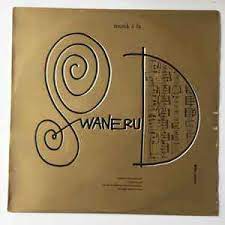
Thore Swanerud was born June 18, 1919 in Stockholm, Sweden. He started out his professional career playing extensively with major Swedish dance bands in the 1940s, such as those of Simon Brehm, Miff Görling, and Stan Hasselgård.
In 1949-1951 Thore led his own six-piece ensemble, then led smaller groups in the 1950s and 1960s. His associations include work with Ernestine Anderson and James Moody.
He is best remembered for an eight-bar improvised solo he made during a 1949 recording of I’m In The Mood For Love, in a quintet headed by Moody while touring Sweden. Eddie Jefferson created the 1952 song Moody’s Mood For Love in vocalese style by adapting lyrics to Moody’s song. The song later became a jazz standard, covered by many singers.
Pianist, vibraphonist, arranger, conductor, and composer Thore Swanerud, who scored three films, appeared in two and recorded five albums and five singles, transitioned in Stockholm on December 8, 1988.
More Posts: arranger,composer,conductor,history,instrumental,jazz,music,piano,vibraphone
Requisites
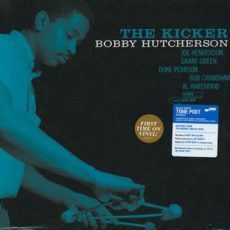
The Kicker ~ Bobby Hutcherson | By Eddie Carter
In 1963, vibraphonist Bobby Hutcherson recorded his first album as a leader which was supposed to be his debut on Blue Note. Sadly, it wasn’t released, and the session remained in the vaults for thirty-six years until it hit the stores in 1999 as a CD album. The Kicker (Blue Note BST 21437), this morning’s choice from the library submitted for your inspection reunites the musicians that recorded Idle Moments by Grant Green six weeks earlier in November. Joe Henderson on tenor sax, Duke Pearson on piano, Grant Green on guitar (tracks: A3 to B2), Bob Cranshaw on bass, and Al Harewood on drums. My copy used in this report is the 2020 Blue Note Tone Poet Series Stereo audiophile reissue.
Side One commences with Mirrors by Joe Chambers, a very pretty song beginning with a brief introduction by Duke opening the way for Hutcherson and the rhythm section’s delicately gentle theme supported by Henderson. Bobby starts with a stunning showcase that’s intimately passionate and very moving. Joe continues expressing deep feelings on the second statement ahead of the ensemble’s thoughtfully polite ending. For Duke P. Bobby’s swinging dedication to Duke Pearson takes off with a brisk opening chorus in unison. Hutcherson gets right down to business on the first interpretation with a spirited reading. Henderson gets into a vibrant workout next and Pearson swings into the closer confidently before the ensemble reprise and close.
The Kicker by Joe Henderson brings Grant Green to the group with an effervescent opening chorus led by the composer. Henderson begins this swinging affair with a swiftly paced solo, then Bobby launches into the next reading vigorously. Grant brings a lot of joy to the third statement and Duke finds some invigorating things to say ahead of the closing chorus and quick climax. Side Two starts with Henderson’s, Step Lightly, an easygoing blues that the ensemble gets underway with a collectively calm theme. Pearson starts the opening solo with easy, unhurried strokes. Hutcherson is smooth as velvet on the second statement. Green swings with a light, refreshing beat next and Henderson provides a fitting summation with a soulful groove preceding the sextet’s ending theme disappearing into a slow fade.
Bedouin by Duke Pearson possesses a Middle Eastern flavor that begins at a snappier tempo than Duke recorded a year later on Wahoo! The solo order is Joe, Grant, Bobby, and Duke, and each gives charming, articulate performances into an ending theme that dissolves into emptiness. The Kicker was originally produced by Alfred Lion and recorded by Rudy Van Gelder. Joe Harley supervised this reissue, and Kevin Gray did the remastering. The sound quality is outstanding with a breathtaking soundstage. The front and rear covers are high-quality with stunning gatefold photos. The vinyl is 180-gram and incredibly quiet until the music starts. If you enjoy good vibes and are looking for a perfect album to enjoy after a long day or week, I highly recommend and offer for a spot in your library, The Kicker by Bobby Hutcherson. It’s a wonderful companion to Idle Moments that’ll reward its owner with many hours of listening pleasure!
~ Idle Moments (Blue Note BLP 4154/BST 84154), The Kicker (Blue Note Connoisseur Series 7243 5 21437 2 6), Wahoo! (Blue Note BLP 4191/BST 84191) – Source: Discogs.com © 2022 by Edward Thomas Carter
More Posts: choice,classic,collectible,collector,history,instrumental,jazz,music,vibraphone
Requisites
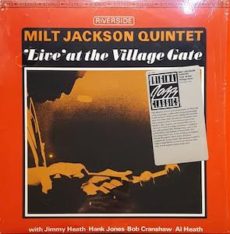
Live At The Village Gate ~ Milt Jackson Quintet | By Eddie Carter
I’ve been a huge fan of Milt Jackson ever since seeing him in concert with The 1972 Newport Jazz All-Stars at Music Hall in New York City. He swung effortlessly that evening with solos that were exciting and spirited, and I began collecting all his albums. A few nights ago, I was listening to this morning’s choice from the library and that’s what prompted this discussion. Live at The Village Gate (Riverside RM 495/RS-9495) is a 1967 release documenting the vibraphonist leading a wonderful quintet, Jimmy Heath on tenor sax, Hank Jones on piano, Bob Cranshaw on bass, and Albert “Tootie” Heath (Jimmy’s brother) on drums. My copy used in this report is the 1987 Original Jazz Classics Stereo reissue (Riverside OJC-309 – RLP-9495).
Side One starts with the first of three tunes by Bags, a nickname given to Milt by a Detroit bass player that he would be called the rest of his life. Bags of Blue is a tune that’ll have you tapping your toes from the quintet’s lively melody. Milt opens with a peppy first solo, then Jimmy takes a sprightly reading. Hank makes everyone feel good on the next statement. Milt and Jimmy split the finale with a few verses ahead of the ensemble’s ending and club’s applause. Little Girl Blue by Richard Rodgers and Lorenz Hart is one of their prettiest compositions from the Broadway musical, Jumbo (1935). Bags and Hank make a dainty introduction, then Bob and Albert come in for the tender theme. As the song’s only soloist, Milt gives a gorgeous performance complemented by the trio’s delicately sensitive support.
Up next is an upbeat original by Jimmy Heath, Gemini. It made its first appearance on his album, Triple Threat (1962). The group begins the melody briskly, then Milt leads off the opening statement with high-spirited energy. Jimmy applies some vigorous passion to the second presentation. Hank closes with a dazzling reading before the quintet takes their exit. Jackson’s light-hearted Gerri’s Blues begins Side Two with the first of two sparkling solos by Hank preceding the ensemble’s theme. Bags takes the first solo and constructs an infectious interpretation that’s perfectly suitable for dancing. Hank keeps the happy beat alive on the next reading, followed by Jimmy’s extremely nimble solo. The leader and saxophonist engage in a three-way conversation with Albert leading to a very satisfying conclusion.
Time After Time by Sammy Cahn and Jule Styne is a beautiful jazz standard and the second quartet presentation featuring Bags as the lone soloist. The quartet states a delicately pretty melody, then Milt seamlessly moves into a statement of great tenderness and intimacy capable of melting even the coldest heart. The quintet ends the set with Jackson’s Ignunt Oil that Bags first recorded on Plenty, Plenty, Soul (1957). The group struts their stuff on the opening chorus in unison. Milt starts off the solos with a joyous workout. Jimmy follows with some inspired ideas. Hank comes in next and cooks at a nice momentum. Bags leads toward the close with a few final thoughts preceding the quintet’s perfect ending to a great set.
Live at The Village Gate was originally recorded by Ray Fowler. The remastering by Phil DeLancie delivers a spacious soundstage transporting the listener to the club with all the intimacy and ambiance of being there in person. The result is a great recording of swinging jazz by one of the consummate musicians, Milt Jackson. It’s also a good place to discover his immense discography as a leader, sideman, and principal member of The Modern Jazz Quartet in an illustrious career lasting forty years. If you’re a fan of Bags, Jimmy Heath, or Hank Jones, I invite you to check out Live at The Village Gate by The Milt Jackson Quintet on your next vinyl hunt. It’s a nice way to unwind after a long day with your favorite drink and in my opinion, would make a great addition to any jazzophile’s library!
~ Plenty, Plenty, Soul (Atlantic 1269/SD 1269), Triple Threat (Riverside RLP 400/RLP 9400) – Source: Discogs.com ~ Little Girl Blue, Time After Time – Source: JazzStandards.com © 2022 by Edward Thomas Carter
More Posts: choice,classic,collectible,collector,history,instrumental,jazz,music,vibraphone