

Daily Dose Of Jazz…
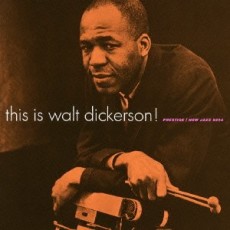
Walter Roland Dickerson was born on April 16, 1928 in Philadelphia, Pennsylvania. He graduated from Morgan State University in 1953 and after two years in the Army he settled in California. There the vibraphonist started to gain attention by leading a group with pianist Andrew Hill and drummer Andrew Cyrille.
During the Sixties in New York City was where he gained some further attention. He recorded four albums for Prestige Records and in 1962 Down Beat named him the Best New Artist.
Dickerson recorded his debut album This Is Walt Dickerson in 1961 on the New Jazz label and would go on to record six more before the end of the decade for New Jazz, Audio Fidelity and MGM record labels. He worked with Elmo Hope, arranging his 1963 album Sounds From Rikers Island.
From 1965 to 1975 he took a break from jazz, but later he worked again with Andrew Hill and Sun Ra. Beginning in 1975 after his return to performing he recorded Tell Us Only The Beautiful Things and Walt Dickerson 1976 on the Whynot label. He then began recording ten albums for the Danish Steeplechase label and one for Soul Note in 1978.
Vibraphonist Walt Dickerson, who was most notably associated with the post-bop idiom, passed away on May 15, 2008 from a cardiac arrest in Willow Grove, Pennsylvania.

Jazz Is Global – Share

More Posts: vibraphone
Daily Dose Of Jazz…
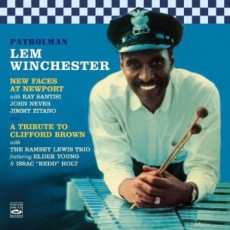
Lem Winchester was born in Philadelphia, Pennsylvania on March 19, 1928. He played piano, baritone and tenor saxophone before settling on the vibraphone. Formerly a police officer, he pursued music as a hobby in Wilmington, Delaware. He turned to music full-time after an appearance at the 1958 Newport Jazz Festival. He was soon working with some of the top names in jazz, making his debut recording with pianist Ramsey Lewis.
Winchester recorded a handful of albums as a leader, mostly for Prestige Records and made sideman appearances with Oliver Nelson, Jack McDuff, Shirley Scott, Benny Golson, Tommy Flanagan and Johnny “Hammond” Smith.
The career of hard bop vibraphonist Lem Winchester was cut short when he passed away from an unsuccessful demonstration of a trick with a revolver on January 13, 1961 in Indianapolis, Indiana. He was 32 years old.
Dose A Day-Blues Away
More Posts: vibraphone
Daily Dose Of Jazz…
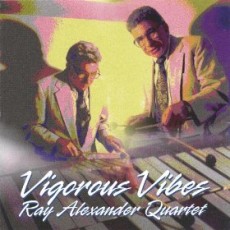
Ray Alexander was born on February 7, 1925 in Lynbrook, Long Island, New York. His mother was a concert pianist who began him on the instrument as a very young child. Asthma ended his ambitions to be a trumpeter but after hearing Gene Krupa his interest turned towards drums. He education also came from listening to Big Sid Catlett, Art Tatum, Dizzy Gillespie and Charlie Parker in the clubs.
Ray started his musical career as a drummer, playing with Claude Thornhill, Bobby Byrne, the Dorsey Brothers, Stan Getz, Joe Venuti, Mel Torme, Johnny Smith, Chubby Jackson, Stuff Smith and numerous others. Switching to the vibraphone he worked with George Shearing, Charlie Barnett, Bil Evans, Anita O’Day and Mel Lewis, as well as his own quartet.
In the early ’70’s he joined with Mousey Alexander and formed the Alexanders the Great quartet which was booked frequently at the new Half Note uptown, as well as gained notoriety and bookings through the city.
By 1983 Ray put out an album called “Cloud Patterns“, recorded live at Eddie Condon’s featuring Albert Daily on piano, Harvie Swartz on bass, Ray Mosca on drums and Pepper Adams on baritone saxophone. He would go on to work with Kenny Barron, Warren Vache Jr., Bob Kindred, Harvie Swartz, Oliver Jackson, Mac Chrupcala, John Anter and Marshall Wood, tour England and nearby European countries. Vibraphonist and drummer Ray Alexander passed away on June 9, 2002 in new Hyde Park, New York as a result of complications from elective surgery.
Give The Gift Of Knowledge
More Posts: drums,vibraphone
Daily Dose Of Jazz…
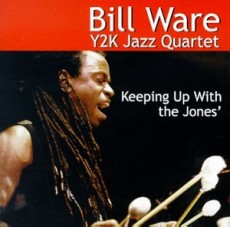
Bill Ware III was born William Anthony Ware III on January 28, 1959 in East Orange, New Jersey. He played bass and piano early in his career at Harlem’s Jazzmobile, prior to choosing vibraphone as his main instrument. After spending several years playing Latin jazz he formed his own Latin Jazz group, AM Sleep.
In 1987 Ware joined saxophonist Roy Nathanson and trombonist Curtis Fowlkes’ Jazz Passengers as a regular memberand by 1990 had put together a group of sidemen as the Club Bird All-Stars, who accompanied him on a tour of Japan. Stretching out to other genres he played with Groove Collective and Steely Dan during the first half Nineties.
Later in the decade Bill teamed up with fellow former Jazz Passengers, Brad Jones and E. J. Rodriguez forming the ensemble Vibes. His 2001 tribute to Duke Ellington was recorded with guitarist Marc Ribot, and Deborah Harry on his 2002 effort Four.
During the mid-2000s, he recorded several projects blending jazz with Western Classical music as well as composing five film scores with Nathanson. He recorded fourteen solo projects as a leader for AM Sleep, Knitting Factory, Cathexis, Wollenware, Random Chance and Pony Canyon record labels. Vibraphonist Bill Ware continues to compose, perform and record.
Give A Gift Of Jazz – Share
More Posts: bass,piano,vibraphone
Daily Dose Of Jazz…
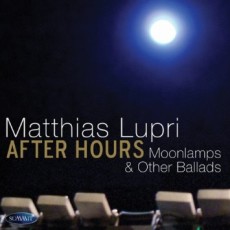
Matthias Albrecht Lupri was born October 29, 1964 in Germany but grew up in Manhattan, Kansas and Alberta, Canada. Initially he played the drums as a teenager in blues, rock and country music bands. In his early twenty’s he studied music at Mount Royal College, where he heard Gary Burton’s recordings and became interested in jazz vibraphone music.
Matthias practiced the instrument for the next five years while on the road with rock bands as a drummer. He then enrolled at the Berklee College of Music and studied with Gary Burton himself. Since graduation he has released several records that have charted in radio’s Top 40 GAVIN, CMJ and Chart Magazine Canada, and was heard on the TV show Alias.
Lupri was named as a rising artist on vibraphone in the Down Beat critics poll for the 2nd time in 2005. He has recorded with Greg Osby, Chris Potter, Kurt Rosenwinkel, Mark Turner, Donny McCaslin, Myron Walden, Greg Hutchinson, Antonio Sanchez, Reuben Rogers, Ian Froman, George Garzone, Jeff Ballard, Rick Margitza, Cuong Vu, Sebastiaan de Krom and Boris Wiedenfeld among other. He continues to perform and tour throughout Canada and the United States.
Dose A Day – Blues Away
More Posts: vibraphone