

Daily Dose Of Jazz…
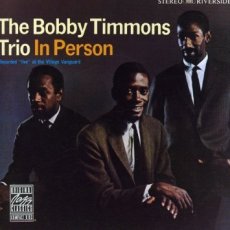
Bobby Timmons was born Robert Henry Timmons on December 19, 1935 in Philadelphia, Pennsylvania. Studying piano from the age of six by the age of 19 he was moving to New York, playing with the likes of Kenny Dorham’s Jazz Prophets, Chet Baker, Sonny Stitt and Maynard Ferguson. He became a member of Art Blakey’s Jazz Messengers from 58-59 touring Europe and became well known for his composition “Moanin”.
He joined Cannonball Adderley for a year, recorded two soul-jazz compositions that became hits “This Here” and “Dat Dere” and rejoined Blakey for a brief stint in the Sixties. Over the course of his career he recorded some 16 albums for Riverside, Milestone and Prestige record labels and recorded another twenty-three as a sideman with Art Blakey, Hank Mobley, Lee Morgan, Donald Byrd, Curtis Fuller, Nat Adderley, Kenny Burrell and the Young Lions.
However sophisticated and versatile a pianist he proved to be, Timmons’ success of his compositions, which have become jazz standards, could not compensate for his artistic frustrations and his battle with alcoholism. Pianist and composer Bobby Timmons passed away from cirrhosis at the age of 38 on March 1, 1974.

Jazz Is Global – Share
More Posts: piano,vibraphone
Daily Dose Of Jazz…
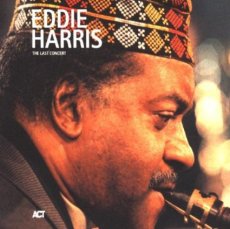
Eddie Harris was born on October 20, 1934 in Chicago, Illinois to a Cuban father and New Orleans mother. He studied music at DuSable High School, then Roosevelt University becoming proficient on piano, vibraphone and tenor saxophone and playing professionally with Gene Ammons.
After graduating and a stint in the 7th Army Band playing alongside Leo Wright, Don Ellis and Cedar Walton, he worked in New York City prior to his Chicago return. He signed with Vee Jay Records and released his debut “Exodus To Jazz” and his jazz arrangement of the theme to Exodus was so heavily played on radio, it became the first jazz record ever to be certified gold.
Throughout his career he recorded for Columbia and Atlantic Records, ventured into electric piano and Varitone saxophone mixing jazz with funk on albums like “The Electrifying Eddie Harris” and crossing into rhythm and blues markets. By 1969 he would perform with Les McCann at Montreux with an unrehearsed band that produced the seminal work Swiss Movement that became one of the best selling jazz albums ever.
In the early to mid ‘70s Harris experimented with altering instruments like his reed trumpet with a sax mouthpiece, saxobone with a trombone mouthpiece and guitorgan, a guitar/organ combination. He also forayed into singing blues, played with jazz-rock, and comic R&B consisting of mostly stand-up comedy all of which ultimately declined his popularity.
He would work with Horace Silver in the ‘80s, record regularly well into the 1990s, tour and perform in Europe and return to hard bop. His move to Los Angeles in the mid-1970s allowed him the opportunity to provide much of the music for The Bill Cosby Show.
Eddie Harris, tenor saxophonist and multi-instrumentalist and composer of “Freedom Jazz Dance” popularized by Miles Davis in the Sixties and also the tune “Listen Here”, passed away from bone cancer and kidney disease at the age of 62 on November 5, 1996.
Inspire A Young Mind
More Posts: organ,piano,saxophone,vibraphone
Daily Dose Of Jazz…
Dave Samuels was born on October 9, 1948 in Illinois. He started his musical career on the drums at age six, attended the New Trier High school in Winnetka, Illinois, known for its superb arts and music programs. He graduated from Boston University with a psychology degree but by this time he was studying mallet instruments.
Samuels next matriculated through Berklee College of Music where he studied under Gary Burton. The vibraphonist first worked with guitarist Pat Metheny and John Scofield while in Boston, then toured with Gerry Mulligan and played with various groups early in his career such as Timepiece, Double Image and Frank Zappa.
In 1979 Dave began recording with Spyro Gyra but it wasn’t until seven years later that he became a member of the group and one of the soloists. His recordings as a leader have been commercial but since leaving Spyro Gyra in the 90s and taking a slot in the Grammy-winning Latin jazz music group Caribbean Jazz Project, one can witness some very impressive output.
Vibraphonist Dave Samuels has worked with Eddie Palmieri in tribute to Cal Tjader, Andy Narrell and Paquito D’Rivera among others. He has taught at his alma mater, Berklee School of Music and continues to perform, record and tour.
Give The Gift Of Knowledge
More Posts: vibraphone
Daily Dose OF Jazz…
Roy Ayers was born on September 10, 1940 in Los Angeles, California and grew up in the epicenter of southern California Black music scene known as South Park, now called South Central. He received his first set of mallets at age five from Lionel Hampton thus leading him to the vibraphone.
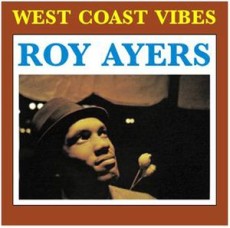
He studied music attending Central Avenue area schools Wadsworth elementary, Nevins Middle and Thomas Jefferson High that also graduated Dexter Gordon. He became part of the West Coast jazz scene in the early ‘60s, played withCurtis Amy as well as Herbie Mann for four years and recorded his first album West Coast Vibes in 1963 and several albums for Atlantic Records as a post-bopper. It was during this period that he became exposed to new styles of music outside bebop.
The 70s saw the advent of jazz funk and Roy was there to help pioneer its rise. With highly successful soundtracks like “Coffy” Ayers went on to record “Mystic Voyage”, “Everybody Loves The Sunshine”, “Running Away” and a string of hits throughout the decade. By 1980 he had teamed with Fela Kuti releasing Afrobeat “Music of Many Colors, went on to produce Sylvia Striplin’s “Give Me Your Love”, and released several albums on the Ichiban label. He collaborated on the Stolen Moments: Red, Hot+ Cool project, turned his attention to house music, founded two record labels – Uno Melodic and Gold Mink, and currently is the feature of the documentary called the Roy Ayers Project.
Roy Ayers, vibraphonist, vocalist, keyboardist, producer, jazz, funk and soul composer has recorded over 50 albums during his long and prolific career and he continues to perform, record and tour.
Give The Gift Of Knowledge
More Posts: keyboard,vibraphone,vocal
Daily Dose Of Jazz…
John Anthony Pompeo, better known as Johnny Rae or John Rae was born on August 11, 1934 in Saugus, Massachusetts and grew up in music, as his mother played piano in night clubs in the Boston area. His area of musical study in jazz led him to become a drummer and vibraphonist. Graduating from East Boston High School in 1952, he went on to study piano at the New England Conservatory and timpani at Berklee College of Music.
Johnny joined Herb Lee’s R&B band right out of high school, gigged with Slim Gaillard and Milt Buckner, played drums and vibes with Al Vega and Jay Migliori. Upon the recommendation of MJQ’s John Lewis, he teamed up with to play with George Shearing, alongside Toots Thielemans, Al McKibbon on bass and three Latin percussionists that included conguero Armando Peraza. It was during this period that Peraza taught him to play timbales.
He played with Johnny Smith, Ralph Sharon, Cozy Cole and Herbie Mann throughout the Fifties. The next couple of decades were equally commanding of his talents by Cal Tjader, Stan Getz, Gabor Szabo, Charlie Byrd, Earl Hines, Art Van Damme, Anita O’Day and Barney Kessel among many others. Though mainly concentrating in the context modern jazz, he never wandered far from Latin music and the Latin jazz percussion he played.
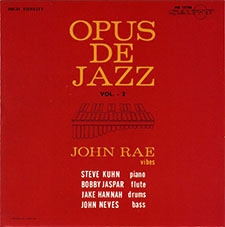
Though he was on more than three-dozen recording sessions, Johnny only recorded one as a leader, “Opus De Jazz, Volume 2” in 1960 for Savoy. A second release under his name was in actuality him fronting Herbie Mann’s band for contractual reasons.
Since the 1980s Rae has worked in music education, has authored several instruction books and was a disc jockey in San Francisco for many years. He assembled a tribute band to Tjader called Radcliff (Tjader’s middle name) and led the band until his death. Johnny Rae, drummer and vibraphonist passed away in 1993 in San Francisco, California.
Dose A Day – Blues Away
More Posts: drums,percussion,timbales,vibraphone