

Daily Dose OF Jazz…
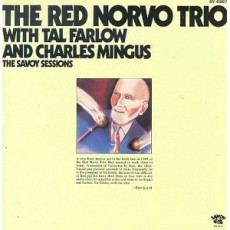
Red Norvo was born Kenneth Norville on March 31, 1908 in Beardstown, Illinois. It is said that he sold his pet pony to help pay for his first marimba. He began his career in 1925 in Chicago playing with a band called “The Collegians”, in 1925. He played with many other bands, including an all-marimba band on the vaudeville circuit along with the bands of Paul Whiteman, Benny Goodman, Charlie Barnet and Woody Herman.
By 1933 he had recorded two sessions for Brunswick under his own name including two of the earliest, most modern pieces of chamber jazz: Bix Beiderbecke’s “In A Mist” and his own “Dance of the Octopus”. For these he put aside the xylophone for the marimba yet outraged the label’s head that tore up his contract and threw him out, though the album remained in print throughout the 30s.
From 1934-35 Red recorded 8 modern swing sides for Columbia followed by 15 sides of Decca and their short-lived Champion label series in 1936. From there he formed a Swing Orchestra and recorded for ARC, Vocalion and Columbia featuring brilliant arrangements by Eddie Sauter and often vocals by Mildred Bailey.
In 1938, Red Norvo and His Orchestra reached number one with their recordings of “Please Be Kind” and “Says My Heart”. He went on to record with Benny Goodman, Charlie Parker, Dizzy Gillespie in 1945, hit the West Coast in ’47, helped Charles Mingus rise to prominence in his trio, recorded for Savoy, recorded with Sinatra in Australia and released by Blue Note, appeared on the Dinah Shore Chevy Show and appeared in the movie Screaming Mimi as himself.
Red Norvo, helped to establish the xylophone, marimba and vibraphone as a viable jazz instrument continued to record and tour throughout his career until a stroke in the mid-1980s forced him into retirement. He died at a convalescent home on April 6, 1999 in Santa Monica, California at the age of 91.
More Posts: composer,marimba,vibraphone,xylophone
Daily Dose Of Jazz…
Stefon Harris was born March 23, 1973 in Albany, New York and started playing the piano at age 6 and learned to read music by the time he began elementary school. By the time he reached 8th grade Stefon played nearly twenty different instruments from string bass to trombone. After seeing the Empire State Youth Orchestra on television, he auditioned for the ensemble and was accepted as the principal percussionist.
A few years later, he earned a full merit scholarship to attend Eastman School of Music in Rochester, where his roommate introduced him to jazz via Charlie Parker records. Smitten by the music, Harris moved to New York City and began gigging on the jazz scene as a vibraphone player while finishing his B.A. and Master’s degrees at the Manhattan School of Music.
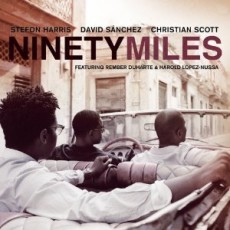
Harris has released several critically acclaimed albums, composed numerous works and is one of the foremost young artists in demand today having played with such luminaries as Kenny Barron, Steve Turre, Kurt Elling, Charlie Hunter, Joe Henderson, Steve Coleman, Cassandra Wilson, Buster Williams, Wynton Marsalis and the Lincoln Center Chamber Music Society. In 2011 he ventured to Havana, Cuba with saxophonist David Sanchez and trumpeter Christian Scott to record their critically acclaimed Ninety Miles. Having performed worldwide, vibraphonist Stefon Harris sits at the forefront of New York music.
More Posts: marimba,vibraphone
Daily Dose Of Jazz…
Joseph Paul Locke was born on March 18, 1959 in Palo Alto, California but grew up in Rochester, New York. A self-taught improviser, he benefited from his early studies in classical percussion and composition at the Eastman School of Music and played with Mongo Santamaria, Pepper Adams, and Dizzy Gillespie before graduating from high school.
Since moving to New York City in 1981, Locke has performed with Grover Washington, Jr., Kenny Barron, Dianne Reeves, Eddie Daniels, Jerry Gonzales’ Fort Apache Band, Rod Stewart, Beastie Boys, Eddie Henderson, Hiram Bullock, Bob Berg, Ron Carter, Jimmie Scott, Geoffrey Keezer, The Mingus Big Band and Randy Brecker among many others.
Joe has toured extensively throughout the world, both as leader and guest soloist. In 2006, 2008 and 2009 Joe Locke received the “Mallet Instrumentalist of the Year” Award, presented by the Jazz Journalist Association. His ability to play cool and funky, heady and relaxed has had him voted the #1 vibist in Down Beat Magazine’s Critic’s Poll and Brazil’s International Jazz Poll.
Locke has recorded nearly 36 projects as a bandleader, including a tribute to the music of Henry Mancini and since 2012 has released a symphonic album, an orchestra project Wishing On A Star, and Lay Down My Heart: Blues & Ballads, Vol. 1. As a producer and sideman, Joe appears on more than 65 recordings and continues to compose, perform and record.
More Posts: vibraphone

Daily Dose Of Jazz…
Jason Marsalis was born on March 4, 1977 in New Orleans, Louisiana and is the youngest son of pianist Ellis Marsalis. Inheriting the virtuosity and compositional skills associated with the Marsalis family, Jason developed a distinctive, polyrhythmic drumming style. His first professional gig was with his father at the age of twelve, he studied classical percussion at Loyola University in New Orleans, and has worked as a sideman with straight-ahead combos, funk fusion bands, with Casa Samba, a Brazilian percussion ensemble and even a Celtic group.
Jason introduced percussionist Bill Summers to trumpeter Irvin Mayfield and together they co-founded the wildly successful Los Hombres Calientes. Then, at the height of that band’s popularity he left to join up with acclaimed pianist Marcus Roberts.
Most recently, Jason has been playing vibraphone, releasing his first album as a leader on vibes in 2009 titled “Music Update”. Earning 4.5 out of 5 stars in Downbeat Magazine, it showcases Jason playing the vibes with his working quartet as well as several over-dubbed drum ensembles titled the “Disciplines”.
Jason also continues to work as a sideman with among others Marcus Roberts, Ellis and Delfeayo Marsalis, John Ellis, Dr. Michael White and Shannon Powell. Along with his father and brothers, he is a recipient of the 2011 NEA Jazz Masters Award and is featured in the non-fiction film on New Orleans jazz culture, “Tradition Is A Temple”.
More Posts: drums,vibraphone
Daily Dose Of Jazz…
Callen Radcliffe Tjader, Jr. a.k.a. Cal Tjader was born July 16, 1925 in St. Louis, Missouri to touring Swedish-American vaudevillians, a tap dancing father and pianist mother. At two, his parents settled in San Mateo, California, opened a dance studio where he received piano and tap instruction from his parents. Tapping alongside his father in the Bay area he landed a role in the film “The White of the Dark Cloud of Joy” tapping with Bill “Bojangles” Robinson.
Playing in a Dixieland band around the Bay area, at sixteen Cal entered and won a Gene Krupa solo contest but the win was dampened by Pearl Harbor. After serving in the Army, he enrolled at San Jose State College and under the G.I. Bill majoring in education. He later transferred to San Francisco State College, took timpani lessons, met Dave Brubeck who introduced him to Paul Desmond. The three formed the Dave Brubeck Octet with Tjader on drums and recorded one album.
Disbanding the octet, Tjader and Brubeck formed a trio that became a fixture in the San Francisco jazz scene. During this period he taught himself the vibraphone, alternating between it and the drums depending on the song. A diving accident in 1951 forced Brubeck’s trio to dissolve, however, Tjader continued trio work with bassist Jack Weeks and pianists John Marabuto or Vince Guaraldi, recording his first 10″ LP as a leader with them for Fantasy. He went on to work with George Shearing and continued recording for Fantasy.
After a gig at the Blackhawk Cal quit Shearing and in 1954 formed The Cal Tjader Modern Mambo Quintet that produced Mambo with Tjader. The Mambo craze reached its peak in the late 1950s, and his band opened the second Monterey Jazz Festival in 1959. The Sixties was his most prolific period and his biggest success was the 1964 album Soul Sauce, the title track, a Dizzy Gillespie composition.
The 70s were lean years suffering like most jazz artists due to rock and roll’s explosive growth. During his later years he cut what most consider his seminal work “Onda Va Bien”, roughly translated as The Good Life, earning him a Grammy for Best Latin Recording.
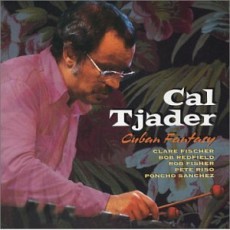
Just as he was born on tour, he died touring on the road with his band in Manila, succumbing from a heart attack on May 5, 1982. Cal Tjader, who 40 year career playing vibraphone, drums, bongos, congas, timpani and piano stands alongside Lionel Hampton and Milt Jackson as a vital influence and is linked with swinging freely between jazz and Latin music.
More Posts: percussion,piano,vibraphone