

Daily Dose Of Jazz…
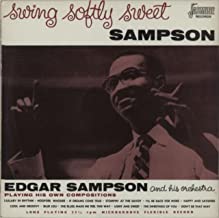
Edgar Melvin Sampson, born October 31, 1907 in New York City, he started playing violin at the age of six and picked up the saxophone in high school. He started his professional career in 1924 with a violin-piano duo with Joe Colman and through the rest of the 1920s and early ’30s, he played with many bands, including those of Charlie “Fess” Johnson, Duke Ellington, Rex Stewart and Fletcher Henderson.
1933 saw him joining Chick Webb’s band. It was during his tenure with Webb that he created his most enduring work as a composer, writing Stompin’ at the Savoy and “Don’t Be That Way“. Leaving the Webb band in 1936 with a reputation as a composer and arranger, he was able to freelance with Benny Goodman, Artie Shaw, Red Norvo, Teddy Hill, Teddy Wilson, and Chick Webb.
Becoming a student of the Schillinger System in the early 1940s, Edgar continued to play saxophone through the late ’40s and led his own band from 1949 to 1951. Through the Fifties, he worked as an arranger for Latin performers Marcelino Guerra, Tito Rodríguez and Tito Puente.
He recorded one album under his own name, Swing Softly Sweet Sampson, in 1956. Due to illness, he stopped working by the late 1960s. Saxophonist, violinist, composer, arranger Edgar Sampson passed away on January 16, 1973 at the age of 65 in Englewood, New Jersey.

More Posts: arranger,composer,history,instrumental,jazz,music,saxophone,violin
Daily Dose Of Jazz…
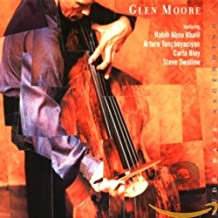
Glen Moore, born October 28, 1941 in Portland, Oregon started his performing career began at age 14 with the Young Oregonians in Portland. It was at this time where he met and played with Native American saxophonist, Jim Pepper.
Graduating with a degree in History and Literature from the University of Oregon, his formal bass instruction started after college with Jerome Magil in his hometown, James Harnett in Seattle, Washington, Gary Karr in New York City, Plough Christenson in Copenhagen, Denmark, Ludwig Streicher in Vienna, Austria, and Francois Rabbath in Hawaii.
Moore is a founding member of Oregon but worked also regularly with Rabih Abou-Khalil, Vasant Rai, Nancy King, and Larry Kar. For the past 30 years, has played a Klotz bass fiddle crafted in Tyrol circa 1715 on which he has made extensive use of a unique tuning with both a low and high C string. He has recorded ten albums as a leader, twenty~eight with Oregon, and twenty as a sideman. Double bassist Glen Moore, who also plays piano, flute, and violin continues to perform and record.
More Posts: bandleader,bass,flute,history,instrumental,jazz,music,piano,violin

Daily Dose Of Jazz…
Jan Savitt was born Jacob Savetnick on September 4, 1907 in Shumsk, U.S.S.R. (now Ukraine) and reared in Philadelphia, Pennsylvania. He exhibited musical ability at an early age and began winning conservatory scholarships in the study of the violin. He was offered the position of concertmaster in Leopold Stokowski’s Philadelphia Symphony Orchestra, but turned it down, preferring to continue his studies at Curtis Institute. A year later, believing himself ready, he joined Stokowski and the association continued for seven years, during which time Savitt gained further laurels as a concert soloist and leader of a string quartet.
In 1938, Jan Savitt & His Top Hatters broadcast from 5–5:30 pm every Tuesday, thru Friday as the KYW staff orchestra at KYW/NBC in Philadelphia. Saturday’s weekly broadcast was one hour, coast-to-coast. The group also played at the Earl Theatre and performed with The Andrews Sisters and The Three Stooges.
He got his start in popular music sometime later as music director of KYW, Philadelphia, where he evolved the unique “shuffle rhythm” which remained his trademark. Numerous sustaining programs created such a demand for the “shuffle rhythm” that Savitt left KYW to form his own dance crew.
His band was notable for including George “Bon Bon” Tunnell,[3] one of the first Black singers to perform with a white band. Tunnell’s recording with Jan included Vol Vistu Gaily Star, co-composed by Slim Gaillard, and Rose of the Rio Grande. Helen Englert Blaum, known at the time as Helen Warren, also sang with him during the war years.
In the 1940s Savitt recorded short pieces used a filler before network shows for the National Broadcasting System’s Thesaurus series. Some of the pieces he created were I’m Afraid the Masquerade Is Over; If I Didn’t Care; Ring Dem Bells; and Romance Runs in the Family.
Violinist, bandleader and arranger Jan Savitt, known as “The Stokowski of Swing” from having played violin in Leopold Stokowski’s orchestra, passed away on October 4, 1948.

More Posts: arranger,bandleader,history,instrumental,jazz,music,violin
Daily Dose Of Jazz…
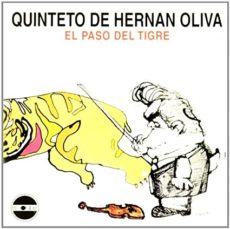
Hernán Oliva was born in Valparaíso, Chile on July 4, 1913 and began his violin studies at age 8 under a dominating mother. Around 1927 at the age of fourteen, he joined the Ernesto Davagnino Orchestra. Bohemian in character and dedicating himself to music over his father choice of law, his father disinherited and expelled from the home.
Around 1935 he crossed to Mendoza, Argentina and worked a few months on the LV10 radio in Cuyo, with his orchestra. Migrating to Buenos Aires, Argentina where Luis Davagnino, Ernesto’s brother, also a musician, lived, and after finding him whistling from corner to corner of Calle Alsina a tune that he knew Luis would recognize received him at his home after. Getting him a job as a companion to Betty Caruso and Fanny Loy on Radio Belgrano, then joined the René Cóspito Orchestra.
He played at the Boite La Chaumiere, with Enrique “Mono” Villegas on piano, David Washington on trumpet, and the English Phillips on sax. The following year Hernán joined the Oscar Alemán orchestra and by 1944 he began working with Ahmed Ratip’s Cotton Pickers, then with Tito Alberti and José Finkel they formed the Jazz Casino in 1951 with singer Lorna Warren.
His later years were spent hanging around the bars of San Telmo playing for whoever asked, sometimes for a glass of whiskey and for many who never appreciated his enormous talent. Violinist Hernán Oliva, who recorded six albums as a leader, passed away in the early morning of June 17, 1988 in Buenos Aires, Argentina lying on a sidewalk in the Palermo neighborhood, hugging his violin case.

More Posts: bandleader,history,instrumental,jazz,music,violin
Daily Dose Of Jazz…
Toby Hardwicke was born Otto James Hardwicke on May 31, 1904 in Washington, D.C., and started on string bass at the age of 14, then moved to C melody saxophone and finally settled on alto saxophone. A childhood friend of Duke Ellington, he joined Ellington’s first D.C. band in 1919. He also worked for banjoist Elmer Snowden at Murray’s Casino.
In 1923, Ellington, Hardwick, Snowden, trumpeter Arthur Whetsol, and drummer Sonny Greer had success as the Washingtonians in New York City. After a disagreement over money, Snowden was forced out of the band and Duke Ellington was elected as the new leader. Booked at a Times Square nightspot called the Kentucky Club for three years, they met Irving Mills, who produced and published Ellington’s music.
Otto left the Duke Ellington band in 1928 to visit Europe, where he played with Noble Sissle, Sidney Bechet and Nekka Shaw’s Orchestra, and led his own orchestra before returning to New York City in 1929. He went on to have a brief stint with Chick Webb that year, then led his own band at the Hot Feet Club, with Fats Waller leading the rhythm section in 1930. He led a group at Small’s before rejoining Duke Ellington in the spring of 1932, following a brief stint with Elmer Snowden.
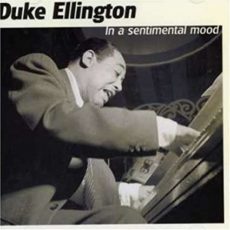
He played lead alto on most Ellington numbers from 1932 to 1946 and was a soloist on Black and Tan Fantasy, In a Sentimental Mood and Sophisticated Lady. Hardwick, with his creamy tone, was almost always the lead alto in the reed section of the Ellington orchestra except in some situations where Ellington required the more cutting tone of Johnny Hodges’ alto to set the tone of the ensemble. He left the band in 1946 over a disagreement with Ellington about his girlfriend, freelanced for a short time in the following year, and then retired from music.
>Occasionally doubling on violin and string bass in the Twenties, alto saxophonist Toby Hardwicke who also played clarinet and bass, baritone, and soprano saxes, passed away on August 5, 1970.

More Posts: bass,clarinet,history,instrumental,jazz,music,saxophone,violin