Daily Dose Of Jazz…
Lee Wiley was born in Fort Gibson, Oklahoma on October 9, 1908. At fifteen, she left home to pursue a singing career, moving to New York City to perform on radio stations. However, her career was interrupted by a horseback riding fall that temporarily sidelined her due to blindness but recovered. At 19 she became a member of the Leo Reisman Orchestra, with whom in 1931 she recorded three songs: Take It From Me, Time On My Hands, and her composition Got The South In My Soul.
Lee began her radio career at KVOO in Tulsa, Oklahoma on the Mrs. Eleanor Roosevelt program on NBC in 1932, and was featured on Victor Young’s radio show in 1933. Throughout the summer of 1936, she had her own show, Lee Wiley, on CBS.
In 1939 she recorded eight Gershwin songs on 78s with a small group for Liberty Music Shop Records. The set sold well and was followed the next year by the music of Cole Porter, Richard Rodgers & Lorenz Hart, Harold Arlen, and the music of Vincent Youmans and Irving Berlin.She sang with Paul Whiteman, and the Casa Loma Orchestra. A collaboration with composer Victor Young resulted in several songs for which Wiley wrote the lyrics, including Got The South In My Soul and Anytime, Anyday, Anywhere. In 1963, Bob Hope Theater on NBC-TV presented “Something About Lee Wiley, where Piper Laurie portrayed her in the episode, which was produced by Revue Studios.
Vocalist Lee Wiley, active from the 1930 through the 1950s, passed away on December 11, 1975.
More Posts: history,instrumental,jazz,music,vocal

Review: Tony Hightower | Legacy
Legacy. If you know Tony Hightower, you understand why he titled this treasury of songs. If you don’t, you will come to appreciate his talent. He was weaned on the classics and his selection of songs as well as his writing and arranging speak to his unique understanding of those who came before. He has accepted the torch and is crafting a distinctive voice to tell his stories. Taking his cues from decades of musical history, as you listen, you will hear the influences as he bares his soul to give you an unabashed glimpse into the pleasures and sorrows of his life.
The opening song, written by the legendary Skip Scarborough, was originally recorded in 1973 as You Can’t Hide Love by the California R&B group Creative Source. It would be two years before Maurice White would drop it down to a ballad for Earth, Wind & Fire and garner wider recognition. Now, nearly fifty years later, a new voice gives it a swing arrangement that shows his maturity to introduce a new generation to a classic song with a different beat. It sets the tone for what is to follow.
Swing is always a fun vehicle to begin an album and it speaks to a historical note of the music that a century ago drew dancers to the floor. Tony’s arrangement of Can’t Hide Love takes us in a new direction and gives us those big band horns, adding a sprinkle of background ladies with drum highlights and a bass line driving the music and you have a classic arrangement that sets the tone for what is to follow. The Doll further illuminates his storytelling acuity with this mid-tempo groove about an elegant lady who is in a league of her own. She turns heads, can stop a room, and is the dream of most men. I think at one time Duke and Billy called her Satin Doll. The Don Redman/And Razaf composition Gee Baby takes the third position sans fanfare, slowing down with an easy opening bass line and a bluesy piano as it begs the question, Ain’t I Good To You? Written at the end of the Roaring Twenties, Tony puts the bass again in the center spotlight to assist in setting the mood as he weaves this tale of a young man trying to understand why the expensive trappings combined with his love mean so little to this woman who is obviously looking for things he is incapable of giving.
Rendez Vous stretches Hightower’s voice in falsetto beyond his familiar tenor. It is a bossa nova getaway tribute to a young man’s love for a woman. She has captured his heart and this is where he can escape from the world and lose himself in her arms on the beach in Ipanema. All To The Good takes us to church but not in the tradition. He keeps a mid~tempo beat alive as he opens with a bit of scatting before delving into his homage to the beautiful spirit that was his mother. Taking wing for that celestial residence is only softened by those left behind with memories of times well spent together. It’s ballad time and Plain Jane takes a deep look inside dreams, aspirations and realities that keep one humble and looking towards the future. It’s acceptable to remove the masks we wear and be the plain people whistling along the boulevard. Need You lightens the mood again with an easy beat as a young man does his best to let the lady in his life know how he feels. One can only envision her smiling.
The Gift is a love song of lament. The orchestration brings to mind theme songs and interlude music of many film noir or those black and white television shows of the Fifties and Sixties. The strings add an eerie but comforting ambience as he unfolds his choices and the subsequent outcome. Love & Happy raises the temperature with this remake of the quintessential Al Green/Teenie Hodges composition Love And Happiness that was first released in the UK in 1973, however, America didn’t get the single until 1977. Tony gives us a funky blues swing tempo with those horns blazing that pays tribute to its raw grittiness that was originally expressed.
There are many songs that one should not tackle unless they have truly done their homework. Here’s To Life is one of those seminal songs that has become a modern day jazz standard and an appropriate closer. Composed by Artie Butler with lyrics by Phyllis Molinary, it became Shirley Horne’s signature song and one of my favorites as the title says it all. “No complaints and no regrets, I still believe in chasing dreams and placing bets, I have learned that all you give is all you get, so give it all you got…” As it unfolds you will hear Tony pay his respects and emerge with the mantra he lives by.
If you are hesitant, don’t be. Tony Hightower’s maturity is evident in his lyricism, composing, arranging and delivery. Penning six of the ten selections he presents here, I implore you to pay very close attention to the musicianship of those who accompany him. The music is as much a part of each story as the lyric, for it plays an equally impassioned role in the story. I also encourage you not to disregard his tracking, as it is reminiscent of past producers who created studio albums that were concerts, where you just drop the needle and let it play. This is one of those albums.
To say this young man is on his way to being one of the great storytellers of his generation is by no means an exaggeration. Listen with intent. For us hip audiophiles, we applaud those who defy popular taste for original design. Legacy.
carl anthony | notorious jazz | october 7, 2021
Give A Gift Of Jazz ~ Share ![]()
#preserving genius
More Posts: bandleader,history,instrumental,jazz,music,review,vocal

Daily Dose Of Jazz…
Teddi King was born Theodora King on September 18, 1929 in Boston, Massachusetts. She won a singing competition hosted by Dinah Shore at Boston’s Tributary Theatre, which led to her beginning to work in a touring revue involved with “cheering up the military in the lull between World War II and the Korean conflict. Improving her vocal and piano technique during this time, she first recorded with Nat Pierce in 1949, later recording with the Beryl Booker Trio as well as with several other small groups from 1954–1955. These recordings were available on three albums for Storyville.
She went on to tour with George Shearing for two years beginning in the summer of 1952, and for a time was managed by the famed George Wein. For a time she was a Las Vegas performer. Teddi ultimately signed with RCA, recorded three albums for the label, beginning with 1956’s Bidin’ My Time. She also had some minor chart success with the singles Mr. Wonderful, Married I Can Always Get and Say It Isn’t So. Her critically praised 1959 album All the Kings’ Songs found her interpreting the signature songs of contemporary male singers like Frank Sinatra and Nat King Cole, the “kings” of the title.
In the Sixties she opened the Playboy Club, where she often performed. After developing lupus, she managed to make a brief comeback with a 1977 album featuring Dave McKenna, and with two more albums recorded for Audiophile released posthumously.
Vocalist Teddi King, who was influenced by Lee Wiley, Mildred Bailey and Mabel Mercer, recorded twelve albums as a leader, passed away from lupus on November 18, 1977.
More Posts: bandleader,history,instrumental,jazz,music,vocal
Daily Dose Of Jazz…
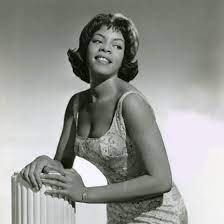
Cæcilie Norby was born on September 9, 1964 in Frederiksberg, Denmark, into a musical family, her father a classical composer and her mother an opera singer. She was a founding member of the band Street Beat in 1982 then for two years, she was a member of the jazz-rock band Frontline. From 1985 to 1993, she worked with singer Nina Forsberg in the rock band One~Two. During the 1990s, she turned to jazz and released her first solo album for Blue Note.
Her self~titled debut recording co~produced by Niels Lan Doky featured Scott Robinson, Randy Brecker and Michael Brecker each played on one track. Doky produced her following album My Corner Of The Sky in 1996, which prominently featured pianists David Kikoski, Joey Calderazzo and Terri Lyne Carrington on drums. The repertoire for both recordings included only a few jazz standards like Summertime or Just One of Those Things, instead she and Lan Doky arranged classic popular songs for a jazz line-up, like Wild Is the Wind, By the Time I Get to Phoenix and a track by Curtis Mayfield on the first album. The Look of Love, Life on Mars, Spinning Wheel and Set Them Free by Sting she recorded on the second.
For both albums Norby wrote lyrics to compositions by Randy Brecker, Chick Corea, Don Grolnick and Wayne Shorter. Both albums gained wide attention and five-digit sales, especially in Denmark and also in Japan.
Her third album Queen of Bad Excuses, released in 1999, was a collaboration with bassist Lars Danielsson, who already played bass on her sophomore release. This time she brought into the studio pianists Ben Besiakov and Lars Jansson, drummers Anders Kjellberg, Per Lindvall, Billy Hart, guitarist John Scofield, saxophonist Hans Ulrik and percussionist Xavier Desandre Navarre. Vocalist Cæcilie Norby continues to advance the music.
More Posts: arranger,composer,history,instrumental,jazz,lyricist,music,vocal

Daily Dose Of Jazz…
Jack Teagarden was born Weldon Leo Teagarden on August 20, 1905 in Vernon, Texas into a musical family, two brothers, a sister and father all musicians. His father started him on baritone horn but by age seven he had switched to trombone. His first public performances were in movie theaters, where he accompanied his mother, a pianist.
By 1920, Teagarden was playing professionally in San Antonio, Texas with the band of pianist Peck Kelley. In the mid-1920s he started traveling widely around the United States in a quick succession of different bands. 1927 saw him in New York City where he worked with several bands and by 1928 he was playing with the Ben Pollack band.
In the late 1920s, he recorded with such bandleaders and sidemen as Louis Armstrong, Benny Goodman, Bix Beiderbecke, Red Nichols, Jimmy McPartland, Mezz Mezzrow, Glenn Miller, and Eddie Condon. Miller and Teagarden collaborated to provide lyrics and a verse to Spencer Williams’ “Basin Street Blues”, which in that amended form became one of the numbers that Teagarden played until the end of his days.
Seeking financial security during the Great Depression, Jack signed an exclusive contract to play for the Paul Whiteman Orchestra from 1933 through 1938. In 1946, he joined his lifelong friend Louis Armstrong and his All Stars. In late 1951, he left to again lead his own band.
Suffering from pneumonia, trombonist and singer Jack Teagarden, considered the most innovative jazz trombone stylist of the pre-bebop era, passed away in New Orleans at the age of 58 on January 15, 1964.
More Posts: bandleader,history,instrumental,jazz,music,trombone,vocal