


Daily Dose Of Jazz…
Buddy Clark was born Samuel Goldberg on July 26, 1912 in Dorchester, Massachusetts, He made his big band singing debut in 1932 as a tenor, with Gus Arnheim’s orchestra, but was not successful. Singing baritone he gained wider notice in 1934 with Benny Goodman on the Let’s Dance radio program. From 1936 to 1938 he performed on the show Your Hit Parade.
In the mid-1930s he signed with Vocalion Records, having a top-20 hit with Spring Is Here. He continued recording, appearing in movies, and dubbing other actors’ voices until he entered the military, but did not have another hit until the late 1940s. In 1946 he signed with Columbia Records, scoring his biggest hit with the song Linda. 1947 saw hits for Clark with How Are Things in Glocca Morra?”, Peg O’ My Heart, An Apple Blossom Wedding, and I’ll Dance at Your Wedding. A duet with Doris Day, Love Somebody, sold a million recordsand reaching #1 on the charts. Through the Forties decade he had nine more chart hits untilhis death.
Vocalist Buddy Clark, who was a popular crooner during the big band era, passed away in a plane crash on Beverly Boulevard in West Los Angeles, California on October 1, 1949.

More Posts: history,instrumental,jazz,music,vocal
The Quarantined Jazz Voyager
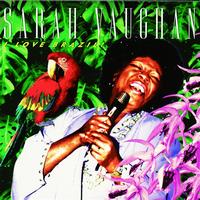
Masking and social distancing are still my mantra in maintaining my health and this pandemic has given me a great opportunity to sit and listen to albums I have’nt in a long time. So as I revisit my music collection this week I place on the turntable the 1977 studio album by Sarah Vaughan titled I Love Brazil! If you love Vaughan’s voice and the music of Brazil, you will want this in your collection.
The session was recorded on October 31 ~ November 7, 1977 and was her first album released on Pablo Records. This was Vaughan’s first but not last foray into Brazilian music, bossa nova and mpb. It was followed by Copacabana in 1979, and Brazilian Romance in 1987.
Track Listing | 54:43- If You Went Away | Preciso Aprender a Ser Só (Ray Gilbert, Marcos Valle, Paulo Sérgio Valle) ~ 4:25
- Triste (Antônio Carlos Jobim) ~ 2:58
- Roses and Roses | Das Rosas (Dorival Caymmi, Gilbert) ~ 3:23
- Empty Faces | Vera Cruz (Lani Hall, Milton Nascimento) ~ 6:26
- I Live to Love You | Morrer de Amor (Oscar Castro-Neves, Luverci Fiorini, Gilbert) ~ 3:54
- The Face I Love | Seu Encanto (Gilbert, Carlos Pingarilho, M. Valle) ~ 3:29
- Courage | Coragem (Nascimento, Cootie Williams) ~ 3:42
- The Day It Rained | Chuva (Pedro Camargo, Durval Ferreira, Gilbert) ~ 4:40
- A Little Tear | Razão de Viver (Deodato, Gilbert, P.S. Valle) ~ 4:07
- Like a Lover | Cantador (Alan and Marilyn Bergman, Dori Caymmi, Nelson Motta) ~ 4:45
- Bridges | Travessia (Nascimento, Fernando Brant, Gene Lees) ~ 4:12
- Someone to Light Up My Life | Se Todos Fossem Iguais a Vocë (Jobim, Vinicius de Moraes, Lees) ~ 3:26
- Sarah Vaughan ~ vocals
- Dorival Caymmi – vocals (3)
- Milton Nascimento – acoustic guitar, vocals (4,7,11)
- Dori Caymmi – acoustic guitar, vocals (10)
- Nelson Angelo – electric guitar (4,7,11)
- Hélio Delmiro – electric guitar (1-3,6,8-9,12)
- Danilo Caymmi – flute (4,7,11)
- Paulo Jobim – flute (4,7,11)
- Mauricio Einhorn – harmonica (8)
- Antônio Carlos Jobim – piano (2,12)
- José Roberto Bertrami – electric piano (1-3,6,8-9), organ (4,7,11)
- Edson Frederico – orchestration (1-3,5-6,8-9,12), piano (5)
- Sergio Barroso – acoustic bass (1-2,6,9,12)
- Claudio Bertrami – acoustic bass (3,8)
- Novelli – electric bass (4,7,11)
- Wilson das Neves – drums (1-3,6,8-9,12)
- Robertinho Silva – (4,7,11)
- Ariovaldo – percussion (1-4,6-7,9,11-12)
- Chico Batera – percussion (1-4,6-7,9,11-12)
- Luna – percussion (12)
- Marçal – percussion (12)
- Durval Ferreira – creative director
- Sheldon Marks – design, layout design
- Norman Granz – design, layout design, liner notes
- Mário Jorge Bruno – engineer
- Tamaki Beck – mastering
- Aloísio de Oliveira – producer
More Posts: adventure,album,club,genius,jazz,museum,music,preserving,restaurant,travel,vocal
Daily Dose Of Jazz…
Ellen Radka Toneff was born on June 25, 1952 in Oslo, Norway. She was the daughter of the Bulgarian folk singer, pilot and radio technician Toni Toneff, and grew up in Lambertseter and Kolbotn. She studied music at Oslo Musikkonservatorium (1971–75), combined with playing in the jazz rock band Unis.
From 1975 to 1980 she led her own Radka Toneff Quintet, with a changing lineup including musicians like Arild Andersen, Jon Balke, Jon Eberson and Jon Christensen, among others. From 1979 she cooperated with Steve Dobrogosz, and in 1980 she participated in the Norwegian national final of the Eurovision Song Contest with the song Parken by Ole Paus.
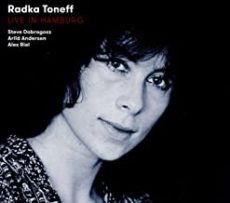
Toneff was awarded the Spellemannsprisen 1977 in the category best vocal for the album Winter Poem, and posthumously received the Norwegian Jazz Association’s Buddypris in 1982. The Radka Toneff Memorial Award is funded with royalties from the albums Fairytales and Live in Hamburg. A biography of her life was published in 2008.
Her 1982 album Fairytales was voted the best Norwegian album of all time. Vocalist Radka Toneff, considered one of Norway’s greatest jazz singers, committed suicide with an overdose of sleeping pills and was found in the woods of Bygdøy outside Oslo on October 21, 1982.
More Posts: history,instrumental,jazz,music,vocal
Daily Dose Of Jazz…
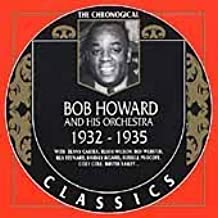
Bob Howard was born Howard Joyner on June 20, 1906 in Newton, Massachusetts, He began singing in New York City night clubs in the mid-1920s and began recording in 1931 under his real name for Columbia Records.
Under the name Bob Howard, he played New York’s Park Central Hotel, Famous Door, Hickory House and other clubs as well as theaters. Signed to Decca Records in 1934 he recorded a series of hot small group swing records between 1935 and 1938. His studio groups included Benny Carter, Buster Bailey, Rex Stewart, Ben Webster, Teddy Wilson, Russell Procope, Cecil Scott, Cozy Cole, Bunny Berigan, Artie Shaw, and Babe Russin among others. Unfortunately on these Decca recording sessions he did not play piano, only sang.
Embarking on several European tours as a solo performer in the middle and late 1930s, Bob also had his own radio series in New York. From 1936 to 1947 he performed in a handful of short films, and 1959 saw him acting in an episode of Perry Mason.
In 1948, Howard hosted The Bob Howard Show on CBS, making him the first Black man to host a regularly broadcast network TV show. The program was cancelled after 13 episodes. He also was a regular performer on Sing It Again on CBS-TV in 1950 – 1951.
Relocating to Las Vegas, Nevada and Los Angeles, California for a time, he returned East. Pianist and vocalist Bob Howard passed away on December 3, 1986 in the Bronx, New York.
More Posts: bandleader,history,instrumental,jazz,music,vocal

Daily Dose Of Jazz…
Marilyn Montez Moore was born in Chicago, Illinois on June 16, 1930. Her vocal style was similar to that of Billie Holiday’s, at twenty-six she recorded her only solo album as a leader in 1957 on the Bethlehem label titled Moody Marilyn Moore. With Jackie Paris she recorde another album titled Oh, Captain.
She was the first wife of saxophonist Al Cohn, who played on Moody Marilyn Moore, and the mother of guitarist Joe Coh. After she and Cohn separated and later divorced, Moore was left to raise her family and never recorded again.
Singer Marilyn Moore, whose short career was limited to activity during the 1950s, passed away on March 19, 1992 at the age of 61 in Ft. Lauderdale, Florida.
More Posts: bandleader,history,instrumental,jazz,music,vocal