

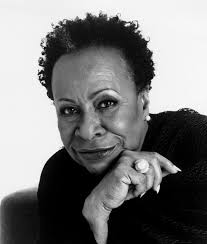
Three Wishes
Speaking with Betty Carter, Baroness Pannonica inquired as to what she would wish for if given three and she responded by telling her:
- “Health. Without that you don’t have anything.”
- “To be recognized as an individual all the way.”
- “Happiness for my son.”
*Excerpt from Three Wishes: An Intimate Look at Jazz Greats ~ Compiled and Photographed by Pannonica de Koenigswarter

More Posts: baroness,history,instrumental,jazz,music,pannonica,three,vocal,wishes
Daily Dose Of Jazz…
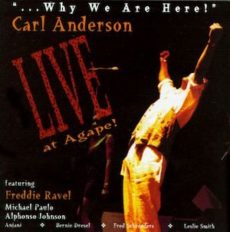
Carl Anderson was born Carlton Earl Anderson on February 27, 1945 in Lynchburg, Virginia, one of 12 children to James and Alberta Anderson. During his junior year of high school, he enlisted in the U.S. Air Force, where he served as a communications technician for two years. Honorably discharged and returning home he completed high school, graduating in 1965. He went on to sing at military bases across the United States as part of the World Wide Air Force Talent Contest.
Making his way to Washington, D.C. in 1969, he and some friends formed a group called The Second Eagle with Anderson handling the vocals. They covered jazz and rock tunes that included songs from the album Jesus Christ Superstar, released long before the stage production was launched. In 1971, a talent agent from the William Morris Agency saw Anderson perform some songs from the show at St. Stephen’s Church and recognized his potential as a solo performer.
His global popularity and star power came from his role as Judas in Jesus Christ Superstar both on Broadway and in the film. He also had rolesin The Black Pearl, The Color Purple, The Eddie Capra Mysteries, Cop Rock, Days of Our Lives, and Hill Street Blues.
As a recording artist, Carl was equally prolific, initially signing with Motown Records in 1972, working with Stevie Wonder on his Songs in the Key of Life double album, as well as numerous others. While working the club circuit in Los Angeles, California he was noticed by and signed to Columbia Records and released four albums on their Epic label. He would go on to perform duets with Gloria Loring, Angie Bofill, Linda Eder and Nancy Wilson.
His duet with Loring, Friends and Lovers, reached Number 2 on the charts, and endeared Anderson to soap opera fans, after being performed on Days of Our Lives. He also recorded Between You and Me, as the title theme for the film Her Alibi.
In 2003 he had a minor car accident on his way to perform and while being treated for his injuries, doctors discovered that he had leukemia. Soul jazz vocalist and actor Carl Anderson passed away the following year from the illness on February 23, 2004, in Los Angeles, just four days before his 59th birthday.

Conversations About Jazz & Other Distractions
Conversations About Jazz Presents
Rubin & Dameron: A Perfect Match on February 25
On Thursday, February 25 at 7:30 pm (EST) Hammonds House Digital invites you to join us for Conversations About Jazz & Other Distractions with host Carl Anthony. Carl’s special guest will be jazz vocalist Vanessa Rubin and they will discuss her career, sample some of her favorite songs, and delve into her latest CD, This Dream is You: Vanessa Rubin Sings Tadd Dameron. This free virtual program will stream on Hammonds House Museum’s Facebook and YouTube channels. For more information about this and upcoming virtual events visit hammondshouse.org.
Revered as both a torchbearer and a storyteller, jazz vocalist Vanessa Rubin possesses a voice hailed for crystalline clarity, warmth, and playful sass. The Cleveland native brings a wealth of diverse influences to her vocal performance from both the Trinidadian/Caribbean roots of her mother and traditional jazz by way of her Louisiana-born father. Additional influences include the melodic bell tone clarity of a young Nancy Wilson, the fire of Lambert, Hendricks & Ross, the sweet sounds of trumpeter Blue Mitchell, and her love of the Motown Sound…especially girl groups like the Supremes.
Rubin’s passion for rich musical stories is evident throughout her eight albums. Highlights include the evocative “Voyager II” from the pen of Teri Thornton, “Inside a Silent Tear” written by Blossom Dearie, a waltz version of John Coltrane’s “Giant Steps” lyricized by New York Voices, and an arrangement of “Superwoman” by Stevie Wonder, inspired by the Ahmad Jamal recording of “Poinciana.” Her current endeavors include highlighting and interpreting well known, obscure and new lyrical works of composer/arranger/pianist Tadd Dameron. “I hope to do for Tadd’s music what Carmen McRae did for Monk’s music,” Rubin explained. For more information visit: vanessarubin.com.
Tadd Dameron (1917-1965) was American jazz pianist, arranger, composer, and bandleader. The most influential arranger of the bebop era, he also wrote charts for swing and hard bop players. The bands he arranged for included those of Count Basie, Artie Shaw, Jimmie Lunceford, Dizzy Gillespie, Billy Eckstine, and Sarah Vaughan. In 1940-41 he was the piano player and arranger for the Kansas City band Harlan Leonard and his Rockets. He and lyricist Carl Sigman wrote “If You Could See Me Now” in 1946 for Sarah Vaughan and it became one of her first signature songs. Dameron wrote many arrangements for Gillespie’s big band, who gave the première of his large-scale orchestral piece Soulphony in Three Hearts at Carnegie Hall in 1948. Later in 1948, Dameron led his own group in New York, which included Fats Navarro. The following year Dameron performed at the Paris Jazz Festival with Miles Davis.
Hammonds House Museum is generously supported by the Fulton County Board of Commissioners, Fulton County Arts and Culture, the City of Atlanta Mayor’s Office of Cultural Affairs, The Community Foundation for Greater Atlanta, The National Performance Network, AT&T and WarnerMedia.
Hammonds House Museum’s mission is to celebrate and share the cultural diversity and important legacy of artists of African descent. The museum is the former residence of the late Dr. Otis Thrash Hammonds, a prominent Atlanta physician and a passionate arts patron. A 501(c)3 organization which opened in 1988, Hammonds House Museum boasts a permanent collection of more than 450 works including art by Romare Bearden, Robert S. Duncanson, Benny Andrews, Elizabeth Catlett, Jacob Lawrence, Hale Woodruff, Amalia Amaki, Radcliffe Bailey and Kojo Griffin. In addition to featuring art from their collection, the museum offers new exhibitions, artist talks, workshops, concerts, poetry readings, arts education programs, and other cultural events throughout the year.
Located in a beautiful Victorian home in Atlanta’s historic West End, Hammonds House Museum is a cultural treasure and a unique venue. During the COVID-19 pandemic, they continue to observe CDC guidelines, but look forward to welcoming in-person visitors soon! For more information about upcoming virtual events, and to see how you can support their mission and programming, visit their website: hammondshouse.org.
More Posts: arranger,composer,conversations,history,instrumental,jazz,musicians,piano,vocal
Daily Dose Of Jazz…
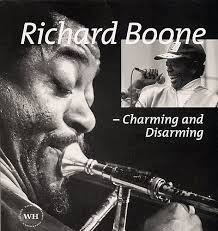
Richard Bently Boone was born on February 24, 1930 in Little Rock, Arkansas and began singing in a Baptist church choir as a boy. By age twwelve he was playing the trombone. He went on to serve in the U.S. Army from 1948 to 1953 where he played trombone in a military band. Following his discharge from the Army, he returned to Little Rock to study music at Philander Smith College.
In 1956 Boone moved to Los Angeles, California where he played with Dolo Coker, Sonny Criss, and Dexter Gordon. Working in the backup band for Della Reese between 1962 and 1966, he then became a member of the Count Basie band. A few years later he left Basie and emigrated to Copenhagen, Denmark and mking it his home, performed with the Ernie Wilkins Big Band.
Trombonist and scat singer Richard Boone passed away in Copenhagen on February 8, 1999.
More Posts: history,instrumental,jazz,music,scat singer,trombone,vocal
The Quarantined Jazz Voyager
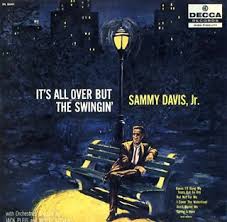
It’s All Over But The Swingin’ is a studio album by Sammy Davis, Jr. that was recorded on July1~2 and 9~10, 1957 and released the same year on the Decca Record label. The music was arranged by Jack Pleis and Morty Stevens and the session was produced by Lee Gillette.
Track List | 43:13- Guess I’ll Hang My Tears Out To Dry (Sammy Cahn, Jule Styne) ~ 4:43
- But Not for Me (George Gershwin, Ira Gershwin) ~ 3:24
- Where’s That Rainbow? (Lorenz Hart, Richard Rodgers) ~ 3:27
- I Cover the Waterfront (Johnny Green, Edward Heyman) ~ 3:19
- Don’t Blame Me (Dorothy Fields, Jimmy McHugh) ~ 2:52
- Better Luck Next Time (Irving Berlin) ~ 2:43
- Can’t Help Lovin’ Dat Gal (Oscar Hammerstein II, Jerome Kern) ~ 4:53
- It Never Entered My Mind (Hart, Rodgers) ~ 4:05
- Someone to Watch over Me (G. Gershwin, I. Gershwin) ~ 3:23
- I’ve Grown Accustomed to Her Face (Alan Jay Lerner, Frederick Loewe) ~ 2:47
- Spring Is Here” (Hart, Rodgers) ~ 4:03
- I Can’t Get Started” (Vernon Duke, I. Gershwin) ~ 3:29
- Sammy Davis, Jr. – vocal
- Dan Lube, M. Sosson – violin
- Al Dinkin, Paul Robyn – viola
- Eleanor Slatkin – cello
- Harry Klee – flute
- Harry Edison, Conrad Gozzo, Virgil Evans, Mannie Klein – trumpet
- Milt Bernhart, Frank Howard, George Roberts – trombone
- Harry Klein, Ronnie Lang – alto saxophone
- Babe Russin, Don Raffell – tenor saxophone
- Bob Lawson – baritone saxophone
- Roger Renner – piano
- Tony Rizzi, Bob Bain – guitar
- Mort Cobb, Joe Comfort – double bass
- Irving Cottler, Alvin Stoller – drums

More Posts: adventure,album,club,genius,jazz,museum,music,preserving,restaurant,travel,vocal