

Three Wishes
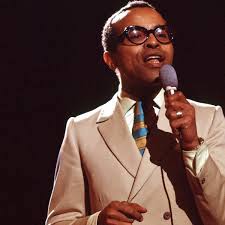
Jon Hendricks told Nica what his three wishes would be when she inquired:
- “Knowledge of God.”
- “Art.”
- “Love.”
*Excerpt from Three Wishes: An Intimate Look at Jazz Greats ~ Compiled and Photographed by Pannonica de Koenigswarter

More Posts: baroness,history,instrumental,jazz,music,pannonica,three,vocal,wishes
Daily Dose Of Jazz…
Miriam Klein was born on March 27, 1937 in Basel, Switzerland and gained fame as a singer for the first time when she appeared on the scene in Paris, France with Pierre Michelot, Don Byas and Art Simmons in the 1950s. After education at the music school in Vienna, Austria she returned to Switzerland and has sung in the group of her husband Oscar Klein since 1963.
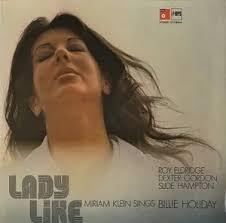
In the 1960s and 1970s, she gained international fame when she released her 1973 album Lady Like. The album was dedicated to Billie Holiday and performed with Roy Eldridge, Dexter Gordon and Slide Hampton. She also recorded music with Albert Nicholas in 1971 and Wild Bill Davison in 1976.
In 1977, Miriam worked with Fritz Pauer’s trio and in 1978 with Roland Hanna and George Mraz in her album By Myself. In 1981/82, she toured with Kenny Clarke, Hanna and Isla Eckinger. In 2001, she took part in My Marlin, the album of her son David Klein. Vocalist Miriam Klein remains active.

More Posts: history,instrumental,jazz,music,vocal
The Quarantined Jazz Voyager
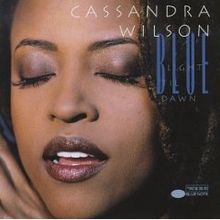
Another week has passed and life goes on. To continually relax in between working on a few projects, I’m kicking back with Blue Light ’til Dawn. This studio album by jazz singer Cassandra Wilson. Her first album on the Blue Note label, it was released in 1993. It contains Wilson’s interpretations of songs by various blues and rock artists, as well as three original compositions.
The album marked a shift in Wilson’s recording style, mostly dropping the electric instruments of her earlier albums in favor of acoustic arrangements. A critical and commercial breakthrough, the album was re-released in 2014 with three bonus tracks recorded live somewhere in Europe during the Blue Light ’til Dawn Tour. The eponimous single was nominated for the Grammy Award as Best Jazz Vocal Performance.
As of March 1996, the album sold over 250 000 copies. While recording the album, Wilson’s father, jazz bassist Herman Fowlkes, died. In an interview for New York Magazine Wilson explained that the album’s name refers to a certain time of night. Says Wilson “At a party you have a blue light to have a certain vibe. The title refers to that light, that blue, giving way to the dawn. It’s after after hours, the predawn twilight”. The album peaked at #10 on the U.S. Billboard Chart.
Track Listing | 34:22- You Don’t Know What Love Is (Gene DePaul, Don Raye) ~ 6:05
- Come On In My Kitchen (Robert Johnson) ~ 4:53
- Tell Me You’ll Wait For Me (Charles Brown, Oscar Moore) ~ 4:48
- Children Of The Night (Thom Bell, Linda Creed) ~ 5:19
- Hellhound On My Trail (Johnson) ~ 4:34
- Black Crow (Joni Mitchell) ~ 4:38
- Sankofa (Cassandra Wilson) ~ 2:02
- Estrellas (Cyro Baptista) ~ 1:59
- Redbone (Wilson) ~ 5:35
- Tupelo Honey (Van Morrison) ~ 5:36
- Blue Light ’til Dawn (Wilson) ~ 5:09
- I Can’t Stand the Rain (Don Bryant, Bernard Miller, Ann Peebles) ~ 5:27
- Cassandra Wilson – vocals
- Olu Dara – cornet
- Don Byron – clarinet
- Charlie Burnham – violin, mandocello
- Tony Cedras – accordion
- Gib Wharton – pedal steel guitar
- Chris Whitley – resophonic guitar
- Brandon Ross – acoustic guitar
- Kenny Davis – bass
- Lonnie Plaxico – bass
- Lance Carter – drums, percussion
- Bill McClellan – drums, percussion
- Cyro Baptista – percussion
- Jeff Haynes – percussion
- Kevin Johnson – percussion
- Vinx – percussion
More Posts: adventure,album,club,genius,jazz,museum,music,preserving,restaurant,travel,vocal
Daily Dose Of Jazz…
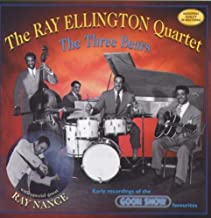
Ray Ellington was born Henry Pitts Brown on March 17, 1916 in Kennington, London, England, the youngest of four children of a Black father and Russian Jew mother. His father died when he was four years old, and was raised as a strictly Orthodox Jew, attending the South London Jewish School before entering show business at the age of twelve, when he appeared in an acting role on the London stage.
Ellington’s first break came in 1937 when he joined Harry Roy and His Orchestra as the band’s drummer, replacing Joe Daniels. His vocal talents were put to good use, from the time of his first session when he recorded Swing for Sale. Called up in 1940 he joined the Royal Air Force as a physical training instructor where he served throughout the war. He played in various service bands including RAF Blue Eagles.
Post military service, Ray resumed his career, fronting his own group, playing at The Bag O’Nails club. By early in 1947, he rejoined the Harry Roy band for a few months, later forming The Ray Ellington Quartet the same year. Specializing in jazz, he experimented with many other genres throughout the show’s history and his musical style was heavily influenced by the comedic jump blues of Louis Jordan.
His band was one of the first in the UK to feature the stripped-back guitar/bass/drums/piano format that became the basis of rock and roll. His band was also one of the first groups in Britain to prominently feature the electric guitar and use an amplified guitar produced and introduced by their guitar player, Lauderic Caton.
Drummer, singer, bandleader Ray Ellington, best known for his appearances on The Goon Show from 1951 to 1960, passed away of cancer on February 27, 1985.
More Posts: bandleader,drums,history,instrumental,jazz,music,vocal
Daily Dose Of Jazz…
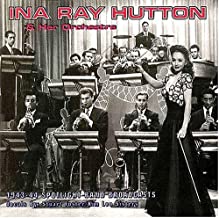
Ina Ray Hutton was born Odessa Cowan on March 13, 1916 in Chicago, Illinois into a family whose mother was a pianist. She began dancing and singing on stage professionally at the age of eight. By 15, she starred in the Gus Edwards revue Future Stars Troupe at the Palace Theater, and Lew Leslie’s Clowns in Clover. On Broadway she performed in George White’s revues Melody, Never Had an Education and Scandals, before joining the Ziegfeld Follies.
1934 saw her being approached by Irving Mills and vaudeville agent Alex Hyde to lead an all-girl orchestra, the Melodears. As part of the group’s formation, Mills asked Odessa to change her name. The group included trumpeter Frances Klein, Canadian pianist Ruth Lowe Sandler, saxophonist Jane Cullum, guitarist Marian Gange, trumpeter Mardell “Owen” Winstead, and trombonist Alyse Wells.
The Melodears appeared in short films and in the movie Big Broadcast of 1936. They recorded six songs, sung by Hutton, before disbanding in 1939. Soon after, she started the Ina Ray Hutton Orchestra (with men only) that included George Paxton and Hal Schaefer. The band appeared in the film Ever Since Venus in 1944, recorded for Elite and Okeh, and performed on the radio. After this band broke up, she started another male band a couple years later. During the 1950s, Hutton again led a female big band that played on television and starred on The Ina Ray Hutton Show.
Although she and some members of her family are known to have been white, historians have theorized that she and her family were of mixed white and African-American ancestry. In 1920, Hutton herself was listed in the US Census as “mulatto” and in 1930 as “negro”. Hutton was also mentioned under her original name in the black Chicago newspaper The Chicago Defender several times in articles describing the early years of her career. A photograph of her as a 7-year-old dancer appeared in a 1924 issue of the paper.
Retiring from music in 1968, Ina Ray Hutton, who led one of the first all-female big bands, passed away on February 19, 1984 from complications due to diabetes at the age of 67 in Ventura, California.
More Posts: bandleader,history,instrumental,jazz,music,vocal