

Daily Dose Of Jazz…
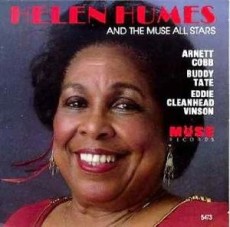
Jazz and blues singer Helen Humes was born on June 23, 1913 in Louisville, Kentucky. As a teenager she was a blues singer, band vocalist with Count Basie, a saucy R&B diva and a mature interpreter of the classy pop song.
Humes made her gramophone record debut in 1927 after being spotted by guitarist Sylvester Weaver. Moving to New York City in 1937 she became a recording vocalist with Harry James’ big band, then replaced Billie Holiday as the voice of the Count Basie Orchestra in 1938. During the 1940s and 1950s, she turned solo performer and worked with different bands and other vocalists including Nat King Cole.
In 1950 Helen recorded Benny Carter’s “Rock Me to Sleep”. She managed to bridge the gap between big band jazz swing and rhythm and blues. She appeared at the 1960 Monterey Jazz Festival with a styling reminiscent of Dinah Washington. Moving to Hawaii, then to Australia in 1964, she returned to the U.S. in 1967 to care for her ailing mother leaving the music industry for several years.
Vocalist Helen Humes received the key to the city of Louisville, the Music Industry of France Award and made a full comeback in 1973 at the Newport Jazz Festival and stayed busy until her passing from cancer at age 68 on September 9, 1981 in Santa Monica, California.

More Posts: vocal
From Broadway To 52nd Street
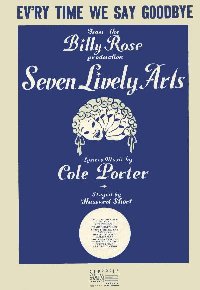
Seven Lively Arts opened at the Ziegfeld Theatre on December 7, 1944 and the curtain rose for 183 performances. Billy Rose produced the show, hiring Cole Porter to compose the music that spawned the jazz standard Ev’ry Time We Say Goodbye.
The Story: The musical featured eleven sketches such as Local Boy Makes Good, Pas de Deux and Heaven On Angel Street. The short-list of actors included Beatrice Lillie, Bert Lahr, Alicia Markova and Doc Rockwell. They are augmented with the talents of jazz notables Teddy Wilson, Red Norvo and Benny Goodman.
Broadway History: By the Mid 40s most theaters on Broadway that had been a good investment and a symbol of vivacity and mirth from the turn of the century were now considered uneconomical. Increasing real estate values was forcing the theaters into obsolescence, turning them into film house to accommodate the takeover by movies. A second threat during this period in the competition for audience was the emergence of television, which was providing free entertainment. The result of these two industries was a shocking 80% unemployment rate for Broadway actors in 1948, and for the first time in its history, Broadway had to call a general emergency meeting for all unions and theater people.
Sponsored By

www.whatissuitetabu.com
Daily Dose Of Jazz…
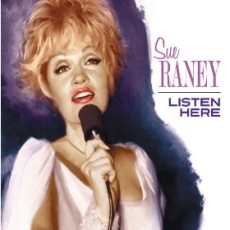
Sue Raney was born on June 18, 1940 in McPherson, Kansas. The proverbial fruit did not fall far from the tree as her mother was a singer and a great, great aunt had been a performer in German opera. She started singing at age four and a year later was performing in public. Due to her young age no voice teacher could be engaged, mother took voice lessons herself and then passed down what she learned to Sue.
A professional before she was a teenager, Raney worked steadily in New Mexico when her family relocated and took several trips out to Los Angeles during a couple of summer vacations. She joined the Jack Carson radio show in 1954 in L.A. when she was barely 14. By age 17 was signed by Capitol Records to record her debut album, the Nelson Riddle-produced When Your Lover Has Gone, released in 1958.
Sue then appeared on Ray Anthony’s television program and became his band’s main vocalist. At 18 she started working as a single. She had already recorded for Phillips and then signed with Capitol, recording several middle-of-the-road jazz-influenced pop dates including her 1958 Nelson riddle-produced debut album “When Your Love Has Gone”.
In the 1960’s Raney often appeared on television variety shows, led her own group and became very active in the studios where her impressive voice helped sell products. After a hiatus in the 1970s, the jazz vocalist continued to record sporadically and by the early 1980’s, in addition to recording several jazz albums for Discovery Records, she began working as a voice teacher. Through the Nineties and into the new millennium she sang with the L.A. Voices, Supersax, the Bill Watrous Big Band and as a soloist, releasing “Heart’s Desire”, a 2006 tribute album to Doris Day and in 2011“Listen Here: Alone With Alan Broadbent”.
Over the course of fifty years vocalist Sue Raney has recorded twenty albums, performed music ranging from swinging jazz and ballads to cabaret, middle-of-the-road pop and jingles, and has remained active as a jazz educator and in the studios.
More Posts: vocal
From Broadway To 52nd Street
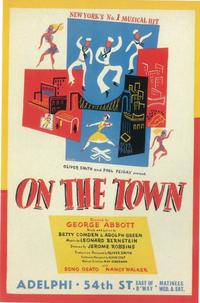
On The Town opened at the Adelphi Theatre on December 28, 1944 and ran for 463 performances. Leonard Bernstein composed the music and Betty Comden and Adolph Green wrote the lyrics. The musical starred Betty Comden, Nancy Walker, Adolph Green, John Battles, S. Ono Osata and Chris Alexander.
The Story: Three sailors – romantic Gaby, down-to-earth Chip and clownish Ozzie are on shore leave in New York City. During a subway ride, Gaby falls in love with a picture of Miss Turnstiles. This event leads the guys on an adventure to find her. Roaming around the city as far as the museum of Natural History and Coney Island, the other two also find love. Nancy Walker plays the cab driver. From this play New York, New York and Some Other Time became jazz standards.
Jazz History: American involvement in World War II, which began on December 11th, 1941 marked a decline in the importance of big bands in popular music. Many musicians were sent to fight in the war, and those who remained were restricted by high taxes on gasoline. By the time the ban on recording was lifted, big bands had practically been forgotten, or had begun to be thought of as peripheral in relation to vocal stars such as Frank Sinatra.
The fall of the Big Band began on August 1, 1942 when the American Federation of Musicians initiated a strike against all major recording companies because of a disagreement over royalty payments. No union musician could record. The effects of the strike include the shrouding of the developments of bebop in mystery. There are few documents that can provide evidence of what the early forms of the music sounded like.
Sponsored By
www.whatissuitetabu.com
Daily Dose Of Jazz…
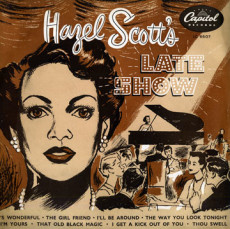
Hazel Dorothy Scott was born on June 11, 1920 in Port of Spain, Trinidad but was raised in New York City from age four. Performing extensively as a child pianist, she trained at Julliard and appeared in the 1942 production of Priorities and performed numerous times at Carnegie Hall.
A jazz and classical pianist and singer, Scott was known for improvising on classical themes and also played boogie-woogie, blues, and ballads. She was the first woman of color to have her own television series “The Hazel Scott Show” that premiered on the Dumont Television Network on July 3, 1950. However, due to her public opposition to McCarthyism and racial segregation the show was canceled in 1950 when she was accused of being a Communist sympathizer; the final broadcast was September 29, 1950.
The talented Hazel went on to have a brief motion picture career included films Something To Shout About, I Dood It, Broadway Rhythm, The Heat’s On and Rhapsody In Blue. Her album Relaxed Piano Moods on the Debut Record label with Charles Mingus and Max Roach is the album critics hold in high regard.
She married U.S. Congressman Adam Clayton Jr., a union that lasted from 1945 to 1956 and produced one child, Adam III. Pianist and vocalist Hazel Scott passed away of pancreatic cancer in New York City on October 2, 1981. She was 61 years old.