

Three Wishes
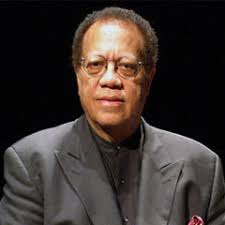
Cedar Walton gave his three wishes to Pannonica and they were:
- “I don’t know how to word this… I’d like to have immediate access to the world, you know? Anywhere I want to go.”
- “To have my own band and to be able to swing no matter what. Playing with Art* demands that.”
- “I wish jazz was accepted like everything else.”

More Posts: adventure,club,genius,jazz,museum,music,preserving,restaurant,travel,voyager
Daily Dose Of Jazz…
Scoville “Toby” Browne was born on October 13, 1909 in Atlanta, Georgia and played in the late 1920s with Junie Cobb’s band and the Midnight Ramblers in Chicago, Illinois. From 1931 to 193232 he played saxophone and clarinet for Fred Avendorph. He went on to work with Louis Armstrong from 1933–35, and in the mid- and late Thirties with Jesse Stone, Jack Butler, Claude Hopkins, and Blanche Calloway.
By the end of the decade, he was attending the Chicago College of Music and the 1940s Browne played with Slim Gaillard, Fats Waller, Buddy Johnson, Hot Lips Page, and Eddie Heywood before serving in the U.S. military during World War II. Following his discharge, he played with Hopkins again and with Buck Clayton.
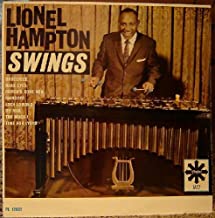
Taken on the role of bandleader on and off in the 1950s, Toby also studied classical music. He was the main clarinet soloist with Lionel Hampton and toured overseas with Muggsy Spanier late in the decade, and appeared in the 1958 photograph A Great Day in Harlem.
Continuing to work with Hopkins well into the Seventies, alto saxophonist and clarinetist Toby Browne who never recorded as a bandleader but only a sideman, passed away on October 3, 1994 in Chicago.

More Posts: bandleader,clarinet,history,instrumental,jazz,music,saxophone
Daily Dose Of Jazz…
Jimmy Archey was born on October 12, 1902 in Norfolk, Virginia. He began playing when he was twelve and was getting professional gigs a year later. He studied at Hampton Institute from 1915 to 1919, played in Atlantic City, New Jersey for a while before moving to New York City in 1923.
During the Roaring Twenties, he played with Edgar Hayes, Most noteworthy for his work was in several prominent jazz orchestras and big bands of his time, including leading one of his own. He performed and recorded with the James P. Johnson Orchestra, King Oliver, Fats Waller, and the Luis Russell Orchestra, among others.
The late 1930s saw Archey participating in big bands that simultaneously featured musicians such as Benny Carter, Coleman Hawkins, Cab Calloway, Duke Ellington, and Claude Hopkins. In the 1940s he toured France with Mezz Mezzrow and in the 1950s, he spent much of his time working with New Orleans revivalist bands with artists such as Bob Wilber and Earl Hines.
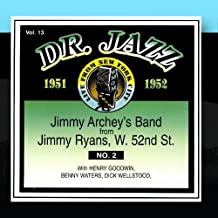
Becoming a bandleader, during the next few years, he headed a sextet, which in 1952 had trumpeter Henry Goodwin, Benny Waters on clarinet and pianist Dick Wellstood. A major yet underrated musician, his only sessions recorded as a leader were for Nec Plus Ultra, the French Barclay and the 77 label. Trombonist Jimmy Archey passed away on November 16, 1967 in Amityville, New York.
More Posts: bandleader,history,instrumental,jazz,music,trombone
Requisites…
<Anthropology~Don Byas | By Eddie Carter
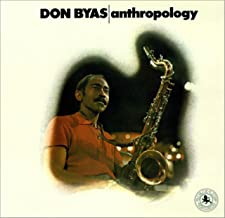
I begin this morning’s discussion with an album by tenor saxophonist Don Byas, a swing and bebop musician who played in the orchestras of Count Basie, Duke Ellington, and Lionel Hampton. He also worked with Art Blakey, Dizzy Gillespie, Bud Powell, and Ethel Waters among others. Anthropology (Black Lion Records BLP 30126) is a 1963 album that was recorded live at the Jazzhus Montmartre (also known as Café Montmartre). The rhythm section is an outstanding trio of Danish descent, pianist Bent Axen, bassist Niels-Henning Ørsted Pedersen and drummer William Schiöpffe. My copy used in this report is the US Stereo reissue (Black Lion BL-160), the date of release is unknown.
The album opens with Anthropology, a bebop classic written in 1945 by Dizzy Gillespie and Charlie Parker that’s also known as Thriving From a Riff or Thriving on a Riff. Schiöpffe introduces the tune, preceding the leader’s feisty delivery of the melody. Byas takes the lead with a compelling lift to start the soloing, then Axen executes the second reading efficiently. Pedersen turns in a brief presentation closely shadowed by Byas and Schiöpffe ends the readings by exchanging a few splendid phrases with the leader.
Moonlight In Vermont was written in 1944 by John Blackburn and Karl A. Suessdorf. This timeless evergreen provides a perfect backdrop for Byas’ gorgeous melody. The saxophonist continues with a very dreamy interpretation of the slow-paced, serene opening solo. Bent follows, displaying a graceful elegance on the next performance with discreet, perfectly tailored support by Niels-Henning and William. Byas’ closing chorus is lovingly rendered, completing the song with a tender finale that’s gorgeous.
Charlie Parker’s 1945 bebop anthem Billie’s Bounce ends the first side with a spirited rendition by the quartet. Pedersen and Schiöpffe open the song as a duet that becomes a lively theme treatment. Don raises the temperature on the lead solo with an effervescent beat that energizes the trio. Bent takes the spotlight last hitting a perfect groove on a swinging performance preceding the leader’s final remarks, theme’s reprise, and coda.
The gears shift upward for Dizzy Gillespie’s most famous recorded tune, Night In Tunisia was written in 1942 with Frank Paparelli. The rhythm section introduces the song at a speedy velocity proceeding to the aggressively energetic theme by Byas who also rips into the first solo voraciously. Bent takes the reins next zipping along like a whirlwind, then Don returns for a second exhilarating statement with bassist and drummer providing the fuel. NHØP takes over for an abbreviated scorcher, then Schiöpffe speaks last exhibiting mesmerizing brushwork into the invigorating climax.
The finale is the 1932 ballad, Don’t Blame Me, written by Jimmy McHugh and Dorothy Fields. This song made its first appearance on Broadway in the show, Clowns in Clover, and later in two films, The Bad and The Beautiful (1952) and Two Weeks in Another Town (1962). Byas begins with a delicate introduction and heart-warming melody ahead of a sultry first statement that’s exquisite. Axen expresses a gentle affection on the final solo preceding Byas who ends the song and LP with a tender sincerity.
In 1964, Byas was celebrating his third decade as a professional musician. In honor of that achievement, the LP was also released as The Big Sound – Don Byas’ 30th Anniversary Album on Fontana in the Netherlands and Debut Records in Denmark. Two songs on the original LP are omitted on Anthropology, There’ll Never Be Another You by Harry Warren and Mack Gordon and Walkin’ by Richard Carpenter. Don Byas was a masterful musician who was adept at a fast clip or on a romantic ballad.
He lived the last twenty-six years of his life in Europe, working extensively before passing away from lung cancer on August 24, 1972, at the age of fifty-nine. The dialogue between the quartet is fascinating and their music a treat for the Café Montmartre crowd. The album was produced by UK music executive Alan Bates who began Black Lion Records and also re-launched the Candid label in London. The sound quality is excellent, transporting the listener to the club amid the crowd. Though out of print for many years, Anthropology is a remarkable live album by Don Byas that I not only recommend but am sure will become a welcome addition in any library.
~ Alan Bates, The Big Sound – Don Byas’ 30th Anniversary Album (Debut Records DEB-142, Fontana 688 605 ZL) – Source: Discogs.com ~ Moonlight In Vermont, Night In Tunisia – JazzStandards.com ~ Don’t Blame Me – Source: Wikipedia.org © 2020 by Edward Thomas Carter
More Posts: choice,classic,collectible,collector,history,instrumental,jazz,music,saxophone
Daily Dose Of Jazz…
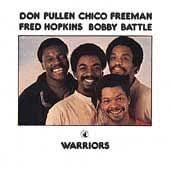
Fred Hopkins was born on October 11, 1947 in Chicago, Illinois and grew up in a musical family, listening to a wide variety of music from an early age. Attending DuSable High School, he studied music under Walter Dyett, who became well-known for mentoring and training musicians. Originally inspired to learn the cello, without one at the school Dyett steered him to the bass. After graduating from high school, while working at a grocery store he was encouraged to pursue music more seriously.
Hopkins soon began playing with the Civic Orchestra of Chicago, where he was the first recipient of the Charles Clark Memorial Scholarship, and studying with Joseph Gustafeste, principal bassist for the Chicago Symphony Orchestra at the time, as well as picking up piano duo gigs. He also began playing with Kalaparusha Maurice McIntyre, with whom he made his debut recording in 1970 Forces and Feelings. At that point he started becoming more serious about improvisation, playing with Muhal Richard Abrams’s Experimental Band and other related groups.
The early 1970s saw him forming a trio called Reflection with saxophonist Henry Threadgill and drummer Steve McCall. In 1975, he left Chicago, moved to New York City, regrouped with Threadgill and McCall, renamed their trio Air, and went on to tour and record extensively. He also joined the AACM, immersed himself in New York’s loft scene. Over the following decades, he increasingly gained recognition, gigging with Roy Haynes.
He performed and recorded with Muhal Richard Abrams, Hamiet Bluiett, Anthony Braxton, Marion Brown, Arthur Blythe, Oliver Lake, David Murray, Diedre Murray, and Don Pullen, as well as with various groups led by Threadgill. Moving back to Chicago in 1997, he continued to perform, tour, and record with a wide variety of musicians. Double bassist Fred Hopkins passed away on January 7, 1999 at age 51 of heart disease at the University of Chicago Hospital.
More Posts: bandleader,bass,history,instrumental,jazz,music