

Daily Dose Of Jazz…
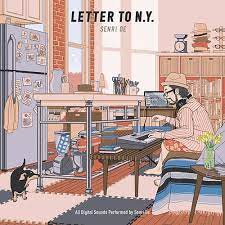
Senri Oe was born on September 6, 1960, in Fujiidera city, Osaka, Japan. He began playing piano at the age of three, and was trained by his junior high school teacher Yumi Nara, who would go on to become an acclaimed opera singer. After each of the lessons, Nara would encourage him to improvise, and eventually he began to compose.
Upon being introduced to music by The Carpenters, Captain & Tenille and Gilbert O’Sullivan, Oe decided to become a singer-songwriter. Soon after, Oe’s music repertoire expanded to include jazz musicians such as Chris Conor, Bill Evans, Thelonious Monk, Antonio Carlos Jobim, Winton Kelly, Miles Davis and Charlie Parker.
In 1975 at 15 Oe intended to study jazz but after participating in the final Yamaha Popular Song Contest POPCON, in 1980 he entered Kwansei Gakuin University majoring in economics while simultaneously beginning to pursue a professional music career. He formed his first band during his time at university, was scouted by Sony Music and signed to Epic Sony Japan in 1981. His pop career unexpectedly took off and he chose to put his jazz aspirations on hold.
At the New School for Jazz, in 2008 Senri moved to Manhattan, New Yorkand later He went on to start a prolific carrer as a pop singer/songwriter but in 2007 he began his serious study of jazz. After graduating from The New School for Jazz, he launched his jazz record label, Peace Never Die Records, in 2012. His jazz debut album was Boys Mature Slow the same year. As of 2021 he has released another six albums under the PND label.
Oe’s work towards composing for a drum-less trio was titled Collective Scribble, with saxophone, piano and upright bass. He has recorded as a leader with Sheila Jordan, Jon Hendricks, Theo Bleckmann and Lauren Kinhan. His Answer July was nominated for a Grammy in the Best Jazz Album category in 2017.
Pianist, composer, producer, actor, singer, and songwriter Senri Oe continues to compose, perform and stretch the realms of his jazz imagination, while writing and producing music for other artists and film soundtracks.

More Posts: bandleader,history,instrumental,jazz,music,piano,producer,vocal

Daily Dose Of Jazz…
Joki Freund was born Walter Jakob Freund on September 5, 1926 in Höchst, Frankfurt am Main, Germany. He began playing the accordion as a child, switching to tenor saxophone after World War II ended.
Early in the postwar era, he played with Joe Quitter, Carlo Bohlander, Gerry Weinkopf, Joe Klimm, and Jutta Hipp, before forming his own ensemble. He began performing with American musicians, including Donald Byrd, Art Taylor, and Doug Watkins during their European festival appearances.
He went on to play with and arranged for Albert Mangelsdorff in the jazz orchestra of Hessischer Rundfunk, and Erwin Lehn in the Süddeutscher Rundfunk orchestra. He played with the Frankfurt Jazz Ensemble on soprano saxophone in the 1970s, also performing as a leader around this time.
Saxophonist Joki Freund, who predominantly played in a quintet setting but also in orchestras or big bands, transitioned on February 15, 2012 in Schwalbach am Taunus, Germany.
More Posts: arranger,bandleader,history,instrumental,jazz,music,saxophone
Requisites
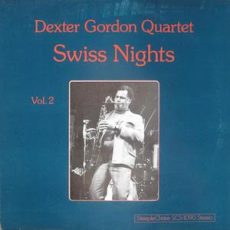
Swiss Nights, Vol. 2 ~ Dexter Gordon Quartet | By Eddie Carter
I begin September with a return to The Zürich Jazz Festival ’75 for this morning’s discussion of Swiss Nights, Vol. 2 (SteepleChase Records SCS-1090) by The Dexter Gordon Quartet. The tenor saxophonist’s back on stage with Kenny Drew on piano, Niels-Henning Ørsted Pedersen on bass, and Alex Riel on drums. My copy used in this report is the 1978 SteepleChase Records German Stereo Audiophile release.
Dexter opens the set introducing There’s No Greater Love by Isham Jones and Marty Symes. The quartet launches into an exciting melody, stepping aside for Dexter who leads off the first solo vigorously. Kenny shows off his creative powers in the second reading, next Niels-Henning walks the bass enthusiastically. Dexter trades thoughts with Alex leading to his final solo ahead of the reprise and finish.
Sticky Wicket, the first of two tunes by Dexter eases the throttle back to a comfortable pace on the foursome’s opening chorus. Gordon leads off the solos with a relaxed statement. Drew continues cruising to a carefree beat, then Pedersen takes a laid-back stroll with his bass. Gordon and Riel share a brief exchange preceding the reprise and the audience’s approval.
Side Two opens to a timeless standard from The Great American Songbook, Darn That Dream by Jimmy Van Heusen and Eddie Lange. Dexter and the trio introduce the song with a delicately gentle theme. Dexter’s tenor sax is the epitome of graceful elegance on the opening solo, next Kenny compliments him with a mellow reading of soft warmth. Niels-Henning and Alex hold everything together as Dexter returns for the climax.
Montmartre is Dexter Gordon’s tribute to the Copenhagen jazz club and is off to the races from the foursome’s opening theme. The leader kicks off the solos with a robust performance that gains momentum as it unfolds. Drew has a very good time on the second statement, next Gordon and Riel exchange a few ideas, then the drummer gets the spotlight briefly. The quartet returns to take the song out with an abrupt finish, followed by the group’s theme and musician introductions to great applause.
Nils Winther produced Swiss Nights, Vol. 2, and Helmuth Kolbe recorded and mixed the album. The soundstage is excellent, placing the listener in a front row seat to enjoy the quartet at work. The record is pressed on 180 grams of audiophile vinyl and is very quiet until the music starts. Like its two companions, Swiss Nights, Vol. 2 is a great live album by The Dexter Gordon Quartet with tight musicianship and outstanding sound. If you’re a fan of Dexter Gordon, it’s definitely worth adding to your library!
~ Swiss Nights, Vol. 1 (SteepleChase Records SCS-1050), Swiss Nights, Vol. 3 (SteepleChase Records SCS-1110) – Source: Discogs.com ~ There’s No Greater Love, Darn That Dream – Source: JazzStandards.com © 2022 by Edward Thomas Carter

More Posts: choice,classic,collectible,collector,history,instrumental,jazz,music,saxophone
Daily Dose Of Jazz…
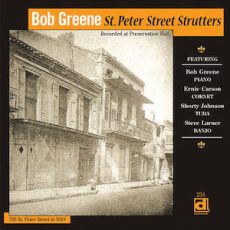
Bob Greene was born on September 4, 1922 in New York City, New York. He was active early in his career in Dixieland jazz revival groups, working with Sidney De Paris, Baby Dodds, Conrad Janis, and Johnny Wiggs.
Leaving music for a period, he got a degree from Columbia University and worked in radio and speechwriting, including for Lyndon Johnson and Robert F. Kennedy. After Robert Kennedy’s assassination, he quit speechwriting and returned to jazz in the late 1960s again, working with Zutty Singleton. Focusing on music full-time, Bob worked in the early 1970s with Don Ewell, Albert Nicholas, and the Peruna Jazz Band.
He put together a traveling ensemble which paid tribute to the music of Jelly Roll Morton. They toured worldwide, recorded several albums and among his sidemen in this setting were Danny Barker, Tommy Benford, Herb Hall, Milt Hinton, and Johnny Williams.
The nephew of Paul Blum, a former intelligence officer, he spent time writing his uncle’s biography, which was published in 1998. Pianist and bandleader Bob Greene transitioned on October 13, 2013 in Amagansett, New York.
More Posts: bandleader,history,instrumental,jazz,music,piano
Daily Dose Of Jazz…
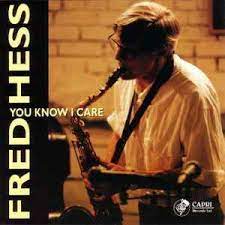
Fred Hess was born in Abington, Pennsylvania on September 3, 1944 but was raised in New Jersey. He studied at Trenton State College with his early studies with saxophonist Phil Woods, a stint with bandleader Fred Waring, and composing music for the world premiere of a Sam Shepard play.
As a composer, his influences encompass avant-garde classical sources, as well as Anthony Braxton and the members of the AACM. Moving to Boulder, Colorado in 1981, he founded the Boulder Creative Music Ensemble. Fred then completed further studies at the University of Colorado, Boulder, taking his doctorate in composition in 1991.
He recorded his debut album Sweet Thunder in 1991 and by 2012 had sixteen albums as a leader in his catalog. He was the Director of Music Composition at Metro State College in Denver, Colorado.
In addition to his own projects as a leader, BCME, The Fred Hess Group and the Fred Hess Big Band, he was the founding director of Denver’s Creative Music Works Orchestra and was a member of drummer Ginger Baker’s Denver Jazz Quintet, as well as ensembles led by trumpeter Ron Miles.
His playing was influenced by Lester Young, John Coltrane, the Association for the Advancement of Creative Musicians, and Eric Dolphy. Tenor saxophonist Fredd Hess transitioned on October 27, 2018.
Bestow upon an inquiring mind a dose of a Abington saxophonist to motivate the perusal of the genius of jazz musicians worldwide whose gifts contribute to the canon…
More Posts: bandleader,history,instrumental,jazz,music,saxophone