

Daily Dose Of Jazz…
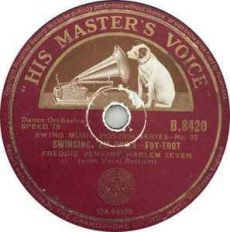
Freddie Jenkins was born on October 10, 1906 in New York City, New York and played in the Jenkins Orphanage Band when young before he attended Wilberforce University. Following this he played with Edgar Hayes and Horace Henderson between 1924 and 1928.
He then took a position in Duke Ellington’s Orchestra in 1928 where he soloed in the 1930 film Check and Double Check, during a performance of the song Old Man Blues. He remained with the Ellington Orchestra until 1935, when lung problems forced him to quit.
Recovered, he formed his own group in 1935, recording one session as a leader. His sidemen included Ward Pinkett, Albert Nicholas and Bernard Addison. After this he played with Luis Russell in 1936. Rejoining Ellington in 1937 he played with him for a year, then for a short time thereafter played with Hayes Alvis.
After 1938, his lung ailment returned and he retired again from performance. In his later years he worked as a songwriter, disc jockey, and in music press. He became a deputy sheriff in Fort Worth, Texas.
Trumpeter Freddie Jenkins transitioned in 1978.
Bestow upon an inquiring mind a dose of a New York City trumpeter to motivate the perusal of the genius of jazz musicians worldwide whose gifts contribute to the canon…
Freddie Jenkins: 1906~1978 | Trumpet
More Posts: bandleader,history,instrumental,jazz,music,trumpet
Requisites
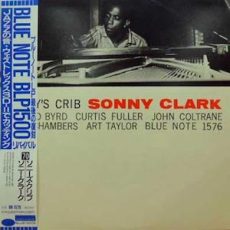
Sonny’s Crib ~ Sonny Clark | By Eddie Carter
Sonny Clark steps into the spotlight with his third LP as a leader, Sonny’s Crib (Blue Note BLP 1576/BST 81576), released in 1957. He was considered the label’s house pianist appearing on many albums with some incredible musicians. On this date, he heads a stellar sextet of heavy hitters; Donald Byrd on trumpet; Curtis Fuller on trombone; John Coltrane on tenor sax; Paul Chambers on bass; and Art Taylor on drums. My copy used in this report is the 1990 Toshiba-EMI Limited Japanese Mono reissue (Blue Note BLP 1576 – BN 1576).
Side One starts with a rapid burner; the 1929 show tune With a Song In My Heart by Richard Rodgers and Lorenz Hart. The sextet takes off on a brisk run through the melody stepping aside for Byrd who gives an electrifying first solo. Coltrane emerges with a vengeance delivering passionate fire at a high velocity on the next reading. Fuller responds with a robust, resonant tone releasing plenty of energy during his turn. Afterward, Clark offers an exhilarating reading that cooks and swings into the climax.
Speak Low by Kurt Weill and Ogden Nash is a popular song from 1943 that starts at mid-tempo. John takes the lead on the Latin-flavored melody with the ensemble manufacturing a firm foundation behind him. He continues with a fervent opening statement that heightens the trio’s flawless accompaniment. Curtis and Donald share the next reading; both men bring out the best in each other with two presentations showcasing their technical chops. Sonny steps in last, summing up the song with a captivating solo before the close. Come Rain or Come Shine by Harold Arlen and Johnny Mercer brings the first side to a close as a beautiful slow-tempo ballad. Fuller opens the melody with a simple statement that’s seductively tender. Clark guides his way sensuously through the next reading presenting an ardently touching interpretation. Coltrane follows with a beautifully constructed, elegant reading and Byrd takes the ensemble home on the ending theme into a gentle climax.
The final two tracks are by the leader Clark and occupy Side Two. Sonny’s Crib is a blues with everyone laid-back and taking it easy on the carefree melody. John goes first swinging expressively with rhythmic verses that are enjoyable listening; Curtis comes in next also contributing some fine solo work. Donald takes the next turn, making his mark with an easy swing that’s cheerfully bright. Sonny is artfully tasteful on the next solo with nimble piano lines that affirm his capability as a great interpreter of Hard-Bop. Paul cuts into the final reading with an exceptionally articulate statement that says plenty about the ensemble’s exit.
Sonny’s News For Lulu closes out the album giving everyone a solo opportunity except Art. The song opens with a brief introduction by the trio followed by a collective midtempo melody presentation and the solo order is piano, trumpet, tenor sax, trombone, and bass. The leader’s opening statement shows his rhythmic vitality on spirited lines that move freely and confidently. Donald reciprocates with a happy, infectious groove on the next solo that shows the workings of a very creative mind. John comes in next, infusing his performance with an energetic effervescence that’s bold, and assertive. Curtis sparkles on the fourth reading with a flow of musical ideas that are brimming with vitality. The finale is a delectable dish served up by Paul anchored by just Art’s tranquil brushwork that swings very nicely into the sextet’s closing chorus and the album’s climax concluding an enjoyable album.
The original recording by Rudy Van Gelder has been lovingly remastered by Toshiba-EMI Limited with a superb soundstage that surrounds your listening spot as if you’re in the studio with the musicians. In addition to Sonny’s Crib, Clark recorded eight more albums for Blue Note as a leader and with many other stars on the label as a sideman. He passed away on January 13, 1963, at the age of thirty-one from a heroin overdose in New York City although the official cause was listed as a heart attack. On this album, Clark and his colleagues leave a lasting impression on the listener through their outstanding interplay together that makes the music come alive. If you’re seeking some Hard-Bop on your next vinyl hunt, I offer for your consideration, Sonny’s Crib by Sonny Clark. It’s an excellent album of good tunes with great solos by six remarkable musicians who together, make highly delectable listening that should appeal to any jazz collector who’s also a fan of jazz piano!
~ Come Rain or Come Shine, Speak Low – Source: JazzStandards.com ~ Sonny Clark, With a Song In My Heart – Source: Wikipedia.org © 2022 by Edward Thomas Carter

More Posts: choice,classic,collectible,collector,history,instrumental,jazz,music,piano
Daily Dose Of Jazz…
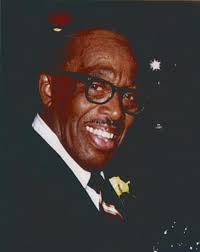
Myron Pierman “Mynie” Sutton was born October 9, 1903 in Niagara Falls, Canada. He worked in dance ensembles in Buffalo, New York and Cleveland, Ohio between 1924 and 1931. Returning to Canada in 1931 he founded the Canadian Ambassadors in Aylmer, Quebec. This was one of very few black jazz bands based out of Canada in the 1930s.
The group operated out of Montreal, Canada from 1933, playing at Connie’s Inn, the Hollywood Club, and Cafe Montmartre. Additionally they toured Quebec and Ontario. Pianists in the ensemble included Lou Hooper and Buster Harding.
By 1941 the Ambassadors had disbanded and Sutton returned to his birthplace of Niagara Falls, where he played locally for decades. He made no commercial recordings. A collection of materials devoted to Sutton is held at the Concordia University library in Montreal.
Alto saxophonist and bandleader Mynie Sutton transitioned on June 17, 1982 in Niagara Falls.

More Posts: bandleader,history,instrumental,jazz,music,saxophone
Daily Dose O fJazz…
Bill Stegmeyer was born October 8, 1916 in Detroit, Michigan. He attended Transylvania College in Lexington, Kentucky from 1934 to 1936, and following his studies he played through the rest of the decade with Austin Wylie, Glenn Miller, and Bob Crosby.
In the 1940s, he did arrangement work and played clarinet and occasionally, saxophone with Billy Butterfield, Yank Lawson, Bobby Hackett, Will Bradley, and Billie Holiday from 1945 to 1947. He arranged for WXYZ, a Detroit radio station, for two years starting in 1948, then followed this with arranging Your Hit Parade for eight years.
In the 1950s he also continued to play jazz with Lawson, Butterfield, Bob Haggart, Jimmy McPartland, and Ruby Braff. He went to work for CBS in the early 1960s.
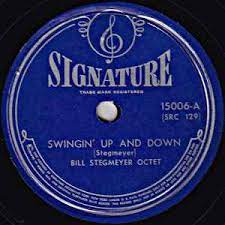
Clarinetist and arranger Bill Stegmeyer, whose only recordings as a leader were five tunes for Signature Records in 1945 and some V-Discs, transitioned from cancer in Long Island, New York on August 19, 1968 at the age of 51.
More Posts: arranger,bandleader,clarinet,history,instrumental,jazz,music
Daily Dose Of Jazz…
Alton “Slim” Moore was born October 7, 1908 in Selma, Alabama and began on baritone horn before settling on trombone by age 17. He played with local bandleaders and territory bands in his youth, such as Georgia Barlowe, Eddie Lemon, Gonzelle White, and Gene Coy.
Moving to New York City early in the Thirties he played with Jack Butler, Charlie Skeete, and Bobby Neal. Frequently switching ensembles in New York, in 1938 he did a short tour of Cuba with the Leon Gross Orchestra. Toward the end of the decade Moore moved up to play in more high-profile bands such as those of Fats Waller, Coleman Hawkins, Hot Lips Page, and Charlie Johnson. In the 1940s he played with Ella Fitzgerald, Benny Carter, Dizzy Gillespie and Louis Armstrong.
By the 1950s Slim had reduced his outings to part-time playing, after an extended stay in the band of Stafford “Pazuza” Simon. He would go on to play with Fletcher Henderson in 1957, and in the 1960s played in the Prince Hall Symphonic Band in New York as well as other big band revival outfits.
Trombonist Slim Moore, who also played and recorded on euphonium and did some scat singing, transitioned in 1978 in New York City.
More Posts: euphonium,history,instrumental,jazz,music,trombone