

Requisites
Coltrane ~ John Coltrane | By Eddie Carter
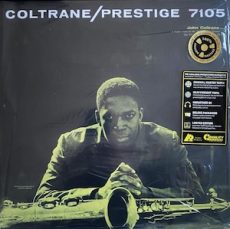
As someone who has enjoyed John Coltrane’s music for years, I’ve revisited this morning’s album from the library countless times, and each time I listen, it reveals something fresh and exciting. Coltrane (Prestige PRLP 7105) is the first chapter in a body of work that continues to challenge, inspire, and uplift listeners. John Coltrane’s path to his debut album was anything but easy. He grappled with addiction and periods of self-doubt, which eventually led to his dismissal from Miles Davis’s quintet. After returning to Philadelphia to end his addiction, John overcame his dependencies and embarked on a profound spiritual journey, allowing him to discover his singular musical voice and ultimately his first Prestige recording session.
Joining the tenor saxophonist are Johnnie Splawn on trumpet (tracks: A1, B1 to B3), Sahib Shihab on baritone sax (A1, B1, B3), Red Garland (A1 to A3), and Mal Waldron (B1 to B3) on piano, Paul Chambers on bass, and Albert “Tootie” Heath on drums. My copy of this album is the 2023 Analogue Productions mono audiophile reissue, sharing the original catalog number. “Bakai” by Cal Massey opens the first side, unveiling the ensemble’s relaxing melody. Red initiates the solos with a gentle and lyrical touch, as smooth as a calm sea. John’s following statement is grounded in a steady, unwavering rhythm of harmonic exploration. Sahib then steps in with an exquisite statement that nearly steals the show, leading back to the sextet’s theme restatement and ending.
Violets For Your Furs is a charming ballad from the 1940s by Tom Adair and Matt Dennis, which Red brings to life with a tender introduction to Coltrane’s lyrical sensitivity in the quartet’s theme, and a softer, more romantic side in the opening solo. Garland comes in next for a thoughtful, reflective reading until Coltrane gracefully reenters for the theme’s elegant climax. “Time Was” by Gabriel Luna de la Fuente, Paz Miguel Prado, and Bob Russell moves the beat upward for the quartet to give a lively melody. John leads off the solos with an abundance of passion, then Red continues soaring with joyful exuberance in the second reading. Paul has the last word and takes a short walk ahead of the theme’s return and finish.
Straight Street by John Coltrane gets the second side off to a good start. This song announces the spiritual dimension that would become central to his later albums. The sextet returns to full voice for a swinging melody with Mal taking over the piano duties. Coltrane gets right to work and wails on the opening statement. Splawn steps in next, firing on all cylinders, then Waldron takes the final spotlight preceding the group’s return for a vivacious exit. The pace slows down again for the album’s second 1940s ballad, “While My Lady Sleeps,” by Gus Kahn and Bronislaw Kaper. The ensemble presents a splendid study in soulful improvisation, with John paving the way through the melody into an affectionately intimate reading that ends as beautiful as it began.
Chronic Blues by John Coltrane opens with the sextet easing into the theme at a laid-back, comfortable tempo. Shihab launches the opening solo with rhythmic grace and effortless flow. Coltrane next delivers a smooth and inviting swing, as warm and familiar as a favorite homemade dish. Splawn’s turn brings a light and airy touch, infusing the piece with an appealing charm. Waldron closes things out with a breezy reading that leaves the sextet’s finale deeply satisfying. Bob Weinstock supervised the initial session, and Rudy Van Gelder was behind the recording dials. Kevin Gray mastered this audiophile reissue at Cohearant Audio. The album’s sound quality is spectacular, with a gorgeous soundstage that places the musicians directly in front of your sweet spot.
The record was pressed on 180-gram audiophile vinyl and offers an absolutely silent background until the music unfolds. Upon its release, “Coltrane” was met with excitement from jazz lovers and critics alike, though it didn’t propel John Coltrane to instant fame. That recognition would eventually arrive with “Giant Steps,” “My Favorite Things,” and “A Love Supreme.” Still, his debut firmly established Coltrane as a bandleader, composer, and innovator. It also marked the beginning of an extraordinary journey, where he would push the boundaries of jazz, explore spiritual themes, and redefine musical expression. If you haven’t experienced “Coltrane” yet, I highly recommend searching for it on your next record store visit. It’s an outstanding album by John Coltrane that provides a calming, immersive listening experience, gently enveloping you in its soothing melodies from the very first note!
A Love Supreme (Impulse A-77/AS-77), Giant Steps (Atlantic 1311/SD 1311), My Favorite Things (Atlantic 1361/SD
1361) – Source: Discogs.com Violets For Your Furs, While My Lady Sleeps – Source: Wikipedia.org © 2025 by Edward Thomas Carter
More Posts: choice,classic,collectible,collector,history,instrumental,jazz,music,saxophone
Daily Dose Of Jazz…
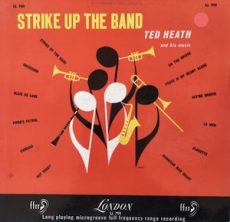
Roy Willox was born into a musical family in Welwyn, Hertfordshire, England on August 31,1929. At 16 he had a brief spell with Johnny Claes in 1945 and then with other bands before joining Ted Heath from 1950 to 1955.
About this time he worked in the jazz clubs in a group with Keith Christie, and with Jack Parnell followed with extensive freelance work in television, radio and the theatre. The jazz scene saw Willox in Harry South’s band during the 1960s and 1970s and returned to the Heath band for dates in the 1960s and 1970s.
He was in demand through the 1960s for many jazz big band dates, notably with Harry South and Tubby Hayes. He played throughout the 1990s and 2000s, first with The Ted Heath Band, (then led by Don Lusher), and in Lusher’s own big band until it’s last concert in 2007. He played in the Ted Heath band’s farewell concert at the Royal Festival Hall, London in 2000.
A fluent saxophonist, clarinetist and flutist Roy Willox, whose main instrument is alto saxophone, continues to perform and record.
More Posts: bandleader,clarinet,flute,history,instrumental,jazz,music,saxophone
Daily Dose Of Jazz…
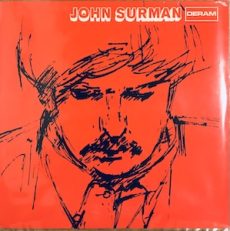
John Douglas Surman was born August 30, 1944 in Tavistock, Devon, England. He initially gained recognition playing baritone saxophone in the Mike Westbrook Band in the mid-1960s, and was soon heard regularly playing soprano saxophone and bass clarinet as well.
His first playing issued on a record was with the Peter Lemer Quintet in 1966. After further recordings and performances with jazz bandleaders Westbrook and Graham Collier and blues-rock musician Alexis Korner, he made the first record under his own name in 1968.
In 1969, he founded The Trio along with two expatriate American musicians, bassist Barre Phillips and drummer Stu Martin. In the mid-1970s, he founded one of the earliest all-saxophone jazz groups, S.O.S., along with alto saxophonist Mike Osborne and tenor saxophonist Alan Skidmore.
During this early period, he also recorded with (among others) saxophonist Ronnie Scott, guitarist John McLaughlin, bandleader Michael Gibbs, trombonist Albert Mangelsdorff, and pianist Chris McGregor’s Brotherhood of Breath.
In 1972 he had begun experimenting with synthesizers. The musical relationships he established during the Seventies with pianist John Taylor, bassist Chris Laurence, and drummer John Marshall; singer Karin Krog and drummer/pianist Jack DeJohnette continued for decades.
Since the 1990s, he has composed several suites of music that feature his playing in unusual contexts, and has worked with bassist Miroslav Vitouš, bandleader Gil Evans, pianist Paul Bley and Vigleik Storaas, saxophonist and composer John Warren, guitarists Terje Rypdal and John Abercrombie and trumpeter Tomasz Stańko.
Baritone and soprano saxophonist, clarinetist, synthesizer player, and composer of free jazz and modal jazz, who continues to often use themes from folk music has also composed and performed music for dance performances and film soundtracks.
More Posts: bandleader,clarinet,history,instrumental,jazz,music,saxophone,synthesizer
Daily Dose Of Jazz…
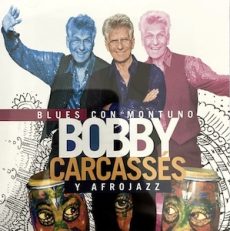
Bobby Carcasses was born on August 29, 1938 in Kingston, Jamaica into a Cuban family. He moved with his family back to Cuba when he was four and was surrounded by the various forms of local music. Starting out as an opera singer, he switched to Cuban music and worked as a vocalist at the famous Tropicana nightclub. It was here that he first began to experiment with incorporating scat and bebop influences into his vocal style.
By 1960 he was known as a dancer and athlete, being Cuba’s Long Jump Champion for that year. Bobby was a multi-instrumentalist having mastered the trumpet, bass, congas and drums. Later in the decade he travelled, including a year in Paris playing with resident jazz greats Bud Powell and Kenny ‘Klook’ Clarke.
Returning to Cuba, Carcassés formed his own jazz group, as well as acting in films and television. The 1980s saw him organize the first Jazz Plaza Festival, bringing to Cuba a host of international artists including Dizzy Gillespie, Charlie Haden and Airto Moreira. The festival became an annual event, with Carcasses and his band performing each year.
He toured extensively throughout Europe and the USA, performing alongside Tito Puente, Eddie Palmieri and many other big names of Latin jazz. Jazz Timbero was recorded in Havana in 1997 with an all-star Cuban big band (including members of Irakere and Los Van Van), playing a funky mix of Latin and jazz.
More Posts: bandleader,history,instrumental,jazz,music,trumpet
The Jazz Voyager
Arrived yesterday in Washington, DC. from Tokyo, Japan in time for the DC JazzFest being held at various locations around town. It’s no longer the city I remember and with you know who on Pennsylvania Avenue, I’m grateful there’s plenty of jazz to wander in and out, though it is sometimes the bane of my existence as so much music coincides that I can’t see it all. Ugh. Be that as it may, this afternoon I’m heading to the Downtown DC Anthem Row to see four groups I have never experienced.
What I do like best about jazz festivals is that they introduce new talent to new audiences. This jazz voyager is looking forward to discovering musicians and vocalists throughout the weekend. Thursday afternoon at Anthem Row begins at 4:30 with Benjie Porecki followed by Be’La Dona at 6:00, Langston Hughes II comes on stage at 7:15 and closing out the night at 8:30pm is Brass-A-Holics.
This Jazz Voyager is spending the weekend in D.C. and indulging in as much music that is possible to hear in a day. Will be moving all over the city.The venue is located at 800 K Street NW, Washington, DC 20001. For more information contact the venue at https://www.dcjazzfest.org/artists.

More Posts: adventure,club,drums,ensembles,genius,jazz,museum,music,preserving,travel