

Daily Dose Of Jazz…
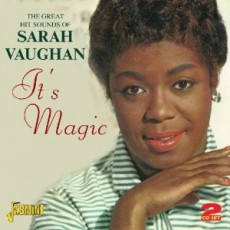
Sarah Lois Vaughan was born on March 27, 1924 in Newark, New Jersey and sang in church and learned to play piano as a child. Around age 18 she won the Apollo’s Amateur Night contest and in the spring of 1943 was called to open for Ella Fitzgerald. This engagement led to signing on with the Earl Hines band as his pianist, although she had some singing duties. An incubator for bebop Sarah played alongside Dizzy Gillespie, Charlie Parker, Bennie Green and Billy Eckstine.
By 1944 Eckstine left the Hines band to form his own and took Gillespie, Parker and Sarah with him giving her an opportunity to stretch her vocal prowess and her first recording session. The year spent with Eckstine proved rewarding as she honed her craft with Miles Davis, Lucky Thompson, Kenny Dorham, Art Blakey, Gene Ammons and Dexter Gordon among others.
Vaughan began her solo career in 1945 freelancing the 52nd Street clubs and record Lover Man on the Guild label. This would lead to recording sessions for Crown and Gotham labels, performing at Café Society and a subsequent Musicraft contract. Soon the hits If You Could See Me Now, Don’t Blame Me, I’ve Got A Crush On You, Everything I Have Is Yours and Body & Soul were released. She then signed with Columbia Records and her stardom was ensured.
Over an illustrious career Sarah Vaughan recorded over six dozen albums and live dates, has two recordings inducted into the Grammy Hall of Fame, was elected to the New Jersey Hall of Fame, has the lyrics to Send In The Clowns on the edge of the Newark Light Rail platforms, recognized as a NEA Jazz Master, received the George and Ira Gershwin Award for Lifetime Musical Achievement, recorded her final complete album Brazilian Romance in 1987 and briefly scatted on her final and only studio session with Ella Fitzgerald on Quincy Jones’ Back On The Block in 1989, a fitting end to a career that started with Ella.
Sarah Vaughan, nicknamed Sailor, Sassy and The Divine One and passed away due to complications from lung cancer on April 3, 1990. She was 66 years of age.
More Posts: vocal
Daily Dose Of Jazz…
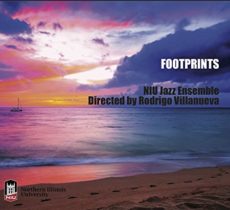
Rodrigo Villanueva was born in Mexico City, Mexico on March 26, 1967 and began playing drums at age of 15, studying privately and taking classical percussion and jazz studies at Escuela Superior de Musica, Ollin Yolitztly and Escuela Nacional de Musica. In 1987, he joined the jazz group Atri 5 recording Ice Cream Concerto and Flavors of the Stars, touring Mexico and playing in several international new music festivals.
Over the course of his career Rodrigo has performed in several theater bands, television shows and studio sessions; and in the jazz/classical genre with Carlos Prieto, Roberto Limón, Marisa Canales, Ana Maria Tradatti and Takagoshi Yoshioka to name a few. He has been a member of the Contemporary Jazz Trio, Brass Explosion, Fénix and Jazztlán; and has co-led the group Espiral.
Villanueva has toured the U.S., Mexico, South America, Europe and Asia with several jazz and pop projects, has won the National Final Nescafe-Yamaha Pop Music Award Band Explosion with the group Corazón Latino, and has composed and arranged in the jazz and pop idioms including big band. He has played with his alma mater’s lab bands at the University of North Texas, performed with Charles McPherson, Eddie Gomez, Clark Terry, Wycliffe Gordon, Stefan Karlsson, Jimmy Owens and Fareed Haque amongst his list of many.
As an educator drummer and percussionist Villanueva has taught drum-set and percussion courses and master classes at different institutions in Mexico, the U.S., Perú, Korea, & Japan. He is currently an Associate Professor of Jazz Studies at Northern Illinois University, coaches the NIU Jazz Lab Band and continues to play with several groups.
More Posts: drums,percussion
Daily Dose Of Jazz…
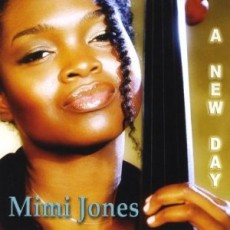
Mimi Jones was born Miriam Sullivan in New York City on March 25th and grew up in the Bronx. Influenced by everyone from Sinatra to the Beatles to Earth Wind & Fire, The Doors, Miles Davis, Gene Ammons, Gloria Lynne and John Coltrane, her compositional style is reflective.
By the age of twelve she was studying guitar with her first teacher, Jim Bartow, taking classes in dance, chorus, drums, music theory, piano and composition at the Harlem School of the Arts which all helped her secure a spot at Fiorello La Guardia High School of Music and Performing Arts. Realizing there was no guitar program Jones switched to cello and eventually was given the bass spot in the jazz band. It was during this time she discovered her musical voice.
Mimi began her relationship with the bass by receiving classical lessons, attended the Jazz Mobile Workshop, and studied with bassist Lisle Atkinson who gave her first bass, a Juzak. She went on to receive a full scholarship to the Manhattan School of Music Conservatory where she studied with saxophonist Charles Davis, Barry Harris, Ron Carter, Milt Hinton, Dr. Billy Taylor, Yusef Lateef, Max Roach, and Latin bass techniques with Guillermo Edgehill while matriculating to degree in music.
As a leader her debut “A New Day” is filled with seamless original compositions and as a sideman she has performed and toured with such luminaries as Lionel Hampton, Roy Hargrove, Sean Jones, Kenny Barron, Kevin Mahogany, Onaje Alan Gumbs and Ravi Coltrane among others. The multi-talented bassist, vocalist and composer continues to bring her elegant sound is an eclectic mix of genres based on a strong jazz foundation to the world stage.
Daily Dose Of Jazz…
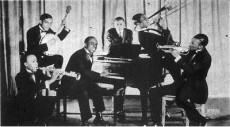
Algeria Junius “June” Clark was born on March 24, 1900 in Long Branch, New Jersey and played piano as a child. He went on to learn bugle and trumpet, playing in local brass bands. Taking a job as a porter in New Orleans, he played in a musical revue called S. H. Dudley‘s Black Sensations, alongside James P. Johnson.
Clark and Johnson parted from the show to play on their own, landing in Toledo, Ohio and playing with Jimmy Harrison in the late 1910s. By 1920 Clark relocated to Philadelphia performing with Josephine Stevens and Willie “The Lion” Smith. He would go on to work in the traveling show Holiday in Dixie, but after a poor run it folded and Clark temporarily took up work in an automobile factory.
Rejoining Harrison soon after as a member of the Fess Williams Band, by 1924 June was in New York City playing with his own band. In the 30s he played with Ferman Tapp, Jimmy Reynolds, George Baquet, Charlie Skeete and Vance Dixon. However, failing health led him to quit music and he became Louis Armstrong’s tour manager.
Suffering from an extended bout of tuberculosis in 1939 Clark was bedridden for several years. After his recovery he worked as a musical advisor and assisted Earl Hines. Giving up music altogether, in the Forties he turned to boxing and became Sugar Ray Robinson’s manager. On February 23, 1963 trumpeter, cornetist, advisor and manager June Clark passed away in New York City.
More Posts: trumpet
Daily Dose Of Jazz…
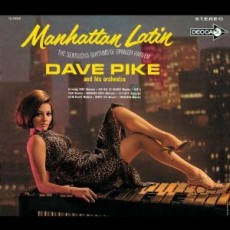
David Samuel Pike was born March 23, 1938 in Detroit, Michigan and learned drums at the age of eight and is self-taught on vibraphone. He made his recording debut with the Paul Bley Quartet in 1958. While working with flautist Herbie Mann in the early Sixties he began putting an amplifier on his vibe. By the late 1960s, Pike’s music became more exploratory, contributing a unique voice and new contexts that pushed the envelope in times remembered for their exploratory nature.
Dave’s release Doors of Perception produced by Mann in 1970 on Vortex Records explored ballads, modal territory, musique concrete, and free and lyrical improvisation. He has recorded as a leader and sideman with Lee Konitz, Chuck Israels, Herbie Mann, Bill Evans, Nick Brignola, and Kenny Clarke.
Pike’s move to Europe and his tenure at MPS Records produced some of the most original jazz of the period. He formed the Dave Pike Set and recorded six albums between 1969 and ’72 that ran the gamut from funky grooves to free, textural territory. The group, though short-lived, created a unique identity and textural palette.
Collaborating with Volker Kriegel during this period provided compositional and instrumental contributions to the group, playing acoustic, classical, and electric guitar as well as sitar, that helped set the Dave Pike Set’s sound apart, organically incorporating influences from jazz, soul jazz, psychedelia, avant-garde music, and World music. With 19 albums to his credit, vibraphonist Dave Pike continued exploring different realms of music until his passing away of lung emphysema on October 3, 2015 in Del Mar, California.
More Posts: drums,marimba,vibraphone