

Requisites
For Basie ~ Paul Quinichette | By Eddie Carter
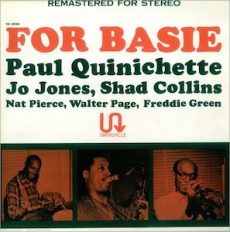
A few nights ago, with rain falling and a cold atmosphere outside, it felt like the ideal moment to listen to a favorite album by tenor saxophonist Paul Quinichette. For Basie (Prestige PRLP 7127), first released in 1958, is a great “blowing session” of the 1950s and a heartfelt homage to Count Basie, offering memorable tunes and lively arrangements by pianist Nat Pierce. The group features two alumni from Basie’s band, showing that these jam sessions were anything but rushed or lacking in artistic merit. Rounding out the sextet are Shad Collins on muted trumpet (tracks: A1, A2, B2) and trumpet (tracks: A3, B1, B2), Freddie Green on guitar, Walter Page on bass, and Jo Jones on drums. The copy I own is the 1963 remastered stereo reissue (Prestige Swingville SVST 2036).
Side One opens at a relaxing beat with Rock-a-Bye Basie by Count Basie, Shad Collins and Lester Young. Nat opens with a short introduction, segueing into Shad's leisurely-paced melody, with Paul playing behind him. Paul’s opening solo is cool and inviting, then Shad comes in on muted trumpet like a gentle breeze on a summer night. Nat sums it up with a friendly reading, returning to the theme’s restatement and a soft conclusion. Texas Shuffle by Herschel Evans and Edgar Battle turns up the heat significantly, beginning with Pierce and Jones’ quick introduction ahead of the ensemble’s speedy melody. Quinichette takes the lead first, then Collins, again using a mute, takes over for a quick run. Quinichette has a short conversation with Jones, and Pierce has the last word before the group ends softly.
Out The Window, by Count Basie and Eddie Durham, was first recorded by Basie’s band in 1937. The sextet pays homage, with the front line featuring Shad on the open horn, leading the mid-tempo melody. Shad struts boldly into the opening statement. Paul follows with a solo that soothes as it swings, then Nat strolls into the third reading with finesse, leading to a lengthy theme reprise with quick comments by Paul and Jo before the close. The group starts Side Two with Jive at Five by Count Basie and Harry Edison, which opens at an easygoing beat for Jones, Pierce, and Page’s introduction to the ensemble’s melody. Quinichette takes the lead here at an unhurried pace. Collins steps up next, still on the open horn with an easily flowing solo. Pierce continues moving along toward the sextet’s closing chorus.
Digging For Dex by Count Basie and Eddie Durham is their tribute to former “Down Beat” editor, Dave Dexter. Nat continues the easygoing pace, leading the rhythm section through the introduction, segueing to the sextet’s theme with Shad still on the open horn. Paul has the first say and makes the most of each note. Shad steps into the spotlight next for some muted work, then Nat takes over and cruises comfortably toward the ensemble’s laid-back climax. Bob
Weinstock supervised the session, and Rudy Van Gelder managed the recording console. I was pleasantly surprised by the reissue’s sound quality, especially for a remastered stereo album from the 50s. The soundstage is excellent, and brings the listener to the studio as the musicians perform.
In my opinion, For Basie captures the essence of Count Basie’s music, allowing each musician in the ensemble to shine. With Quinichette leading the sextet and his subtle homage to Lester Young in his playing, hence his nickname, The Vice Pres pays a respectful tribute to Basie’s legacy, blending nostalgia with innovative interpretations. The seamless chemistry between Collins, Pierce, Green, Page, and Jones elevates each tune into a stellar example of jazz artistry. If you enjoy swing, big band jazz, or have a soft spot for the tenor sax as I do, I invite you to check out Paul Quinichette’s For Basie on your next record-shopping trip. It’s a delightful album that’s perfect for listening to at any time of day or night, a real joy for jazz fans, and a title well worth adding to your library!
© 2026 by Edward Thomas Carter

More Posts: choice,classic,collectible,collector,history,instrumental,jazz,music,saxophone
Daily Dose Of Jazz…
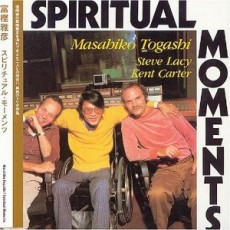
Masahiko Togashi was born in Tokyo, Japan on March 22, 1940 and began his musical education with the violin at age 6. It was some time later that the young man took up drums. He made his debut as a professional drummer at 14 with his father’s swing band and appeared on his first recording three years later with Sadao Watanabe’s Cozy quartet.
Togashi would go on to form his own quartet, releasing his group’s debut album, We Now Create, in 1969. However, a spinal injury in 1970 left the jazz percussionist permanently paralyzed from the waist down, and he would play the rest of his life seated in a specially designed wheelchair.
His physical disability limited his international travels and festival appearances, but frequently played with visiting musicians most notably saxophonist Steve Lacy who performed and recorded extensively with Togashi during his 12 tours in Japan, in particular Bura-Bura featuring Lacy along with Don Cherry and Dave Holland.
Drummer Masahiko Togashi passed away of heart failure at age 67 in his home in Kanagawa, Japan on August 22, 2007. Over the course of his career, which spanned more than 50 years, the percussionist strived to broaden the exposure of Japanese jazz and bridge Western music with the traditional sounds of eastern Asia.
More Posts: drums,percussion
Daily Dose Of Jazz…
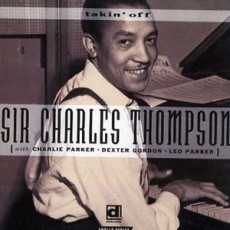
Charles Phillip Thompson was born in Springfield, Ohio on March 21, 1918 and became a professional pianist from the age of 10. By age twelve Thompson was playing private parties with Bennie Moten and his band in Colorado Springs. During this time Count Basie played off and on with Moten’s band and at one of these shows Basie called the young Charles up to play.
Throughout his career has chiefly worked with small groups, although he belonged to the Coleman Hawkins/Howard McGhee band in 1944-1945. Throughout the 40s he recorded with Charlie Parker, Dexter Gordon and J.C. Heard among others.
Thompson composed the jazz standard “Robbins’ Nest” and was dubbed Sir Charles Thompson by Lester Young. The swing and bop pianist, organist and arranger at age 98, passed away of colon cancer on June 16, 2016 in Tokyo, Japan.
More Posts: piano
Daily Dose Of Jazz…
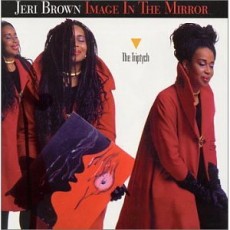
Jeri Brown was born in Halifax, Missouri on March 20, 1952 and began singing publicly from the age of six. While matriculating through college in Iowa on a four-year scholarship she studied classical voice. As a result of student performances in mid-western U.S. and Europe her voice caught the attention of musical directors and composers looking for an imaginative voice with incredible range effortlessly creating aesthetic touches to their contemporary or avant-garde works.
Along with performances with the Cleveland Chamber Orchestra, St. Louis Symphony Orchestra and several combos, Jeri began incorporating more stylistic renditions of standards from theatre, film and pop culture. This led to her working with Ellis Marsalis, Billy Taylor and Dizzy Gillespie. Upon the suggestion of Joe Lovano, she began to improvise during concert performances.
The short list of jazz artists Jeri has performed and recorded with is not limited to Leon Thomas, John Hicks, Grady Tate, Kirk Lightsey, Betty Carter, David Murray, D.D. Jackson, Billy Hart, Kenny Werner, Pierre Michelot, Onaje Allan Gumbs, Fred Hersch, Tony Suggs, Michel Donato, Winard Harper, Chico Freeman, Rufus Reid and Seamus Blake.
Holding several degrees in Counseling, Education and English, Brown has taught at Cleveland State University, Oberlin Conservatory of Music, The university of Akron, University of Massachusetts at Amherst and several universities in Canada. Not to be limited, she has added documentaries, film and theatre to her arsenal of accomplishments and has written and recorded lyrics in collaboration with Avery Sharpe, Henry Butler, Cyrus Chestnut, Abdullah Ibrahim, and Jimmy Rowles. She continues her lifelong pursuit of excellence performing, composing and recording.
More Posts: vocal
Daily Dose Of Jazz…
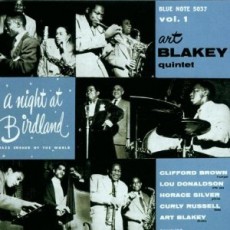
Curley Russell was born Dillon Russell on March 19, 1917 in Trinidad. Learning to play bass in his youth, the double-bassist by 1941 had joined the Don Redman big band and two years later was playing with Benny Carter. During the early bop period of jazz he became extremely busy performing and recording with Dizzy Gillespie and Charlie Parker.
From 1947 – 1949 he was a member of the Tadd Dameron Sextet and became more in demand for his ability to play at rapid tempos typical of the period. During his short career as a sideman he performed and recorded with an impressive list of musicians: Buddy De Franco, Bud Powell, Horace Silver, Thelonious Monk, the Art Blakey Quintet, Clifford Brown, Fats Navarro, Miles Davis, J. J. Johnson, Johnny Griffin, Stan Getz, George Wallington, Milt Jackson, Al Cohn and Zoot Sims.
Seemingly uninterested in the melodic mobility that was expected of bassists, he was never featured as a soloist and by the late Fifties dropped out of the jazz scene and left the music business altogether. Bassist Curley Russell passed away on July 3, 1986.
More Posts: bass