

Daily Dose Of Jazz…
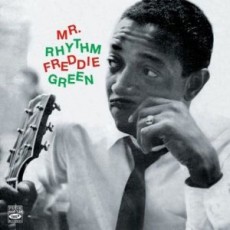
Freddie Green was born Frederick William Green on March 31, 1911 in Charleston, South Carolina. Exposed to music early he learned to play banjo before taking up the guitar and learning to read music. He got his first gig playing with a local group alongside trumpeter William “Cat Anderson who would end up in Ellington’s band.
Following his parent’s death while in his teens, Freddie moved to New York to live with his aunt and finish school. He began playing the club circuit, earning both money and a reputation. Noticed by the legendary talent scout John H. Hammond, Green was introduced to Count Basie and in 1937 became part of the outfit. He would remain a pivotal fixture of the Count Basie Band for the next fifty years.
Freddie recorded extensively with Count Basie but also produced several albums as a leader and in addition as a sideman working with such artists as Joe Newman, Al Grey, Zoot Sims, Herb Ellis, Paul Quinichette and Al Cohn to name a few to his credit.
Guitarist Freddie Green, who made a name for himself during the Swing era, who was part of the All-American Rhythm Section alongside pianist Count Basie, drummer Jo Jones and bassist Walter Page and whose technique was to play only certain important notes of each chord limiting unnecessary harmonic presence, passed away at age 75 on March 1, 1987.
More Posts: guitar
Daily Dose Of Jazz…
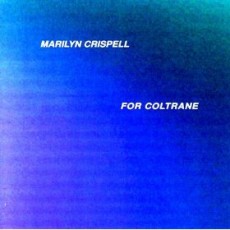
Marilyn Crispell was born March 30, 1947 in Philadelphia, Pennsylvania and studied classical piano and composition at the New England Conservatory of Music. She discovered jazz through the music of John Coltrane, Cecil Taylor and other contemporary jazz players and composers like Paul Bley and Leo Smith.
For ten years Marilyn was a member of Anthony Braxton’s Quartet and the Reggie Workman Ensemble. She has worked with the Barry Guy New Orchestra as well as a member of the Henry Grimes Trio, the European Quartet Noir and Anders Jormin’s Bortom Quintet.
A resident of Woodstock, New York since 1977 when she came to study and teach at Karl Berger’s Creative Music Studio, in 2005 she performed and recorded with the NOW Orchestra, a year later she was co-director of the Vancouver Creative Music Institute and a faculty member at the Banff Centre International Workshop in Jazz.
Crispell has performed and recorded nearly two-dozen albums as a soloist and leader of her own groups as well as with John Cage, Pauline Oliveros, Robert Cogan, Pozzi Escot, Manfred Niehaus, Larry Ochs, Reggie Workman,Roscoe Mitchell, Wadada Leo Smith, Anthony Braxton, Steve lacy and Anthony Davis with the New York City Opera, among numerous others.
Pianist Marilyn Crispell, the recipient of a Guggenheim Fellowship, continues to perform, record and teach throughout the U.S., Europe, Canada and New Zealand, and collaborate with videographers, filmmakers, dancers and poets.
More Posts: piano
Requisites
Philly Mignon ~ Philly Joe Jones | By Eddie Carter
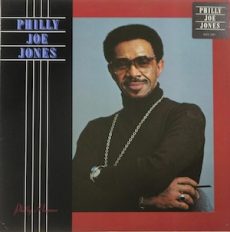
This morning’s album from my library is a hidden gem led by the talented drummer Philly Joe Jones. He brings together an outstanding group on his 1978 release, Philly Mignon (Galaxy GXY 5112). My first introduction to Jones’s artistry was through his work on Miles Davis’s four Prestige quintet records, where his impeccable timekeeping really stood out to me. The ensemble includes Nat Adderley on cornet (tracks: A1, B1, B3), Dexter Gordon (tracks: A2, B2), and Ira Sullivan (tracks: A1, B3), on tenor saxophone, (track: B1) on soprano saxophone, George Cables (tracks: A1, A2, B2, B3) on piano, and Ron Carter on bass. The copy I own is the original 1978 U.S. Stereo pressing!
The album opens with a spirited rendition of Confirmation by Charlie Parker. Philly’s introduction kicks things off ahead of the lively theme led by Ira. George has the first solo and drives vigorously. Nat takes over, fueling the second statement with a brassy bite. Ira comes in next, riding hard on a robust reading, then the front line gives Philly space for a robust workout before the group’s theme reprise takes things out. Neptunis by Benny Bailey sets an easy tempo from the start of Dexter and George’s introduction that develops into the melody. The saxophonist leads the soloing with a relaxing joyride. George follows, each chorus unfolding efficiently and smoothly. Dexter and Philly share the spotlight briefly before the drummer has the last word and the foursome wraps up.
Jim’s Jewel by Charles Bowen Jr. is a completely different animal, with Nat and Ira featured in a piano-less foursome. Ron introduces the song, segueing into the front line’s theme, propelled by Philly’s drums. Nat’s first solo is particularly compelling. Ira follows with a soprano sax reading that will move the listener to sit up and take notice. Philly enters the spotlight last with a concise comment before the closing chorus and the group’s exit. Polka Dots and Moonbeams by Jimmy Van Heusen and Johnny Burke is up next. Dexter’s spoken introduction of the opening lyrics blossoms into his saxophone, continuing the tender melody. The trio provides an elegantly lush foundation for Dexter’s delicately tender first solo. George follows with a lovely reading leading to the gorgeous closing chorus and the soft ending.
United Blues by Ron Carter is an upbeat tune that brings Nat and Ira back for the album’s closer. Philly’s short introduction kicks things off ahead of the quintet’s theme. Nat is up first with a spirited statement, then Ira grabs the second spot, back on tenor sax and hooks you from the start. George strolls in next for a short stay, and Philly does a great deal in a short time before the reprise of the melody finishes on a good note. Ed Michel produced Philly Mignon, while Baker Bigsby and Wally Buck managed the recording console. David Turner handled the album’s mastering, and the sound quality is exceptional. The stereo presentation is vivid, the horns truly sparkle, and the bass sounds full and resonant. It’s also an excellent pressing, and the record is dead silent until the music starts.
Philly Joe Jones led 16 albums and contributed as a sideman to a wide array of exceptional recordings, making his discography one of the most impressive in jazz history. Whether you’re passionate about jazz drumming or curious to explore Jones’s artistry, I highly recommend checking out his album Philly Mignon by Philly Joe Jones during your next visit to the record store. This release offers a delightful listening experience for jazz lovers at any hour, appealing even to the most discerning musical tastes. Just a word of caution, though, once you start listening, you may find yourself completely captivated!
~ Cookin’ With The Miles Davis Quintet (Prestige PRLP 7094), Relaxin’ With The Miles Davis Quintet (Prestige PRLP 7129), Steamin’ With The Miles Davis Quintet (Prestige PRLP 7200), Workin’ With The Miles Davis Quintet (Prestige PRLP 7166) – Source: Discogs.com
~ Polka Dots and Moonbeams – Source: JazzStandards.com © 2026 by Edward Thomas Carter
More Posts: choice,classic,collectible,collector,drums,history,instrumental,jazz,music
Daily Dose Of Jazz…
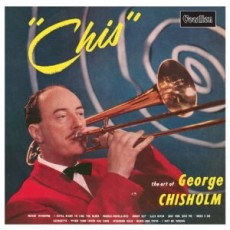
George Chisholm was born on March 29, 1915 in Glasgow, Scotland and began playing trombone in his youth. His musical career started in the Glasgow Playhouse orchestra and by the late 1930s he moved to London, where he played in dance bands led by Bert Ambrose and Teddy Joyce. He later recorded with jazz musicians such as Coleman Hawkins, Fats Waller and Benny Carter when they visited the U.K.
In 1940, during World War II George signed on with the Royal Air Force becoming a member of the RAF Dance Orchestra, known popularly as The Squadronaires. He followed this with freelance work and a five-year stint with the BBC Show Band and as a core member of Wally Stott’s orchestra on BBC Radio’s The Goon Show, for which he made several acting appearances.
In the 1960s, Chisholm was part of The Black and White Minstrel Show, went on to join the house band for two children’s programs Play School and Play Away, and had roles in the films The Mouse on the Moon, The Knack and Superman III.
Despite undergoing heart surgery, during the 1980s George continued to play with his band The Gentlemen of Jazz, with Keith Smith’s Hefty Jazz among others, and playing live with touring artists. He was awarded an OBE (Order of the British Empire) in 1984 but in the mid-1990s, trombonist George Chisholm retired from public life due to ill health and passed away on December 6, 1997, aged 82.
More Posts: trombone
Daily Dose Of Jazz…
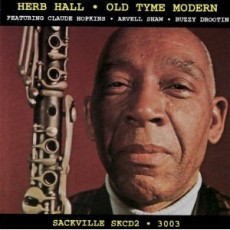
Herbert “Herb” Hall was born on March 28, 1907 in Reserve, Louisiana. He began on banjo and guitar with the Niles Jazz Band, then settled on reeds playing clarinet. In 1926 he played with Kid Augustin Victor in Baton Rouge, then moved to New Orleans the following year. Hall played briefly with trumpeter Sidney Desvigne’s outfit, and then teamed up with bandleader Don Albert played for many years from 1929-40. Following this stint he moved to San Antonio with him and remaining there until 1945.
After this Herb moved to Philadelphia playing with Herman Autrey; a few years later he was in New York, working with Doc Cheatham and toured Europe with Sammy Price in the mid-Fifties. He was a regular at the New York clubs of Jimmy Ryan and Eddie Condon in the late 1950s and 1960s. In 1968-69 he was on the road again touring with Wild Bill Davison’s Jazz Giants, and then a stint with an offshoot band of The Jazz Giants, called “Buzzy’s Jazz Family”.
Hall worked with Don Ewell, and appeared in Bob Greene’s Jelly Roll Morton revue show in the Seventies. Herb Hall, the highly skilled stylist, clarinetist, alto and baritone saxophonist who produced an impressive body of work, passed away on March 5, 1996.